Consumer electronics
Calculators, TVs, cameras, set-top boxes and wearables. 352 chips on EveryChip so far.
Consumer electronics were the first mass market for chips. Pocket calculators drove early chip design: the Intel 4004 was built for a Busicom calculator, and Texas Instruments' TMS1000 went into calculators, toys and microwave ovens. Since then chips have filled TVs, cameras, music players, set-top boxes, projectors, smart speakers and watches, usually as SoCs designed for one kind of product.
Calculators to cameras
In 1969 the Japanese company Busicom asked Intel for a set of chips for a printing calculator; Intel's answer was the 4004, released in 1971. Calculator prices fell sharply in the 1970s as single-chip designs arrived. Digital cameras were made possible by image sensors and image processors, and Texas Instruments' DLP chips, with millions of tiny mirrors, went into projectors and cinema screens.
Smart devices
Today's TVs, streaming sticks and smart speakers run SoCs from MediaTek, Realtek, Amlogic, Broadcom and others, combining Arm cores with video decoders for formats such as HEVC and AV1. Wearables such as Apple's watch use tiny SoCs in system-in-package modules, in which many chips are sealed together into one small block.
Famous consumer electronics chips
 Intel 4004Built for the Busicom 141-PF calculator, 1971
 TMS1000Microcontroller of calculators and toys
 Texas Instruments LPC Speech ChipsSpeech chips of TI's Speak and Spell toy
 Digital micromirror deviceTI's DLP mirror chip for projectors
 Apple S1The first Apple Watch's system in package, 2015
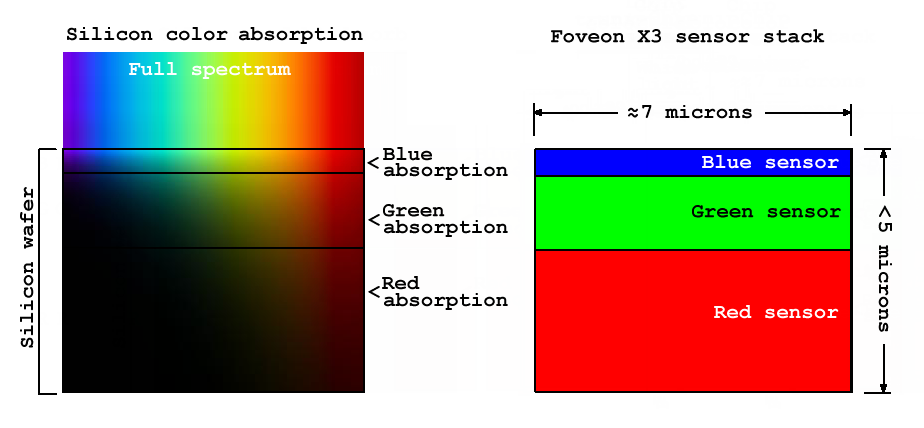 Foveon X3 sensorImage sensor of Sigma cameras
Further reading
 🇺🇸 United States and 1 moreLM317
Adjustable positive linear voltage regulator integrated circuitAnalog · 1976
🇰🇷 South KoreaISOCELL
Samsung family of CMOS image sensors for mobile and digital camerasSensor
🇺🇸 United StatesGoldmont Plus
Low-power Atom microarchitecture for Celeron and Pentium Silver SoCsCPU · x86 · 2017
 🇯🇵 JapanFujifilm X-Trans sensor
Image sensor with a unique colour filter patternSensor
🇺🇸 United StatesTMS6100
Serial mask ROM for speech synthesis data storageMemory · Other · 1978
 🇺🇸 United States555 timer IC
A versatile integrated circuit for timing and pulse generation.Analog · 1972
🇺🇸 United StatesGoogle Tensor
Google's own ARM64 system-on-chip family built for Pixel phones and tabletsSoC · Arm · 2016
 🇳🇱 NetherlandsMIFARE
Contactless smart card chip series for tickets, access control and paymentsMining or security · Other
 🇺🇸 United StatesLM358
Low-power dual operational amplifier for single-supply circuitsAnalog
 🇳🇱 NetherlandsTriMedia
VLIW media processors for audio and video streams, from Philips and NXPDSP · VLIW · 1996
 World78xx
Family of fixed positive linear voltage regulator integrated circuitsAnalog
 🇺🇸 United States4000 series
Versatile CMOS logic chips for low-power digital circuitsAnalog · Other · 1968
🇺🇸 United StatesAdreno
Qualcomm's in-house GPU cores for Snapdragon mobile chipsGPU · GPU architecture · 2009
 🇺🇸 United States and 1 moreMicrosoft XCPU (Xenon)
Three-core PowerPC CPU at the heart of the Xbox 360 consoleCPU · Power · 2003
 🇺🇸 United StatesTMS9900
A 16-bit single-chip microprocessor from Texas Instruments, launched in 1976.CPU · Other · 1976
 🇨🇳 ChinaESP32
Low-cost Wi-Fi and Bluetooth microcontroller family from Espressif SystemsMicrocontroller · RISC · 2016
 🇬🇧 United KingdomZN414
Single-chip AM radio receiver integrated circuitAnalog · 1972
 🇺🇸 United StatesPeripheral Interface Adapter
Parallel I/O chip for early microprocessor systemsAnalog · Other · 1976
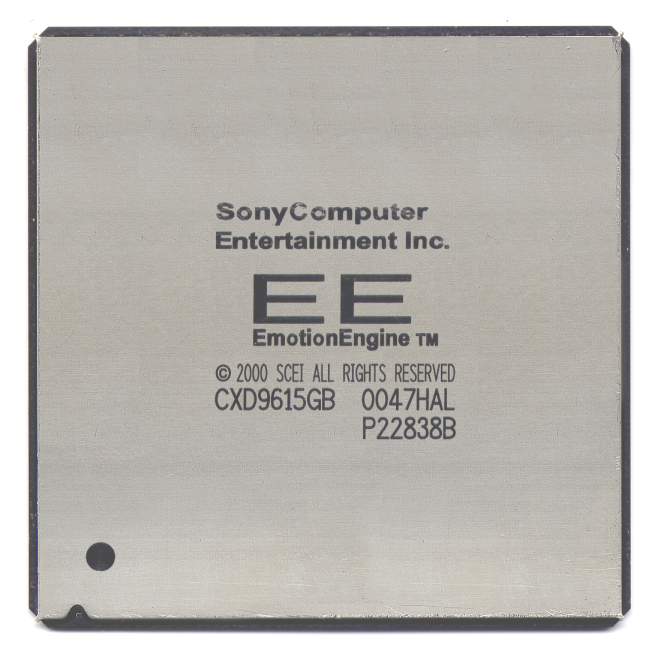 🇯🇵 JapanEmotion Engine
Sony and Toshiba's CPU for the PlayStation 2 consoleCPU · MIPS · 1999
 🇺🇸 United StatesMotorola 6800
An 8-bit microprocessor from Motorola, launched in 1974 as the core of the M6800 family.CPU · Other · 1974
 🇺🇸 United StatesIntel 8085
An 8-bit Intel microprocessor from 1976, the last of its lineCPU · 8-bit · 1976
 🇺🇸 United StatesIntel 4040
Intel's second 4-bit microprocessor, a 1974 upgrade of the 4004CPU · Other · 1974
🇺🇸 United StatesFour-Phase Systems AL1
An early 8-bit slice CPU built for Four-Phase's System IV/70 minicomputer.CPU · Other · 1970
 🇺🇸 United StatesBobcat
Low-power x86 microarchitecture for AMD APUsCPU · x86 · 2011
 🇺🇸 United StatesPOKEY
Atari I/O chip for sound, keyboard and paddlesAnalog · Other · 1979
 WorldIntersil 6100
A 12-bit CMOS microprocessor that runs the PDP-8 instruction set on one chipCPU · Other · 1975
 🇺🇸 United StatesTL431
Adjustable shunt voltage regulator introduced in 1977Analog · 1977
 WorldMOS 6507
A low-cost 8-bit 6502 variant in a 28-pin package with an 8 KB address rangeCPU · Other · 1975
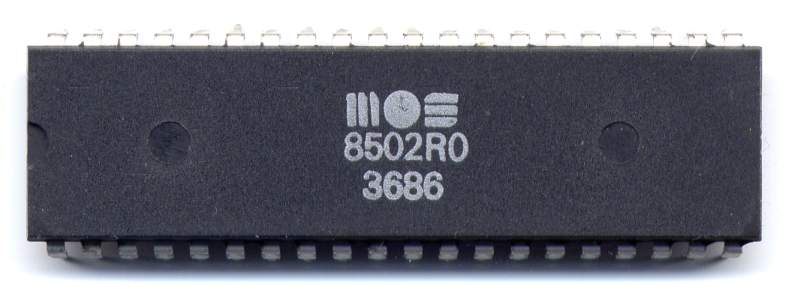 WorldMOS Technology 8502
An 8-bit CPU from MOS Technology that powered the Commodore 128CPU · 8-bit
 🇯🇵 JapanHitachi 6309
Hitachi's CMOS 8-bit microprocessor, a faster and richer 6809CPU · 8-bit · 1985
WorldZilog eZ80
8-bit Z80-compatible microprocessor with 24-bit addressing, up to 50 MHzCPU · 8-bit · 2001
 🇺🇸 United StatesLM3914
Analog display driver for LED bar graphs and dot metersAnalog
 🇺🇸 United StatesNE5532
Dual low-noise operational amplifier for professional audioAnalog · 1979
 🇺🇸 United StatesIntel 80486
32-bit x86 CPU with pipelined execution and on-chip cache, launched 1989CPU · x86 · 1989
 🇳🇴 NorwayMali
A family of graphics processing unit cores licensed by Arm for mobile and embedded chips.GPU · Other · 2005
🇺🇸 United StatesAlchemy
Ultra low power MIPS embedded microprocessor familySoC · MIPS · 2000
🇺🇸 United StatesHP Saturn
HP's 4-bit calculator microprocessor family, introduced in 1984CPU · Other · 1984
 WorldVIA Eden
Low-power x86 processor for embedded systemsCPU · x86
 🇺🇸 United StatesCapricorn
HP's 8-bit microprogrammed CPU for the Series 80 scientific microcomputersCPU · 8-bit · 1980
 WorldRise mP6
Low-cost x86 microprocessor for Super Socket 7 systemsCPU · x86 · 1998
🇺🇸 United StatesRockwell PPS-8
An early 8-bit microprocessor from Rockwell with unusual code-saving featuresCPU · 8-bit · 1974
 🇬🇧 United KingdomARM9
32-bit RISC processor core family for microcontrollersMicrocontroller · Arm · 1998
 🇺🇸 United StatesIntel 8255
Programmable parallel input/output interface chip for early microprocessorsAnalog · 1970
🇺🇸 United StatesIntel 4004
The first commercial microprocessor, a 4-bit chip released by Intel in 1971.CPU · Other · 1971
 🇬🇧 United KingdomARM Cortex-R
Real-time ARM processor cores for safety-critical systemsCPU · Arm · 2020
 🇺🇸 United StatesWD16
A 16-bit CISC microprocessor from Western Digital, built from five DIP chips.CPU · Other · 1976
 🇬🇧 United KingdomARM Cortex-A7
Power-efficient 32-bit ARM processor core for mobile and embedded systemsCPU · Arm · 2011
Photo credits on this page
The small pictures above come from Wikimedia Commons under free licences. Some are cropped to fit.
- LM317: Raimond Spekking, CC BY-SA 4.0, source
- Fujifilm X-Trans sensor: Tomás Freres, CC BY 4.0, source
- 555 timer IC: Raimond Spekking, CC BY-SA 4.0, source
- ZN414: Nkendrick ( talk ), Public domain, source
- MIFARE: Adontz, CC BY-SA 4.0, source
- LM358: Raimond Spekking, CC BY-SA 4.0, source
- TriMedia: Pauli Rautakorpi, CC BY 3.0, source
- 78xx: Raimond Spekking, CC BY-SA 4.0, source
- 4000 series: Teravolt ( talk ), CC BY 3.0, source
- Microsoft XCPU (Xenon): Konstantin Lanzet, CC BY 3.0, source
- TMS9900: Konstantin Lanzet, CC BY-SA 3.0, source
- ESP32: Ubahnverleih, CC0, source
- Peripheral Interface Adapter: Swtpc6800 en:User:Swtpc6800 Michael Holley, Public domain, source
- Emotion Engine: Unknown author, CC BY-SA 3.0, source
- Intel 4040: Thomas Nguyen, CC BY-SA 4.0, source
- Intel 8085: Stefan506 ( dewiki userpage ), CC BY-SA 3.0, source
- Motorola 6800: Swtpc6800 en:User:Swtpc6800 Michael Holley, Public domain, source
- Bobcat: Brit robin, CC BY-SA 4.0, source
- POKEY: RodCastler, CC BY-SA 3.0, source
- TL431: Raimond Spekking, CC BY-SA 4.0, source
- Intersil 6100: Christian Bassow, CC BY-SA 4.0, source
- MOS 6507: Konstantin Lanzet, CC BY 3.0, source
- MOS Technology 8502: Unknown author, CC BY-SA 3.0, source
- Hitachi 6309: No machine-readable author provided. Lamune~commonswiki assumed (based, Public domain, source
- LM3914: Retired electrician, CC0, source
- NE5532: Raimond Spekking, CC BY-SA 4.0, source
- Intel 80486: Thomas Nguyen, CC BY-SA 4.0, source
- Mali: Open Grid Scheduler / Grid Engine, CC0, source
- VIA Eden: Konstantin Lanzet, CC BY 3.0, source
- Capricorn: Thomas Schanz, CC BY-SA 3.0, source
- Rise mP6: Konstantin Lanzet (with permission), CC BY-SA 3.0, source
- ARM9: Raimond Spekking, CC BY-SA 4.0, source
- Intel 8255: Myself User:ZyMOS, CC BY-SA 4.0, source
- Intel 4004: the Science Museum, CC BY 4.0, source
- ARM Cortex-R: Raimond Spekking, CC BY-SA 4.0, source
- WD16: RastaKins, CC BY-SA 4.0, source
- ARM Cortex-A7: Raimond Spekking, CC BY-SA 4.0, source
- Foveon X3 sensor: Anoneditor at English Wikipedia, CC BY-SA 3.0, source
- Apple S1: Henriok, CC0, source
- Texas Instruments LPC Speech Chips: Orginal photo © Bill Bertram 2006, editing by user:Tomhannen, CC BY-SA 2.5, source
- Digital micromirror device: mitopencourseware, CC BY-SA 4.0, source
- TMS1000: Pauli Rautakorpi, CC BY 3.0, source