Games consoles
The processors and graphics chips inside home and handheld consoles. 195 chips on EveryChip so far.
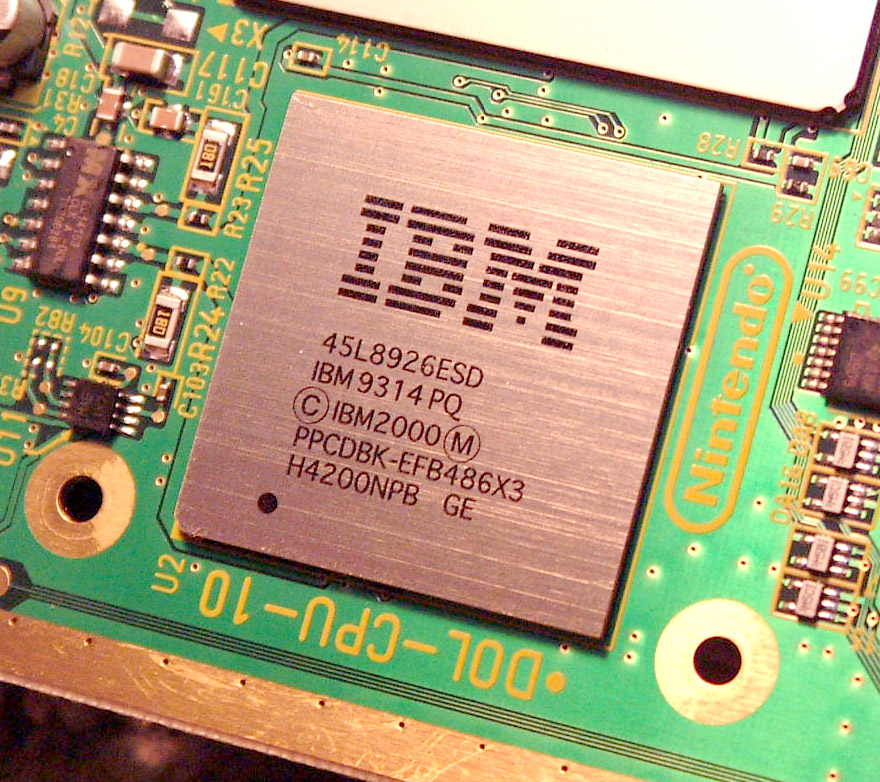
Games consoles have driven chip design since the 1970s. Each console uses a fixed set of chips for years, made in tens of millions, so its makers can afford custom designs. From the Atari 2600's TIA and the NES's Ricoh 2A03 to the PlayStation 2's Emotion Engine and the PlayStation 3's Cell, console chips were often unusual. Recent PlayStation and Xbox consoles use custom AMD SoCs.
Custom chips
Early consoles needed chips that could draw sprites and scroll backgrounds on a TV with very little memory. Later, the PlayStation 2's vector units and the Cell's eight helper cores gave great power to developers who mastered them. IBM supplied the processors of the GameCube, Wii, Xbox 360 and PlayStation 3 in the same years.
PC-like consoles
The PlayStation 4 and Xbox One of 2013 both used AMD SoCs with x86 CPU cores and Radeon graphics, and their 2020 successors use AMD Zen 2 and RDNA 2. Nintendo chose Nvidia's Tegra X1 for the Switch of 2017 and a newer Nvidia chip for the Switch 2 of 2025. Handheld gaming PCs, such as Valve's Steam Deck, also use AMD chips.
Famous games consoles chips



Further reading
 🇺🇸 United StatesKelvin
Nvidia GPU microarchitecture for GeForce 3 and 4 seriesGPU · GPU architecture · 2001
 WorldGeForce 256
Nvidia's first GeForce, a 1999 3D accelerator with hardware transform and lightingGPU · GPU architecture · 1999
 🇺🇸 United StatesFermi
Nvidia GPU microarchitecture from 2010GPU · GPU architecture · 2010
 🇺🇸 United StatesMaxwell
Nvidia GPU microarchitecture focused on power efficiencyGPU · GPU architecture · 2014
 🇺🇸 United States and 1 moreMicrosoft XCPU (Xenon)
Three-core PowerPC CPU at the heart of the Xbox 360 consoleCPU · Power · 2003
 🇺🇸 United StatesGeForce RTX 50 series
Nvidia's Blackwell consumer graphics cards, from the RTX 5050 to the RTX 5090GPU · GPU architecture · 2025
 WorldRockchip RK3288
Quad-core ARM Cortex-A17 system on a chip for low-power devicesSoC · Arm · 2014
🇺🇸 United StatesCelsius
Nvidia GPU microarchitecture from 1999GPU · GPU architecture · 1999
 🇺🇸 United StatesKepler
Nvidia GPU microarchitecture focused on energy efficiency and programmability.GPU · GPU architecture · 2012
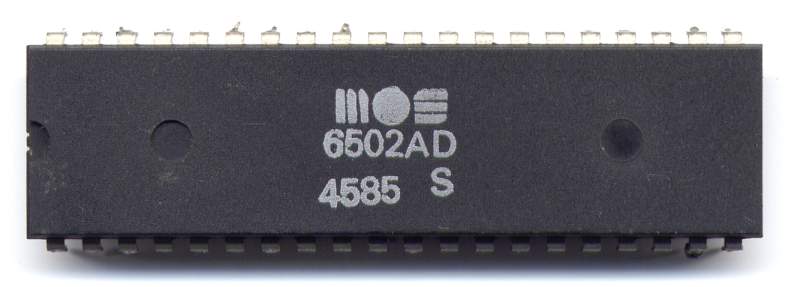 🇺🇸 United StatesMOS Technology 6502
An 8-bit microprocessor from 1975 that made cheap home computing possibleCPU · 8-bit · 1975
 🇺🇸 United StatesPOKEY
Atari I/O chip for sound, keyboard and paddlesAnalog · Other · 1979
 🇺🇸 United StatesJaguar
Low-power x86 microarchitecture for consoles and embedded systemsCPU · x86 · 2013
 WorldMOS 6507
A low-cost 8-bit 6502 variant in a 28-pin package with an 8 KB address rangeCPU · Other · 1975
 🇺🇸 United States and 1 moreDEC T-11
DEC's first single-chip PDP-11 microprocessor, built for embedded control workCPU · Other · 1982
🇺🇸 United StatesZen
AMD's processor microarchitecture family behind Ryzen, Threadripper and Epyc chipsCPU · x86 · 2017
🇺🇸 United StatesAY-3-8900
Video display controller for the Mattel Intellivision consoleGPU
🇺🇸 United StatesTiger Lake
11th generation mobile processors from Intel using Willow Cove coresCPU · x86 · 2020
🇺🇸 United StatesGulftown
Intel's six-core 32 nm desktop and server processor, sold as Core i7 and XeonCPU · x86 · 2010
 🇺🇸 United StatesCell Broadband Engine
A multi-core RISC processor pairing one PowerPC core with eight vector coprocessors.CPU · Power · 2007
 🇨🇦 CanadaR420
ATI GPU core for Radeon X800 graphics cardsGPU · GPU architecture · 2004
 WorldGeForce 700 series
Nvidia graphics card series from 2013 using Kepler and Maxwell chipsGPU · GPU architecture · 2013
🇺🇸 United StatesRDNA 2
AMD GPU microarchitecture for gaming and consolesGPU · GPU architecture · 2020
🇯🇵 JapanPICA200
Low-power GPU core for embedded devices and handheld consolesGPU · GPU architecture · 2005
🇯🇵 JapanYamaha YM2610
FM synthesis sound chip for arcade and home consolesAnalog · 1987
WorldXDR DRAM
High-bandwidth memory interface for consoles and GPUsMemory
🇺🇸 United StatesMOS Technology 6532
Integrated circuit combining RAM, I/O ports and a timer for 1970s systems.Microcontroller · Other
 🇺🇸 United StatesANTIC
Video display controller for Atari 8-bit computers and the 5200 consoleSoC · Other · 1978
🇺🇸 United StatesSN76489
Programmable sound generator chip for 1980s computers and consolesAnalog · 1979
 🇯🇵 JapanYM2413
Cost-reduced FM synthesis sound chip by YamahaAnalog · Other · 1986
 🇯🇵 JapanYamaha OPN
Family of FM synthesis sound chips for computers and gamesAnalog · 1984
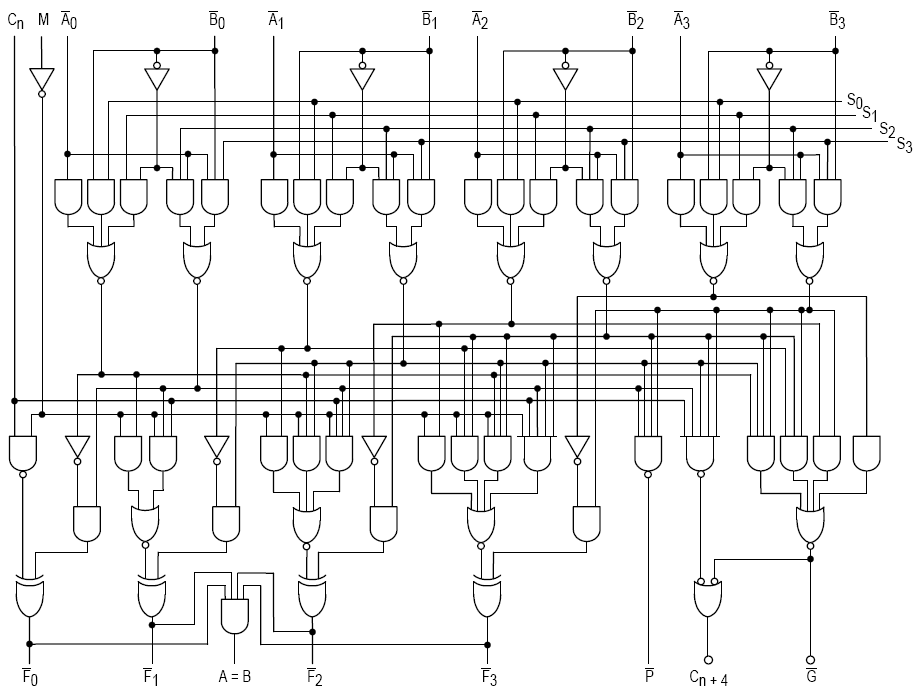 🇺🇸 United States74181
4-bit slice ALU, the first complete arithmetic logic unit on one chipCPU · Other · 1970
 🇺🇸 United StatesAMD APU
AMD chips combining CPU and GPU on one dieCPU · x86 · 2011
 🇬🇧 United KingdomARM9
32-bit RISC processor core family for microcontrollersMicrocontroller · Arm · 1998
🇺🇸 United StatesARM Cortex-A78
64-bit ARMv8.2-A CPU core designed by ARM for mobile and embedded devices.CPU · Arm · 2020
 🇺🇸 United StatesTuring
Nvidia GPU microarchitecture with real-time ray tracing and AI coresGPU · GPU architecture · 2018
 🇺🇸 United StatesPeripheral Interface Adapter
Parallel I/O chip for early microprocessor systemsAnalog · Other · 1976
 WorldGeForce 4 series
Fourth generation of Nvidia GeForce graphics processorsGPU · GPU architecture · 2002
 WorldARM7
A family of 32-bit RISC cores licensed by ARM for microcontroller useCPU · Arm · 1993
 🇨🇦 CanadaATI Rage
Graphics chipset series by ATI with 2D, video and 3D accelerationGPU · GPU architecture · 1996
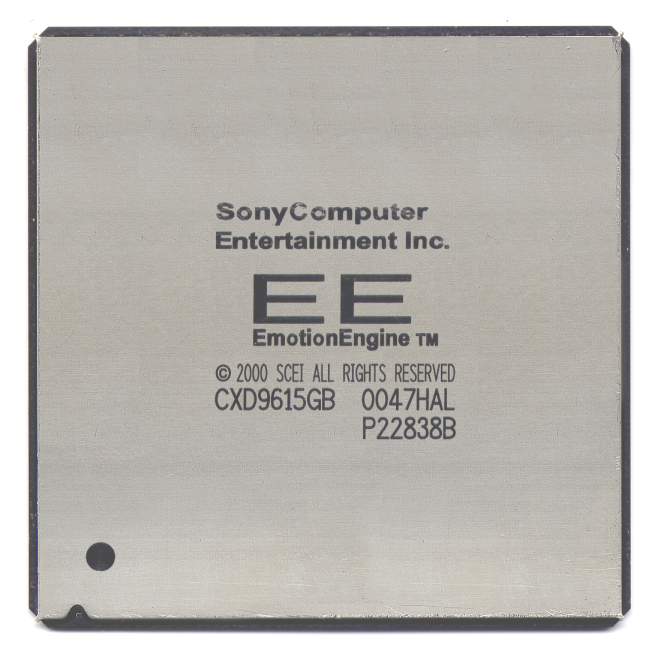 🇯🇵 JapanEmotion Engine
Sony and Toshiba's CPU for the PlayStation 2 consoleCPU · MIPS · 1999
🇺🇸 United StatesWDC 65C816
16-bit microprocessor from the 6502 family with 24-bit addressingCPU · Other · 1985
 🇺🇸 United StatesGeneral Instrument CP1600
A 16-bit microprocessor from 1975, best known inside the Intellivision consoleCPU · Other · 1975
 🇺🇸 United StatesPentium III
Intel's 32-bit P6 desktop and server CPU line, launched in 1999 with SSE.CPU · x86 · 1999
 🇺🇸 United StatesMotorola 68000
A 16/32-bit CISC microprocessor introduced by Motorola in 1979CPU · 68k · 1979
 🇺🇸 United StatesSignetics 2650
8-bit microprocessor from 1975 modelled on the IBM 1130 minicomputerCPU · 8-bit · 1975
 🇺🇸 United StatesZilog Z80
An 8-bit microprocessor released in 1976 that became a staple of early personal computing and embedded systems.CPU · Other · 1976
 🇺🇸 United StatesRCA 1802
8-bit CMOS microprocessor family from RCA, first of its kindCPU · 8-bit · 1974
 🇺🇸 United StatesZen 2
AMD's seventh-nanometre processor design used in Ryzen, Epyc and game consoles.CPU · x86 · 2019
Photo credits on this page
The small pictures above come from Wikimedia Commons under free licences. Some are cropped to fit.
- GeForce 256: Hyins, Public domain, source
- Cell Broadband Engine: Greenpro, CC BY-SA 3.0, source
- Microsoft XCPU (Xenon): Konstantin Lanzet, CC BY 3.0, source
- GeForce RTX 50 series: 极客湾Geekerwan, CC BY 3.0, source
- AMD APU: Wikiinger, CC0, source
- Peripheral Interface Adapter: Swtpc6800 en:User:Swtpc6800 Michael Holley, Public domain, source
- Emotion Engine: Unknown author, CC BY-SA 3.0, source
- MOS Technology 6502: Dirk Oppelt, CC BY-SA 3.0, source
- POKEY: RodCastler, CC BY-SA 3.0, source
- Jaguar: Fritzchens Fritz, CC0, source
- MOS 6507: Konstantin Lanzet, CC BY 3.0, source
- DEC T-11: Pauli Rautakorpi, CC BY 3.0, source
- 74181: Unknown author, CC BY-SA 3.0, source
- ARM9: Raimond Spekking, CC BY-SA 4.0, source
- Turing: Fritzchens Fritz, CC0, source
- GeForce 4 series: Hyins, Public domain, source
- ATI Rage: Trio3D, CC BY-SA 3.0, source
- R420: Raimond Spekking, CC BY-SA 4.0, source
- GeForce 700 series: Hyins, Public domain, source
- ANTIC: Rod Castler, CC BY-SA 3.0, source
- YM2413: Baz1521, CC BY-SA 3.0, source
- Yamaha OPN: TYalaA, CC BY-SA 4.0, source
- General Instrument CP1600: Evan-Amos, CC BY-SA 3.0, source
- Pentium III: Konstantin Lanzet, CC BY-SA 3.0, source
- Motorola 68000: en:User:ArnoldReinhold, CC BY-SA 3.0, source
- Signetics 2650: Konstantin Lanzet, GFDL, source
- Zilog Z80: Zilog Inc., Public domain, source
- RCA 1802: Konstantin Lanzet (with permission), CC BY-SA 3.0, source
- Zen 2: Fritzchens Fritz, CC0, source
- ARM7: Raimond Spekking, CC BY-SA 4.0, source
- Rockchip RK3288: Les Pounder, CC BY-SA 2.0, source
- Fermi: Department of Energy-Office of Public Affairs, restored by Yann, Public domain, source
- Kepler: Fritzchens Fritz, CC0, source
- Maxwell: Blakegripling ph, CC BY-SA 4.0, source
- Kelvin: Russell & Sons, London., No restrictions, source
- Gekko: Baz1521, CC BY-SA 3.0, source
- Broadway: ZyMOS, CC BY-SA 4.0, source
- Ricoh 2A03: PantheraLeo1359531, CC BY 4.0, source
- Tegra: Raimond Spekking, CC BY-SA 4.0, source