Games consoles
The processors and graphics chips inside home and handheld consoles. 195 chips on EveryChip so far.
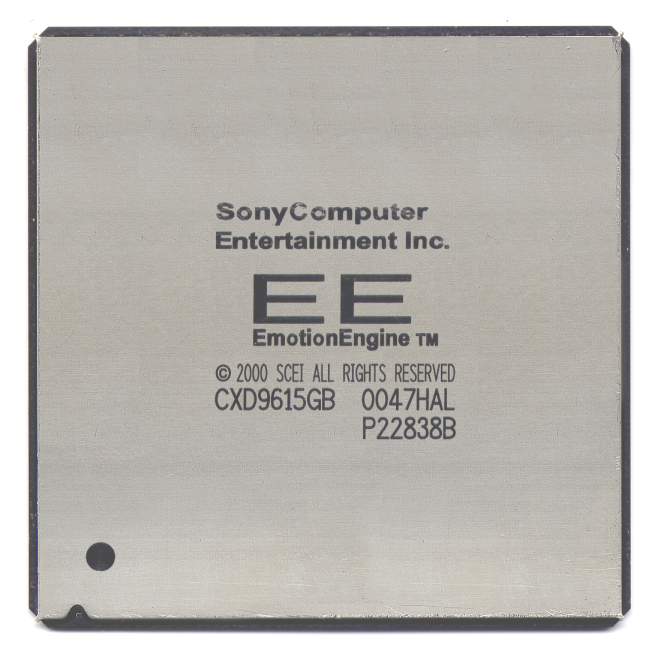
Games consoles have driven chip design since the 1970s. Each console uses a fixed set of chips for years, made in tens of millions, so its makers can afford custom designs. From the Atari 2600's TIA and the NES's Ricoh 2A03 to the PlayStation 2's Emotion Engine and the PlayStation 3's Cell, console chips were often unusual. Recent PlayStation and Xbox consoles use custom AMD SoCs.
Custom chips
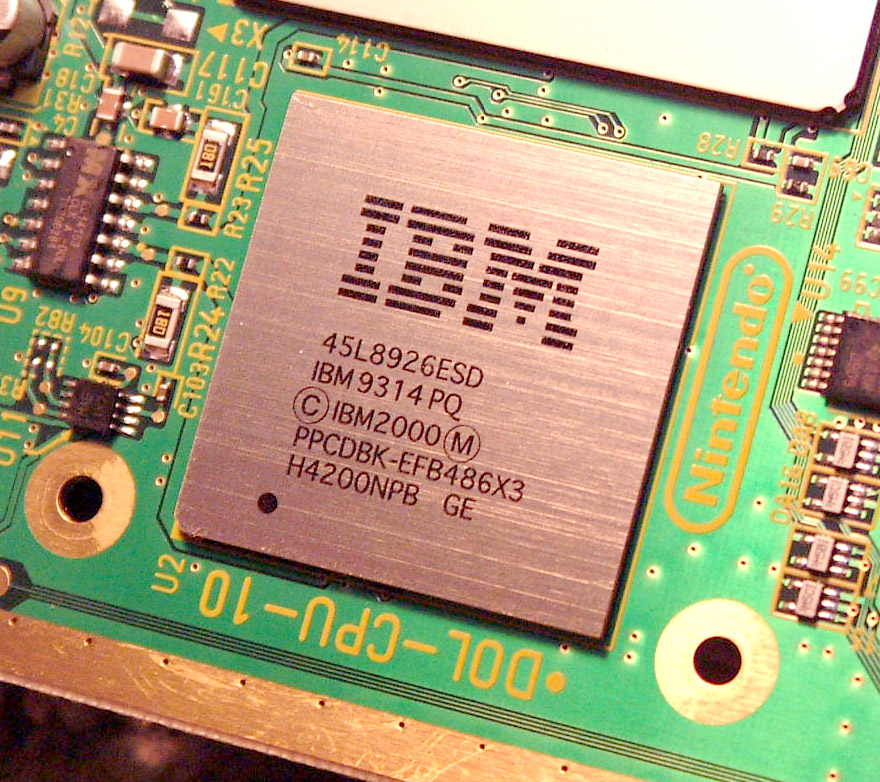
Early consoles needed chips that could draw sprites and scroll backgrounds on a TV with very little memory. Later, the PlayStation 2's vector units and the Cell's eight helper cores gave great power to developers who mastered them. IBM supplied the processors of the GameCube, Wii, Xbox 360 and PlayStation 3 in the same years.
PC-like consoles
The PlayStation 4 and Xbox One of 2013 both used AMD SoCs with x86 CPU cores and Radeon graphics, and their 2020 successors use AMD Zen 2 and RDNA 2. Nintendo chose Nvidia's Tegra X1 for the Switch of 2017 and a newer Nvidia chip for the Switch 2 of 2025. Handheld gaming PCs, such as Valve's Steam Deck, also use AMD chips.
Famous games consoles chips





Further reading
 🇺🇸 United StatesPeripheral Interface Adapter
Parallel I/O chip for early microprocessor systemsAnalog · Other · 1976
 🇺🇸 United StatesPOKEY
Atari I/O chip for sound, keyboard and paddlesAnalog · Other · 1979
🇯🇵 JapanYamaha YM2610
FM synthesis sound chip for arcade and home consolesAnalog · 1987
🇺🇸 United StatesSN76489
Programmable sound generator chip for 1980s computers and consolesAnalog · 1979
 🇯🇵 JapanYM2413
Cost-reduced FM synthesis sound chip by YamahaAnalog · Other · 1986
 🇯🇵 JapanYamaha OPN
Family of FM synthesis sound chips for computers and gamesAnalog · 1984
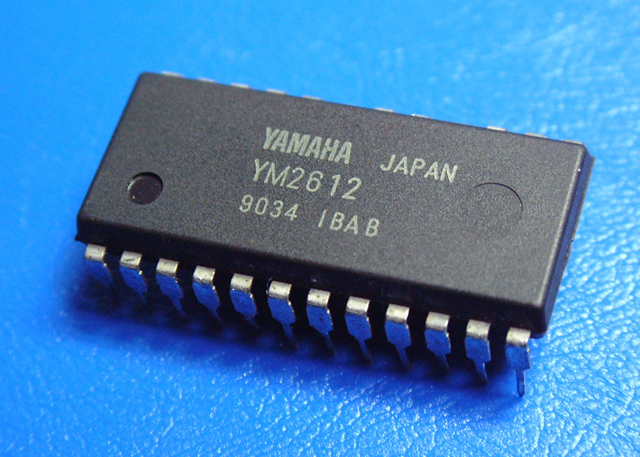 🇯🇵 JapanYM2612
Six-channel FM synthesis sound chip for Sega Mega DriveAnalog
🇯🇵 JapanYamaha YM2151
Eight-channel FM synthesis sound chip by YamahaAnalog · 1984
 🇯🇵 JapanYM2608
Yamaha FM synthesis sound chip for NEC computersAnalog
 🇯🇵 JapanYamaha YM2203
Six-channel FM synthesis and SSG sound chip by YamahaAnalog
 🇯🇵 JapanYamaha OPL
Family of FM synthesis sound chips by Yamaha for PCs and games.Analog · 1984
 🇺🇸 United StatesMOS Technology SID
Programmable sound generator chip for Commodore home computersAnalog · 1982
🇺🇸 United StatesNCR 53C9x
SCSI controller family for workstations and consolesAnalog
 🇺🇸 United StatesTMS9918
Texas Instruments video display controller from 1979Analog · 1979
 🇺🇸 United StatesAY-3-8910
Three-voice programmable sound generator chip from 1978Analog · 1978
 🇺🇸 United StatesSP0256
Voice synthesis chip by General Instrument from the early 1980sAnalog · Other · 1981
 🇺🇸 United StatesSN76477
Analog sound chip for arcade games and toysAnalog · Other · 1978
🇳🇱 NetherlandsSAA1099
Six-voice stereo sound generator chip from PhilipsAnalog · 1987
🇯🇵 JapanYamaha YM3812
FM synthesis sound chip for PC audioAnalog · 1985
🇯🇵 JapanYM3526
First Yamaha FM synthesis sound chip for computers and gamesAnalog · 1984
🇯🇵 JapanYMF262
FM synthesis sound chip for PC audioAnalog · 1990
🇯🇵 JapanYamaha YMZ280B
Eight-channel PCM sound chip for arcade gamesAnalog
 🇯🇵 JapanYamaha YMF292
Sound chip for Sega Saturn and arcade boardsAnalog
🇺🇸 United StatesSN76477
Analog sound chip for arcade games and toysAnalog · Other · 1978
Photo credits on this page
The small pictures above come from Wikimedia Commons under free licences. Some are cropped to fit.
- Cell Broadband Engine: Greenpro, CC BY-SA 3.0, source
- Microsoft XCPU (Xenon): Konstantin Lanzet, CC BY 3.0, source
- Peripheral Interface Adapter: Swtpc6800 en:User:Swtpc6800 Michael Holley, Public domain, source
- Emotion Engine: Unknown author, CC BY-SA 3.0, source
- POKEY: RodCastler, CC BY-SA 3.0, source
- YM2413: Baz1521, CC BY-SA 3.0, source
- Yamaha OPN: TYalaA, CC BY-SA 4.0, source
- Yamaha YMF292: Unknown author, CC BY-SA 3.0, source
- TMS9918: Baz1521 at Japanese Wikipedia, CC BY-SA 3.0, source
- AY-3-8910: Seanriddle, CC BY-SA 4.0, source
- SP0256: Myself User:ZyMOS, CC BY-SA 4.0, source
- SN76477: Leomil72, Public domain, source
- YM2612: Baz1521 at Japanese Wikipedia, CC BY-SA 3.0, source
- YM2608: rance3, CC BY-SA 3.0, source
- Yamaha YM2203: Shiru at Russian Wikipedia, Public domain, source
- Yamaha OPL: Original uploader was Shiru at ru.wikipedia, CC BY-SA 3.0, source
- Gekko: Baz1521, CC BY-SA 3.0, source
- Broadway: ZyMOS, CC BY-SA 4.0, source
- Ricoh 2A03: PantheraLeo1359531, CC BY 4.0, source
- MOS Technology SID: Taras Young, CC BY-SA 4.0, source
- Tegra: Raimond Spekking, CC BY-SA 4.0, source