
YM2608
Yamaha FM synthesis sound chip for NEC computers
The YM2608 is a sound chip developed by Yamaha as part of its OPN family. It succeeded the YM2203 and provided FM synthesis, square waves, and sample playback for NEC PC-8801 and PC-9801 series computers.
- Successor to the Yamaha YM2203 sound chip
- Features six-channel FM synthesis with four operators
- Used in NEC PC-8801 and PC-9801 computer series
- Includes built-in ROM for six rhythm percussion tones
- Basis for the Sega Mega Drive YM2612 chip
What it is
The YM2608, also known as OPNA, is a sound chip created by Yamaha. It belongs to the OPN family of frequency modulation synthesis chips. This component served as the successor to the earlier YM2203 model. It was widely used in NEC personal computers, specifically the PC-8801 and PC-9801 series. The chip integrates multiple audio generation methods into a single package, allowing for complex sound production in home computing systems of that era.
How it came about
Yamaha developed the YM2608 to replace the YM2203 within its product line. It became a standard audio component for NEC computer systems. The design later influenced other chips in the same family. A subsequent version called the YMF288 or OPN3 was created for later sound cards. This newer model removed several features to reduce cost and size while adding power saving modes.
Inside the chip
The chip contains four distinct audio modules. The main section provides six channels of FM synthesis with four operators per channel. It supports eight different algorithms for connecting these operators. A second module implements the YM2149 sound generator, offering three square wave channels and noise. A third section handles single channel ADPCM samples at various rates. The final module plays six percussion sounds from internal read-only memory. It also includes timers and general purpose input output ports.
How it was made
Specific manufacturing details such as the process node or transistor count are not provided in the available records. The chip was designed by Yamaha. It operates alongside a YM3016 stereo digital to analog converter to produce audio output. Later variants like the YMF288 were produced in smaller physical packages including 28-pin and 64-pin formats.
Where it went
This sound chip was primarily found in NEC PC-8801 and PC-9801 series computers. These machines were popular in the Japanese market for both business and home use. The audio capabilities allowed these systems to play complex music and sound effects. The architecture also formed the basis for audio chips in arcade systems and game consoles from other manufacturers.
Versions and family
The YM2608 led to the creation of the YM2610 and YM2612. The YM2610 kept similar specifications and was used in SNK Neo-Geo systems. The YM2612 was a simplified version without ADPCM or SSG channels, used in the Sega Mega Drive. The YMF288 succeeded the YM2608 directly, removing some features like GPIO ports and composite sinusoidal modeling to create a smaller, more efficient chip for later PC-9801 sound cards.
Why it matters
The YM2608 established a standard for audio in NEC personal computers. Its design influenced the sound hardware of major gaming consoles and arcade boards. The FM synthesis techniques it employed became characteristic of the audio landscape in late twentieth century computing. It remains a notable example of integrated sound generation in microcomputer history.
Questions people ask about YM2608
What computers used the YM2608 chip?
The YM2608 was notably used in the NEC PC-8801 and PC-9801 series of personal computers. It provided the primary audio processing for these systems.
How many sound channels does the YM2608 have?
It has six FM synthesis channels, three SSG square wave channels, one ADPCM sample channel, and six rhythm tone channels for percussion sounds.
What is the difference between YM2608 and YMF288?
The YMF288 is a later version that removes GPIO ports, CSM, and the ADPCM source. It adds a low-power standby mode and comes in smaller physical packages.
Good reading and sources
The facts on this page come from the Wikipedia article "Yamaha YM2608", written by its contributors and used under the CC BY-SA 4.0 licence, and from its Wikidata record (CC0). EveryChip rewrote the text in its own words, with AI assistance, and compares every page with the article to make sure no passage is copied. It may be reused under the same CC BY-SA 4.0 licence with a link back.
It may contain mistakes, and figures change over time. Nothing here is investment or buying advice. If something is wrong, tell us. Last refreshed 2026-11-14.
Like YM2608
All analog, power and mixed-signal 🇺🇸 United StatesPeripheral Interface Adapter
Parallel I/O chip for early microprocessor systemsAnalog · Other · 1976
🇺🇸 United StatesSN76489
Programmable sound generator chip for 1980s computers and consolesAnalog · 1979
 🇯🇵 JapanYamaha OPN
Family of FM synthesis sound chips for computers and gamesAnalog · 1984
More from Yamaha
All of them 🇯🇵 JapanYamaha YM2203
Six-channel FM synthesis and SSG sound chip by YamahaAnalog
 🇯🇵 JapanYamaha V9958
Video display processor for MSX2+ and turbo R computersGPU
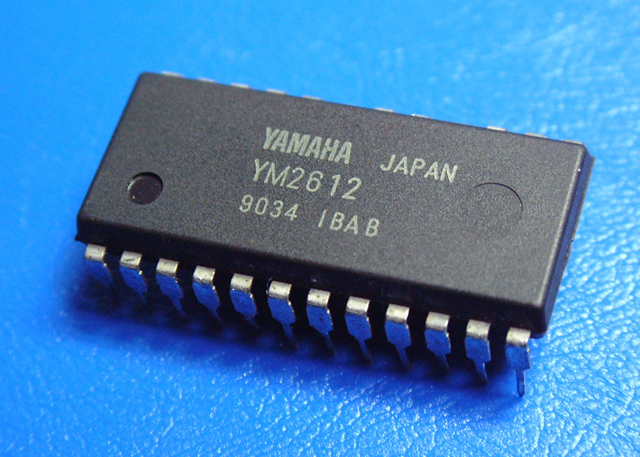 🇯🇵 JapanYM2612
Six-channel FM synthesis sound chip for Sega Mega DriveAnalog
 🇯🇵 JapanMSX-Engine
Integrated circuit combining MSX computer functions into one chip.SoC · Other