
Yamaha V9958
Video display processor for MSX2+ and turbo R computers
The Yamaha V9958 is a video display processor designed for home computers in the MSX2+ and MSX turbo R series. It succeeded the V9938 by adding advanced colour modes and scrolling features, though it saw less widespread adoption than its predecessor.
- Supports up to 19,268 colours in YJK mode
- Successor to the Yamaha V9938 video processor
- Used in MSX2+ and MSX turbo R computers
- Includes hardware acceleration for copy and fill
What it is
The Yamaha V9958 is a specialised video display processor. It manages graphics output for specific home computer systems, primarily the MSX2+ and MSX turbo R lines. This chip acts as the successor to the earlier V9938 model found in standard MSX2 machines. Its primary role is to render text and images on screen, supporting various resolutions and colour depths. The component also served as the core for the TI Image Maker expansion card used with the TI-99/4A computer. It introduced new graphical capabilities while removing some legacy functions from previous designs.
How it came about
This processor was developed to extend the graphical capabilities of the MSX computer standard. It followed the V9938, which had established the baseline for MSX2 video performance. Engineers aimed to improve colour reproduction and scrolling smoothness for these home systems. The chip also found a niche market outside the MSX ecosystem through its use in video expansions for Texas Instruments hardware. Despite its technical improvements, the V9958 did not achieve the same level of market penetration as the V9938.
Inside the chip
The architecture supports several distinct display modes. It can handle text displays at 80 by 24 or 32 by 24 characters. Graphical resolutions include 512 by 212 pixels with limited colours, and 256 by 212 pixels with extensive palettes. A key innovation is the YJK mode, which allows up to 19,268 simultaneous colours. This mode operates similarly to YUV colour spaces. The chip includes hardware acceleration for basic drawing commands like copying, lining, and filling. It also features horizontal and vertical scroll registers for smoother movement. Interlacing support doubles the vertical resolution when needed.
How it was made
Specific details regarding the manufacturing process node are not available in the provided records. The transistor count and physical packaging format are also unspecified. The chip requires video random access memory to function, supporting a base of 128 kilobytes plus an additional 64 kilobytes of expanded VRAM. This memory configuration enables the higher colour depths and resolutions that distinguish it from earlier models.
Where it went
The primary application for this processor was in the MSX2+ and MSX turbo R home computers. These machines were popular in certain regions for gaming and educational software. The chip enabled richer visual experiences compared to earlier eight-bit systems. It was also integrated into the TI Image Maker, a video expansion module for the TI-99/4A. This allowed users of that older platform to access enhanced graphical features. The hardware accelerated commands helped improve performance in applications requiring frequent screen updates.
Versions and family
The V9958 is the direct successor to the Yamaha V9938. Key differences include the addition of horizontal scrolling registers and YJK graphics modes. Conversely, it removed support for lightpen and mouse functions, as well as composite video output. In the MSX BASIC environment, screen modes are mapped to specific numbers, with Screen 9 reserved for South Korean MSX2 units. No direct successor to the V9958 is listed in the provided information.
Why it matters
While technically superior in colour handling to its predecessor, the V9958 was not as widely adopted as the V9938. Its introduction marked an attempt to push the limits of the MSX standard before the industry moved towards more powerful sixteen-bit and thirty-two-bit architectures. The YJK mode remains a notable feature for enthusiasts interested in the graphical capabilities of late eight-bit era hardware. Its use in the TI-99/4A expansion demonstrates its versatility beyond the MSX ecosystem.
Questions people ask about Yamaha V9958
What computers used the Yamaha V9958?
This video processor was primarily used in the MSX2+ and MSX turbo R series of home computers. It was also featured in the TI Image Maker video expansion card for the TI-99/4A system.
How many colours can the V9958 display?
In its advanced YJK graphics modes, the chip can display up to 19,268 colours simultaneously at a resolution of 256 by 212 pixels. Other modes support fewer colours, such as 12,499 or standard palette sizes.
What features were removed from the previous V9938?
Compared to the V9938, the V9958 removed support for lightpen and mouse functions. It also eliminated the composite video output function, focusing instead on improved graphical modes and scrolling capabilities.
Good reading and sources
The facts on this page come from the Wikipedia article "Yamaha V9958", written by its contributors and used under the CC BY-SA 4.0 licence, and from its Wikidata record (CC0). EveryChip rewrote the text in its own words, with AI assistance, and compares every page with the article to make sure no passage is copied. It may be reused under the same CC BY-SA 4.0 licence with a link back.
It may contain mistakes, and figures change over time. Nothing here is investment or buying advice. If something is wrong, tell us. Last refreshed 2026-11-14.
Like Yamaha V9958
All graphics processors 🇬🇧 United KingdomVideoCore
Low-power mobile multimedia processor series by BroadcomGPU · Arm
WorldAmiga Hombre
Unreleased RISC-based graphics and system chipset for Amiga computers.GPU · RISC
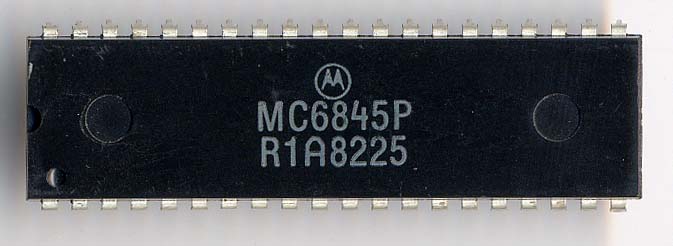 🇺🇸 United StatesMotorola 6845
Display controller for 1980s home computers and early PC graphics cardsGPU
 🇫🇷 FranceThomson EF936x
Graphic Display Processor by Thomson-EFCIS from the late 1970sGPU · 1977
More from Yamaha
All of them 🇯🇵 JapanYamaha YM2203
Six-channel FM synthesis and SSG sound chip by YamahaAnalog
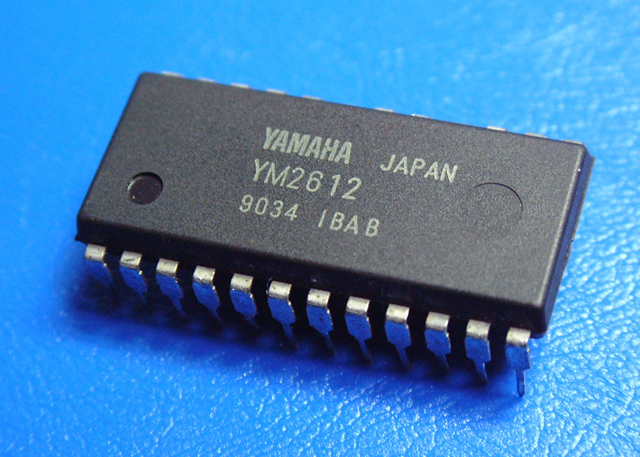 🇯🇵 JapanYM2612
Six-channel FM synthesis sound chip for Sega Mega DriveAnalog
 🇯🇵 JapanYM2608
Yamaha FM synthesis sound chip for NEC computersAnalog
 🇯🇵 JapanMSX-Engine
Integrated circuit combining MSX computer functions into one chip.SoC · Other