
Yamaha YM2203
Six-channel FM synthesis and SSG sound chip by Yamaha
The YM2203 is a programmable sound generator developed by Yamaha. It combines three FM synthesis channels with three SSG channels. This chip powered audio in many arcade games and home computers during the 1980s and early 1990s.
- Combines 3 FM channels and 3 SSG channels
- Uses 4 operators per FM channel with 8 algorithms
- Requires external YM3014 DAC for analog output
- Used in arcade hits like Space Harrier and Darius
What it is
The YM2203, also known as OPN or FM Operator Type-N, is a six-channel sound chip created by Yamaha. It serves as the foundation for the OPN family of FM synthesis chips. The device generates audio using frequency-modulated digital sine waves. It was widely adopted in video game systems and personal computers throughout the 1980s and early 1990s. Its design allows for complex sound creation through digital signal processing before converting to analog output.
How it came about
Yamaha developed the YM2203 as the first member of its OPN series. This chip became a standard component for audio in many electronic entertainment systems. It addressed the need for richer sound capabilities in arcade machines and home computers. The chip remained in use for over a decade, influencing subsequent designs in the same product line. Its introduction marked a shift towards more sophisticated digital audio synthesis in consumer electronics.
Inside the chip
The chip features three concurrent FM synthesis voices and three SSG channels. Each FM channel uses four operator cells that generate 13-bit sine waves. These operators can be connected in eight different patterns, called algorithms. Channel three allows independent frequency settings for its operators, enabling dissonant harmonics. An internal module replicates the functions of the YM2149F SSG chip, including noise generation and GPIO ports. Two interval timers are also included. The digital output passes through an external DAC, typically the YM3014, to produce analog sound.
How it was made
Yamaha designed and produced the YM2203. The chip relies on an external companion chip, the YM3014, for digital-to-analog conversion. This separation allows the main processor to handle digital synthesis while the DAC manages the final audio signal quality. Specific manufacturing details such as process node or transistor count are not provided in the available records.
Where it went
This sound chip appeared in numerous arcade titles such as Space Harrier, Ghosts 'n Goblins, and Bubble Bobble. It was also integrated into several personal computer models, including the NEC PC-8801 and PC-9801, as well as the Fujitsu FM-7. The Elka EK 44 synthesizer utilized this chip for its audio generation. Its versatility made it a popular choice for both gaming cabinets and home computing platforms.
Versions and family
The YM2203 initiated the OPN family. Later iterations include the YM2608 (OPNA), YM2610 (OPNB), and YM2612 (OPN2). These successors expanded on the original design with additional channels or features. The YM2203 itself contains an internal implementation of the YM2149F SSG functionality, merging two distinct sound generation methods into one package.
Why it matters
As the progenitor of the OPN series, the YM2203 established a standard for FM synthesis in arcade and computer audio. Its ability to produce complex tones via algorithmic operator connections influenced sound design in many classic games. The chip helped define the auditory landscape of 1980s interactive entertainment, providing a distinct sonic character that remains recognizable today.
Questions people ask about Yamaha YM2203
What does the acronym OPN stand for?
OPN stands for FM Operator Type-N. It is the alternative name for the Yamaha YM2203 sound chip, which uses frequency modulation to generate audio signals.
How many sound channels does the YM2203 have?
The chip has six channels in total. Three are for FM synthesis and three are for SSG (Software Controlled Sound Generator) operations, which mimic older square wave sounds.
Does the YM2203 produce analog sound directly?
No, it outputs digital signals. It requires an external companion chip, usually the YM3014, to convert these digital values into analog audio that speakers can play.
Good reading and sources
The facts on this page come from the Wikipedia article "Yamaha YM2203", written by its contributors and used under the CC BY-SA 4.0 licence, and from its Wikidata record (CC0). EveryChip rewrote the text in its own words, with AI assistance, and compares every page with the article to make sure no passage is copied. It may be reused under the same CC BY-SA 4.0 licence with a link back.
It may contain mistakes, and figures change over time. Nothing here is investment or buying advice. If something is wrong, tell us. Last refreshed 2026-11-14.
Like Yamaha YM2203
All analog, power and mixed-signal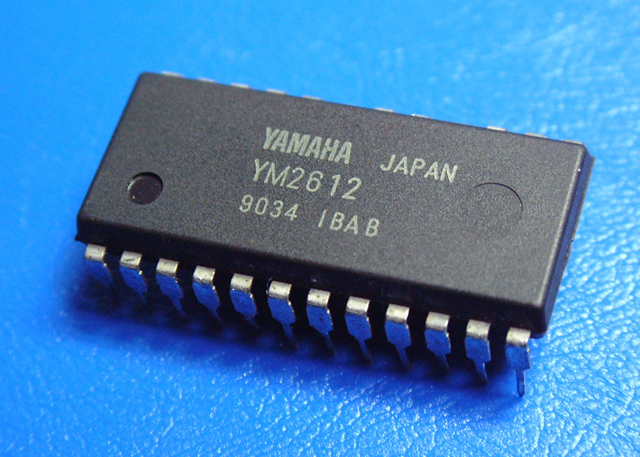 🇯🇵 JapanYM2612
Six-channel FM synthesis sound chip for Sega Mega DriveAnalog
 🇯🇵 JapanYamaha YMF292
Sound chip for Sega Saturn and arcade boardsAnalog
 🇺🇸 United StatesPeripheral Interface Adapter
Parallel I/O chip for early microprocessor systemsAnalog · Other · 1976
 🇺🇸 United StatesAY-3-8910
Three-voice programmable sound generator chip from 1978Analog · 1978
More from Yamaha
All of them 🇯🇵 JapanYM2608
Yamaha FM synthesis sound chip for NEC computersAnalog
 🇯🇵 JapanYamaha V9958
Video display processor for MSX2+ and turbo R computersGPU
 🇯🇵 JapanMSX-Engine
Integrated circuit combining MSX computer functions into one chip.SoC · Other
 🇯🇵 JapanYamaha YM2164
FM synthesis sound chip for MIDI synthesizers and expansion cardsAnalog · Other