
Yamaha YMF292
Sound chip for Sega Saturn and arcade boards
Yamaha developed the YMF292, also known as the SCSP, for the Sega Saturn console. It provides 32 channels of FM or PCM audio and digital signal processing for games and arcade machines.
- Runs at 22.58 MHz with 44.1 kHz playback
- Features 32 sound generators for FM or PCM
- Used in Sega Saturn and Model 3 arcade boards
- Includes FH-1 DSP with 16 effect presets
- Lacks hardware audio decompression support
What it is
The YMF292 is a multi-function sound integrated circuit created by Yamaha. It is widely recognised by its alias, the Sega Custom Sound Processor or SCSP. This chip served as the primary audio engine for the Sega Saturn home console. It also powered several arcade systems, including the ST-V, Model 2, and Model 3 boards. The component handles both frequency modulation synthesis and pulse-code modulation digital audio. It operates at a clock speed of 22.58 MHz and supports playback at 44.1 kHz. Users can load eight-bit or sixteen-bit waveform data into the system for high-quality sound reproduction.
How it came about
Yamaha designed this processor specifically for Sega’s hardware needs during the mid-1990s. The goal was to create a versatile audio solution that could handle complex musical scores and sound effects simultaneously. It became a standard part of the Saturn architecture and was adapted for use in Sega’s arcade divisions. The chip allowed developers to mix various audio types without relying on external decompression hardware. Its design reflected the transition from pure synthesis to digital sample-based audio in video games.
Inside the chip
The core of the SCSP consists of thirty-two independent sound generators. Each generator can operate in either FM synthesis mode or as a PCM digital audio channel. These outputs feed into an FH-1 digital signal processor. This DSP features one hundred and twenty-eight steps and includes sixteen preset sound effects. Channels can be configured to modulate one another, allowing up to four generators to link together. Alternatively, all thirty-two generators can combine into a single channel. A seven-level interrupt controller helps manage processing tasks. The chip lacks built-in hardware audio decompression, requiring software to handle compressed formats.
How it was made
Specific details regarding the manufacturing process node and transistor count are not provided in the available records. The chip functions alongside other components in the host system. It relies on a dedicated external processor for control, such as the Motorola 68EC000 found in Sega hardware. A separate RAM chip stores digital audio data and sound programming instructions. An external digital-to-analogue converter chip is also required to output the final audio signal to speakers or headphones.
Where it went
This sound processor is best known for its role in the Sega Saturn home video game console. It provided the audio backbone for hundreds of titles released on that platform. Beyond home gaming, the chip was integral to Sega’s arcade infrastructure. It powered the ST-V arcade board, which shared architecture with the Saturn. It also appeared in the more powerful Model 2 and Model 3 arcade systems. These machines ran popular fighting games and racing simulators that relied on the SCSP for their distinctive soundtracks and effects.
Versions and family
The primary identifier for this chip is the YMF292-F model number. It is most commonly referred to as the SCSP in technical documentation and user manuals. There are no distinct successor models listed in the provided information, nor are there specific predecessors mentioned. The design appears to have been a custom solution tailored for Sega’s specific requirements during that generation of hardware. It stands as a unique implementation of Yamaha’s audio technology in the console market.
Why it matters
The SCSP enabled rich audio landscapes in mid-1990s video games. Its ability to mix FM synthesis with digital samples gave composers significant flexibility. Developers could create complex musical layers while maintaining clear sound effects. The lack of hardware decompression meant that programmers had to optimise their code carefully. Despite this limitation, the chip delivered high-fidelity audio at 44.1 kHz. It remains a notable example of custom silicon designed for interactive entertainment systems.
Problems and reception
Technical manuals describe the chip as a robust tool for audio generation. The configurable channel combining allowed for creative sound design approaches. However, the absence of hardware decompression was a notable difference compared to some contemporary systems. Engineers had to manage memory and processing loads via the external controller. The integration with the Motorola 68EC000 processor provided a stable environment for executing sound programs. The seven-level interrupt controller helped maintain system responsiveness during intense audio scenes.
Questions people ask about Yamaha YMF292
What does SCSP stand for?
SCSP stands for Sega Custom Sound Processor. It is the common name for the Yamaha YMF292 chip used in Sega hardware.
How many sound channels does it have?
The chip contains thirty-two sound generators. These can function independently or combine to form complex audio channels.
Does it support compressed audio?
No, the SCSP lacks hardware audio decompression. Software must handle any compressed audio data before sending it to the chip.
Which consoles used this chip?
It was primarily used in the Sega Saturn home console. It also powered the ST-V, Model 2, and Model 3 arcade systems.
Good reading and sources
- Yamaha YMF292 on WikipediaEncyclopedia
- More photos on Wikimedia CommonsPhotos
- Wikidata recordOpen data
The facts on this page come from the Wikipedia article "Yamaha YMF292", written by its contributors and used under the CC BY-SA 4.0 licence, and from its Wikidata record (CC0). EveryChip rewrote the text in its own words, with AI assistance, and compares every page with the article to make sure no passage is copied. It may be reused under the same CC BY-SA 4.0 licence with a link back.
It may contain mistakes, and figures change over time. Nothing here is investment or buying advice. If something is wrong, tell us. Last refreshed 2026-11-14.
Like Yamaha YMF292
All analog, power and mixed-signal 🇯🇵 JapanYamaha YM2203
Six-channel FM synthesis and SSG sound chip by YamahaAnalog
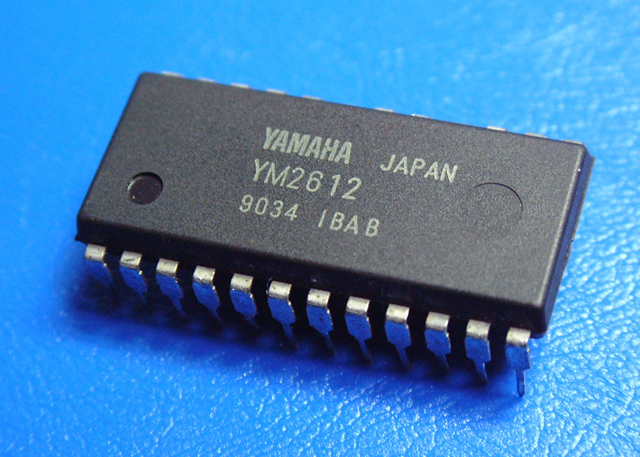 🇯🇵 JapanYM2612
Six-channel FM synthesis sound chip for Sega Mega DriveAnalog
 🇺🇸 United StatesPeripheral Interface Adapter
Parallel I/O chip for early microprocessor systemsAnalog · Other · 1976
 🇺🇸 United StatesAY-3-8910
Three-voice programmable sound generator chip from 1978Analog · 1978
More from Yamaha
All of them 🇯🇵 JapanYM2608
Yamaha FM synthesis sound chip for NEC computersAnalog
 🇯🇵 JapanYamaha V9958
Video display processor for MSX2+ and turbo R computersGPU
 🇯🇵 JapanMSX-Engine
Integrated circuit combining MSX computer functions into one chip.SoC · Other
 🇯🇵 JapanYamaha YM2164
FM synthesis sound chip for MIDI synthesizers and expansion cardsAnalog · Other