
Yamaha OPN
Family of FM synthesis sound chips for computers and games
The Yamaha OPN series comprises programmable sound generators using frequency modulation. Introduced in 1984, these chips powered audio in arcade cabinets, home consoles and personal computers throughout the late twentieth century.
- First model YM2203 released in 1984
- Uses four-operator FM synthesis algorithms
- Powered Sega Genesis and Neo Geo audio
- Includes programmable square wave generator
- Later variants featured lower power modes
What it is
The OPN family represents a line of integrated circuits designed to generate audio through digital means. Yamaha created these components to provide flexible sound capabilities for electronic devices. They combine frequency modulation synthesis with programmable square wave generation. This approach allowed developers to create complex musical tones and sound effects without relying on pre-recorded samples. The series became a standard choice for hardware manufacturers during the eighties and nineties.
How it came about
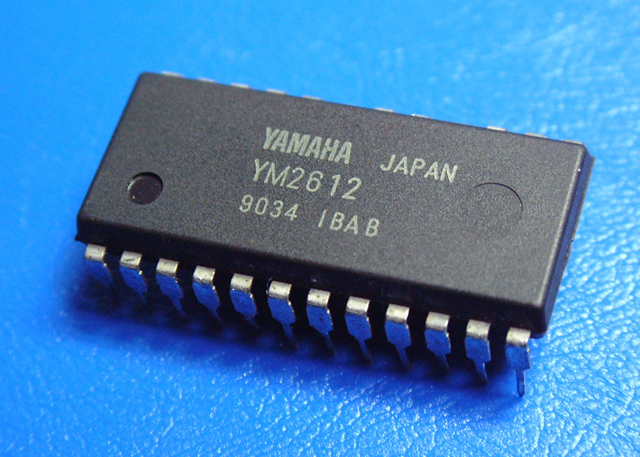
Yamaha launched the first model, the YM2203, in 1984. It established the architecture for subsequent variants. The company expanded the lineup with the YM2608 in 1986, adding more channels and stereo output. Further iterations like the YM2610 and YM2612 followed in 1987 and 1988 respectively. These releases addressed specific needs of arcade boards and home computers. By 1995, newer variants such as the YMF288 offered reduced power consumption and smaller physical footprints.
Inside the chip
These chips produce sound by modulating the frequency of digital sine waves. Each unit contains multiple operators, or cells, that generate thirteen-bit waveforms. Users can adjust volume envelopes and connect these cells in various algorithms. The four-operator structure allows for richer timbres than earlier two-operator designs. Most models include a separate section for generating simple square waves and noise. Digital outputs are converted to analog signals via internal or external converters.
How it was made
Yamaha manufactured the entire series. Later models utilized smaller packaging formats like the twenty-eight pin small outline package. Some variants integrated the digital-to-analog converter directly onto the silicon die. Others required external converter chips for mono or stereo output. The integration levels varied across the family, with some combining multiple sound generation methods on a single package.
Where it went
Sega employed the YM2612 in its Genesis console and several arcade systems. SNK used the YM2610 variant in Neo Geo hardware. Japanese computer makers like NEC and Fujitsu integrated these chips into their PC-88, PC-98 and FM Towns lines. Arcade manufacturers including Taito relied on them for coin-operated machine audio. The chips provided the primary soundtrack for countless video games from that era.
Versions and family
The family includes the original YM2203, the enhanced YM2608 with ADPCM support, and the YM2610 for arcade use. The YM2612 removed some features to suit home consoles. Later revisions like the YM3438 improved audio quality by reducing distortion. The YMF288 offered a low-power mode for portable or efficient designs. The YMF297 combined two different chip types into one package.
Why it matters
This series defined the auditory character of a generation of video games. Its distinctive frequency modulation tone is still recognized by enthusiasts today. The chips enabled affordable high-quality audio in consumer electronics before sample-based methods became dominant. They remain popular among retro computing hobbyists and chiptune musicians.


Questions people ask about Yamaha OPN
What does OPN stand for?
OPN stands for FM Operator Type-N. It refers to the specific architecture of the sound chips developed by Yamaha, which use frequency modulation with multiple operators to generate sound.
Which famous console used the YM2612?
The Sega Genesis video game console used the YM2612 chip. This variant provided six channels of FM synthesis and was central to the system's audio capabilities during its market life.
How do these chips generate sound?
They generate sound using frequency modulation of digital sine waves. Operators modify the frequency of other operators, creating complex harmonics. A digital-to-analog converter then turns these signals into audible analog audio.
Good reading and sources
The facts on this page come from the Wikipedia article "Yamaha OPN", written by its contributors and used under the CC BY-SA 4.0 licence, and from its Wikidata record (CC0). EveryChip rewrote the text in its own words, with AI assistance, and compares every page with the article to make sure no passage is copied. It may be reused under the same CC BY-SA 4.0 licence with a link back.
It may contain mistakes, and figures change over time. Nothing here is investment or buying advice. If something is wrong, tell us. Last refreshed 2026-11-14.
Like Yamaha OPN
All analog, power and mixed-signal 🇯🇵 JapanYamaha OPL
Family of FM synthesis sound chips by Yamaha for PCs and games.Analog · 1984
🇯🇵 JapanYM3526
First Yamaha FM synthesis sound chip for computers and gamesAnalog · 1984
🇯🇵 JapanYamaha YM3812
FM synthesis sound chip for PC audioAnalog · 1985
🇳🇱 NetherlandsSAA1099
Six-voice stereo sound generator chip from PhilipsAnalog · 1987
More from Yamaha
All of them
🇯🇵 JapanYamaha YM2151
Eight-channel FM synthesis sound chip by YamahaAnalog · 1984
 🇯🇵 JapanYamaha V9938
Video display processor for MSX2 home computersGPU · Other · 1985
WorldYamaha DSP-1
A 1986 digital signal processor for synthesizing multi-channel surround sound from stereo sources.DSP · 1986
🇯🇵 JapanYamaha YM2610
FM synthesis sound chip for arcade and home consolesAnalog · 1987