Space and defence
Radiation-hardened chips for satellites, probes and aircraft. 45 chips on EveryChip so far.
Chips for space and defence must survive radiation, extreme temperatures and vibration, and keep working for years where no one can repair them. Radiation can flip bits, a single-event upset, or slowly damage transistors over time. Radiation-hardened chips use special designs, processes and packaging, and are usually several generations behind commercial chips in speed. They fly in satellites, Mars rovers, space telescopes and aircraft.
Hardening chips
Designers harden chips by using insulating substrates, larger transistors, extra error-correcting memory and circuits that vote between three copies of the same logic. Testing exposes chips to particle beams. BAE Systems' RAD750, based on the PowerPC 750, has flown on NASA's Curiosity and Perseverance rovers and the James Webb Space Telescope. ESA uses SPARC-based LEON processors.
India and new approaches
India's space agency ISRO uses processors designed in-house and made at the Semi-Conductor Laboratory in Mohali, such as the Vikram 3201 presented in 2025. Some newer missions, especially small satellites, use ordinary commercial chips with software checks and shielding instead, accepting more risk for far more computing power at lower cost.
Famous space and defence chips
Further reading
 🇮🇳 IndiaShakti
Open-source RISC-V processor family from IIT Madras, spanning microcontrollers to 128-core designsCPU · RISC-V · 2018
 WorldIntersil 6100
A 12-bit CMOS microprocessor that runs the PDP-8 instruction set on one chipCPU · Other · 1975
 🇬🇧 United KingdomFerranti F100-L
A 16-bit military microprocessor built on Ferranti's bipolar CDI processCPU · Other · 1977
🇺🇸 United StatesRAD5500
Radiation-hardened PowerPC processor for space systemsCPU · Power
WorldERC32
Radiation-tolerant SPARC V7 processor for space missionsCPU · SPARC
🇷🇺 RussiaKOMDIV-32
Radiation-hardened MIPS microprocessors for spacecraftCPU · MIPS · 1999
 WorldIntel 80386EX
Embedded variant of the 386 with on-chip peripherals, launched in 1994CPU · x86 · 1994
 🇺🇸 United StatesIntel MCS-51
An 8-bit microcontroller series for embedded systems.Microcontroller · Other · 1980
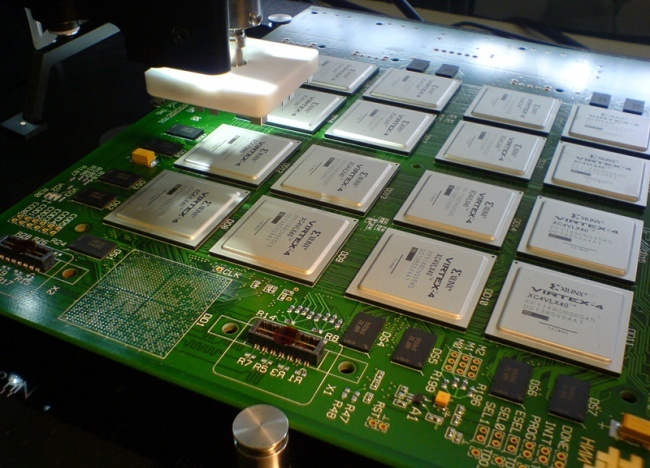 🇺🇸 United StatesVirtex
High-performance FPGA family by AMD and XilinxFPGA · Other · 1999
 🇷🇺 RussiaNeuroMatrix
DSP series with VLIW architecture for neural networks and radiosDSP · Arm · 1999
 🇺🇸 United StatesColdFire
Embedded microprocessor family derived from the Motorola 68000 architecture.Microcontroller · 68k · 1994
🇷🇺 RussiaELVEES Multicore
Russian 32-bit microprocessor and DSP series for space and industryCPU · Arm · 2004
🇷🇺 RussiaK1839
Soviet 32-bit microprocessor chipset compatible with VAX-11CPU · Other · 1989
 🇷🇺 Russia and 1 more1801 series
Soviet 16-bit microprocessors compatible with DEC PDP-11CPU · Other · 1978
🇺🇸 United StatesRHPPC
Radiation-hardened PowerPC 603e processor for aerospace useCPU · Power
🇺🇸 United StatesMongoose-V
Radiation-hardened 32-bit CPU for spacecraft computersCPU · MIPS · 2000
 🇺🇸 United StatesRAD6000
Radiation-hardened processor for NASA spacecraftCPU · Power · 1995
 🇺🇸 United StatesRAD750
Radiation-hardened PowerPC processor for spacecraft and satellitesCPU · Power · 2001
WorldPowerPC e5500
64-bit embedded microprocessor core by FreescaleCPU · Power · 2010
EuropeLEON
Radiation-tolerant SPARC V8 microprocessor core for space applicationsCPU · SPARC · 1997
🇺🇸 United StatesCOP8
8-bit microcontroller with low EMI and integrated peripheralsMicrocontroller · Other · 1988
🇷🇺 RussiaMulticlet
A multicellular microprocessor with dynamic reconfigurationCPU · Other · 2010
🇮🇳 IndiaVikram 3201
India's first home-grown 32-bit space-grade microprocessorCPU · Other · 2025
 🇺🇸 United States and 1 moreAMD Am2900
AMD's 1975 bipolar bit-slice IC family for building custom control unitsCPU · Other · 1975
WorldSHARC
A 32-bit floating-point DSP family from Analog Devices with VLIW instructionsDSP · VLIW · 1999
WorldRTX 2010
Radiation-hardened 16-bit stack processor for real-time space workCPU · Other · 1988
 🇺🇸 United StatesAMD Am9080
AMD's reverse-engineered clone of the Intel 8080, made from 1975CPU · 8-bit · 1975
 🇺🇸 United StatesRCA 1802
8-bit CMOS microprocessor family from RCA, first of its kindCPU · 8-bit · 1974
🇬🇧 United KingdomVIPER
A formally proven 32-bit microprocessor for safety-critical avionics systemsCPU · Other · 1987
 WorldOpenRISC
Open-source RISC processor architecture and reference implementationsCPU · RISC · 2000
 WorldSeaWiFS
Satellite sensor for measuring ocean chlorophyll and colour.Sensor · 1997
 WorldHazcam
Wide-angle engineering cameras for rover navigationSensor
 WorldEvent camera
Imaging sensor that reports brightness changes asynchronouslySensor
🇺🇸 United StatesCachecam
Sample verification camera for the Perseverance Mars roverSensor
 🇺🇸 United StatesMicrobolometer
Uncooled infrared sensor for thermal imaging camerasSensor · 1992
 🇺🇸 United StatesIBM 2361
Magnetic core memory expansion for IBM System/360 mainframesMemory
🇺🇸 United StatesProgrammable metallization cell
Non-volatile resistive memory using metal filamentsMemory
WorldStaring array
Two-dimensional image sensor for infrared and optical detectionSensor
 🇺🇸 United StatesCharge-coupled device
Integrated circuit sensor that converts light into digital images.Sensor · 1969
 🇺🇸 United StatesMP944
Custom MOS chipset for the F-14 Tomcat flight computerCPU · Other · 1970
 🇺🇸 United StatesQuantum well infrared photodetector
Infrared sensor using quantum wells for detectionSensor · 1987
🇬🇧 United KingdomCSX700
192-core SIMD coprocessor for high-performance computingAI accelerator · Other · 2001
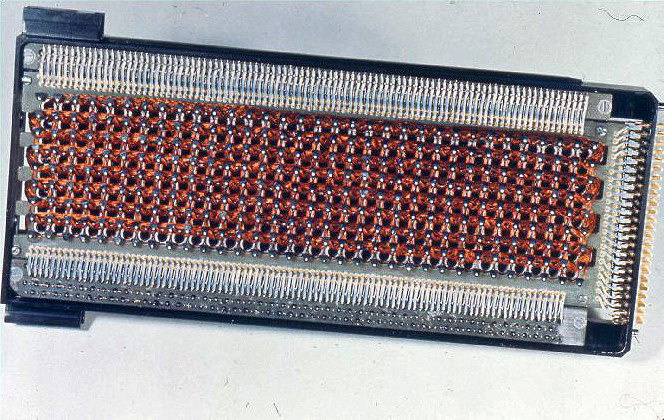 🇺🇸 United StatesCore rope memory
Read-only memory woven from magnetic cores and wireMemory
🇺🇸 United StatesRH-32
Radiation-hardened MIPS chipset for aerospace useCPU · MIPS
🇺🇸 United StatesCYPRIS
A cryptographic processor for military radios by Lockheed MartinCPU · RISC
Photo credits on this page
The small pictures above come from Wikimedia Commons under free licences. Some are cropped to fit.
- F-14 Central Air Data Computer: Camera Operator: SSGT MICHAEL D. GADDIS, USAF, Public domain, source
- Intersil 6100: Christian Bassow, CC BY-SA 4.0, source
- Ferranti F100-L: Logg Tandy, CC BY 4.0, source
- OpenRISC: Lampret, Damjan, CC BY-SA 4.0, source
- Charge-coupled device: Merzperson ( talk ) ( Uploads ), Public domain, source
- Quantum well infrared photodetector: SK, CC BY-SA 4.0, source
- Shakti: Martin.J, CC BY-SA 3.0, source
- AMD Am2900: Konstantin Lanzet (with permission), CC BY-SA 3.0, source
- AMD Am9080: Mister rf, CC BY-SA 4.0, source
- RCA 1802: Konstantin Lanzet (with permission), CC BY-SA 3.0, source
- Intel 80386EX: Konstantin Lanzet, CC BY 3.0, source
- Intel MCS-51: Konstantin Lanzet (with permission), CC BY-SA 3.0, source
- Virtex: Антракт, CC BY-SA 4.0, source
- NeuroMatrix: Dkos, CC BY-SA 3.0, source
- ColdFire: Raimond Spekking, CC BY-SA 4.0, source
- 1801 series: Konstantin Lanzet, CC BY-SA 4.0, source
- RAD6000: Henriok, CC0, source
- RAD750: Henriok, CC0, source
- Hazcam: NASA/JPL-Caltech (original uploader was Fotaun at English Wikipedia ), Public domain, source
- Core rope memory: The original uploader was Grabert at German Wikipedia ., Public domain, source
- SeaWiFS: Plumbago ( talk ), CC BY-SA 3.0, source
- Event camera: Auledas, CC BY 4.0, source
- Microbolometer: Unknown author, Public domain, source
- IBM 2361: Bubba73 , Jud McCranie, CC BY-SA 4.0, source