
RCA 1802
8-bit CMOS microprocessor family from RCA, first of its kind
COSMAC is an 8-bit microprocessor family introduced by RCA, historically notable as the first CMOS microprocessor. It began as the two-chip CDP1801R and CDP1801U, later merged into the single-chip CDP1802, which made up most production and gave the whole line its familiar name.
- First CMOS microprocessor, introduced by RCA
- Static core with no minimum clock, can stop at zero Hz
- Instructions take 16 or 24 clock cycles
- Flew on Galileo, Magellan and Hubble Space Telescope subsystems
- Still produced in 40-pin DIP as of 2026
What it is
The RCA 1802 is an 8-bit microprocessor, the best-known member of the COSMAC family from RCA. COSMAC stands for Complementary Symmetry Monolithic Array Computer. It holds a place in history as the first CMOS microprocessor, arriving at a time when nearly all rivals used NMOS fabrication. Production began with a two-chip set, the CDP1801R and CDP1801U, before these were combined into the single-chip CDP1802. That part dominated the family's output and today gives the whole line its name. Its static CMOS design meant very low power use and the ability to stop the clock entirely without losing state.
How it came about
Joseph Weisbecker started designing a small home computer in 1970, building the processor from RCA TTL chips and buying other parts from Radio Shack across several stores to avoid attention. The machine, nicknamed FRED, ran by October 1971 on about 100 chips over multiple boards. RCA management showed little interest at first, but the company later adapted the design to its COS/MOS process, sampling a two-chip version in 1974. Jerry Herzog led the single-chip implementation, which sampled in 1975 and reached production in 1976.
Inside the chip
The 1802 uses a static CMOS core with no minimum clock speed, so it can run slowly or be halted completely and simply resume. It has an 8-bit bidirectional data bus and a multiplexed 16-bit address bus, where high and low address bytes appear on the same 8 pins with a two-clock offset. A single programmable output bit, Q, and four directly testable input pins, EF1 to EF4, handle simple I/O. Instructions take 16 or 24 clock cycles, so the chip is not fast by the standards of the MOS 6502 or Intel 8080.
How it was made
RCA built the COSMAC in CMOS rather than the NMOS process common at the time, using static logic that runs cool and sips power. Radiation-hardened versions followed: a high-speed part in Silicon on Sapphire for resistance to radiation and static discharge, and another built on bulk silicon with C2L technology developed with Sandia National Laboratories. Parts came in 40-pin DIP and 44-pin PLCC packages. Suffixes marked speed grades from 3.2 MHz to 6.4 MHz, temperature ranges from -40 °C to +85 °C or -55 °C to +125 °C, and supply voltages from 4 V to 10.5 V.
Where it went
The 1802 powered early microcomputers such as the COSMAC Elf, COSMAC VIP, Netronics ELF II, Telmac 1800, Pecom 32 and 64, and the RCA Studio II console, one of the first with bitmapped graphics. Its low power drew embedded designers: Plessey payphones, Chrysler's second-generation Electronic Lean-Burn engine control, and pinball and arcade machines made in Spain. Spacecraft use is extensive, including Galileo, Magellan, the Ulysses Plasma Wave Analyzer, amateur radio satellites, and subsystems of the Hubble Space Telescope. British military equipment such as the Ptarmigan communications system also used it.
Versions and family
The line began with the two-chip CDP1801R and CDP1801U before the single-chip CDP1802 arrived. Successors CDP1804, CDP1805 and CDP1806 add an extended instruction set, on-chip RAM and ROM, and a timer, with modest speed gains, though some functions such as the DMA auto-boot loader are dropped. Part suffixes distinguish speed, temperature, voltage and package. Hughes Aircraft used the HCMP prefix and Solid State Scientific used SCP. The 40-pin DIP format is still produced as of 2026.
Why it matters
As the first CMOS microprocessor, the 1802 showed that low-power static logic could serve where NMOS parts were unsuitable, opening embedded and aerospace markets. Radiation-hardened variants were among very few such processors available when it launched. It flew on major NASA and ESA missions and stayed in production for decades, with Renesas still making it in 2008 and the line continuing in 2022. Hobbyist revivals such as the Membership Card and Elf 2000 keep it alive today.
Problems and reception
The 1802 was never a speed leader: its instructions need 16 or 24 clock cycles against 2 to 4 for most 6502 instructions. Its multiplexed address bus also adds delay compared with the Intel 8085. RCA's own Studio II console was overtaken by the Atari 2600 and cancelled in February 1978. Even so, the design found lasting favour in embedded and space work where power and reliability mattered more than raw speed.


Questions people ask about RCA 1802
What makes the RCA 1802 historically important?
It was the first microprocessor built with CMOS technology, at a time when nearly all rivals used NMOS. That static CMOS design let it run at very low power, stop the clock entirely without losing state, and run cool, which suited embedded and aerospace work.
Who designed it and when did it appear?
Joseph Weisbecker began the design around 1970 using TTL chips in a machine called FRED. RCA adapted it to CMOS, sampling a two-chip version in 1974. Jerry Herzog led the single-chip CDP1802, sampled in 1975 and in production from 1976.
Why was it popular in spacecraft?
Its CMOS construction draws little power and runs cool, and radiation-hardened versions were built in Silicon on Sapphire and in bulk silicon with Sandia National Laboratories. At the time few other radiation-hardened microprocessors existed, so it suited satellites and probes well.
What came after the 1802?
RCA followed it with the CDP1804, CDP1805 and CDP1806. These add an extended instruction set, on-chip RAM and ROM, and a timer, with some versions running a little faster, though features such as the DMA auto-boot loader are lost.
Is it still available?
Yes. Radiation-hardened versions remained in production as of 2022, having been made by Intersil and later Renesas as of 2008, and the line continues to be produced in its original 40-pin DIP package as of 2026.
Good reading and sources
The facts on this page come from the Wikipedia article "RCA 1802", written by its contributors and used under the CC BY-SA 4.0 licence, and from its Wikidata record (CC0). EveryChip rewrote the text in its own words, with AI assistance, and compares every page with the article to make sure no passage is copied. It may be reused under the same CC BY-SA 4.0 licence with a link back.
It may contain mistakes, and figures change over time. Nothing here is investment or buying advice. If something is wrong, tell us. Last refreshed 2026-11-14.
Like RCA 1802
All CPUs and microprocessors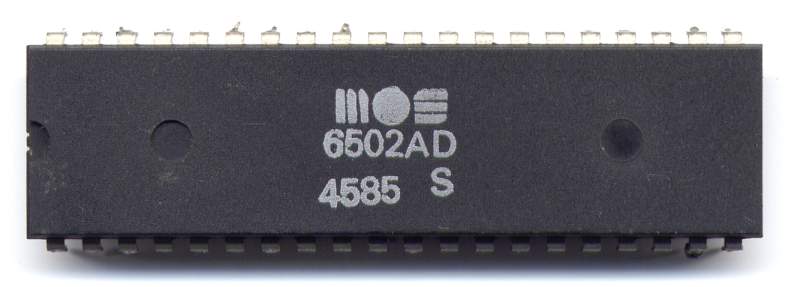 🇺🇸 United StatesMOS Technology 6502
An 8-bit microprocessor from 1975 that made cheap home computing possibleCPU · 8-bit · 1975
 🇺🇸 United StatesFairchild F8
An early 8-bit microprocessor family built for small controller jobsCPU · 8-bit · 1974
 🇺🇸 United States and 1 moreAMD Am2900
AMD's 1975 bipolar bit-slice IC family for building custom control unitsCPU · Other · 1975
 WorldIntersil 6100
A 12-bit CMOS microprocessor that runs the PDP-8 instruction set on one chipCPU · Other · 1975
More from RCA
All of them 🇺🇸 United StatesIntel 8255
Programmable parallel input/output interface chip for early microprocessorsAnalog · 1970
 🇺🇸 United States4000 series
Versatile CMOS logic chips for low-power digital circuitsAnalog · Other · 1968
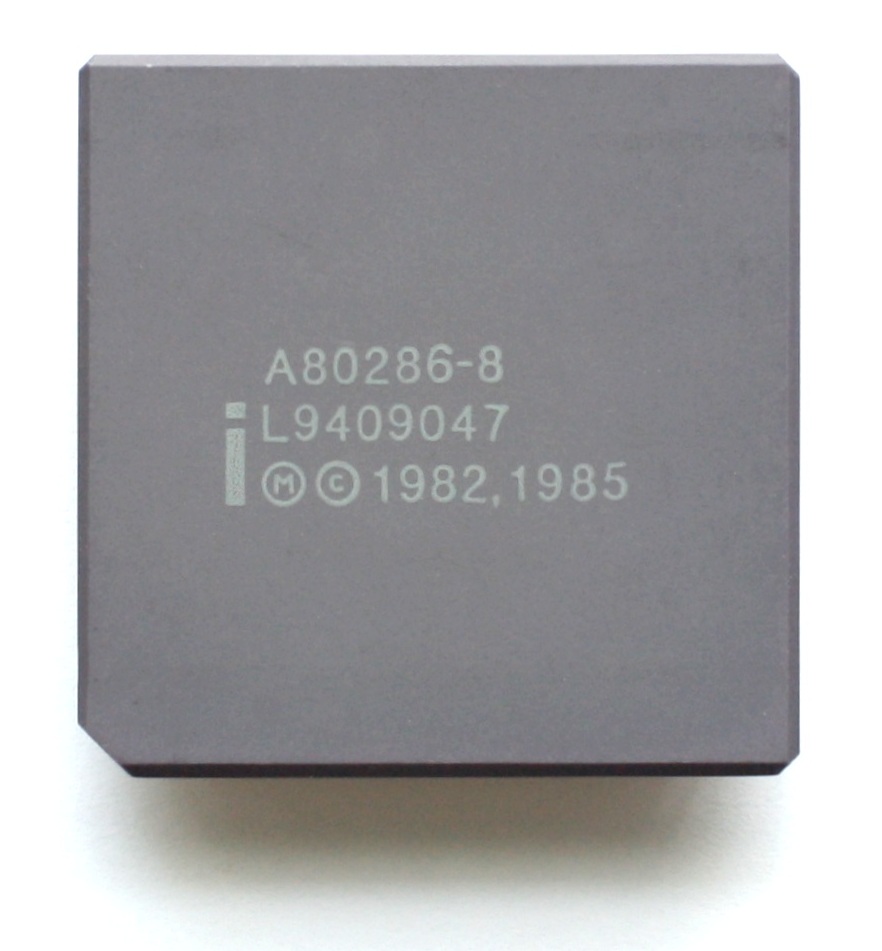 🇺🇸 United StatesIntel 80286
16-bit x86 CPU with protected mode and 24-bit addressing, launched in 1982CPU · x86 · 1982
WorldRTX 2010
Radiation-hardened 16-bit stack processor for real-time space workCPU · Other · 1988