LEON
Radiation-tolerant SPARC V8 microprocessor core for space applications
LEON is a 32-bit CPU core implementing the SPARC V8 instruction set. Designed by the European Space Agency and Gaisler Research since 1997, it offers radiation tolerance for space missions. The core is available as open-source VHDL or under proprietary licenses for system-on-chip integration.
- Radiation-tolerant 32-bit SPARC V8 CPU core
- Designed by ESA and Gaisler Research since 1997
- Used in Chang'e 4 lunar lander and ESA IXV
- Available under GPL/LGPL or proprietary licenses
- Configurable via VHDL for SoC integration
What it is
LEON is a radiation-tolerant 32-bit central processing unit core. It implements the SPARC V8 instruction set architecture originally developed by Sun Microsystems. The European Space Agency initiated the project in 1997 to create a high-performance processor for European space missions. Later versions were designed by Gaisler Research. The design is described in synthesizable VHDL, allowing it to be configured for specific needs. It supports a dual license model, offering both free open-source options and proprietary licenses for commercial integration.
How it came about
The European Space Agency started the LEON project in late 1997. The goal was to develop an open, portable processor for space projects that could withstand single-event upsets. The first version, LEON1, was used in a test chip made with 0.25 μm technology to prove fault tolerance. ESA developed LEON2, which was used in Atmel devices. Gaisler Research later created LEON3 and LEON4. These later designs improved performance and added features like symmetric multiprocessing support.
Inside the chip
LEON cores use a pipelined in-order architecture based on SPARC V8. LEON2 features a five-stage pipeline, while LEON3 and LEON4 use seven stages. LEON4 adds static branch prediction and optional level-2 cache. The cores are highly configurable via VHDL generics. Fault-tolerant variants like LEON2-FT and LEON3FT include error correction for registers and memory. They detect and correct single-event upsets without software intervention. LEON3 supports symmetric multiprocessing, unlike its predecessor.
How it was made
The initial LEONExpress test chip used 0.25 μm technology. Atmel manufactured the AT697 device using the LEON2 design. The cores are often implemented as soft IP in field-programmable gate arrays or application-specific integrated circuits. Gaisler Research distributes the designs with the GRLIB IP library. This library provides templates for various hardware targets. The LEON3FT core is distributed only as a netlist for critical space applications.
Where it went
LEON processors are used in system-on-chip designs for research and commercial space missions. The LEON2-FT processor flew on the ESA Intermediate eXperimental Vehicle in 2015. It was also used in China's Chang'e 4 lunar lander. The cores support real-time operating systems such as RTEMS, VxWorks, and Linux. They are suitable for embedded systems requiring high reliability and radiation tolerance.
Versions and family
The family includes LEON1, LEON2, LEON3, and LEON4. LEON2-FT and LEON3FT are fault-tolerant versions with error correction. LEON3 introduced symmetric multiprocessing support. LEON4 added branch prediction and higher performance claims. The GR740 is a next-generation microprocessor from ESA based on this lineage. Predecessors include the ERC32 processor.
Why it matters
LEON provided Europe with an independent, non-proprietary processor for space applications. Its open-source model allowed widespread adoption in research and industry. The fault-tolerant designs enabled reliable operation in harsh space environments. It demonstrated that open hardware could meet stringent aerospace requirements.
Questions people ask about LEON
What instruction set does LEON use?
LEON implements the SPARC V8 instruction set architecture. This is a reduced instruction set computer design originally developed by Sun Microsystems. The core is compliant with this standard, ensuring software compatibility.
Is LEON open source?
Yes, LEON has a dual license model. It is available under GNU LGPL and GPL licenses for free use. A proprietary license is also available for integration into closed commercial products without sharing source code.
How does LEON handle radiation errors?
Fault-tolerant versions like LEON2-FT and LEON3FT use triple modular redundancy for flip-flops. They also employ error detection and correction codes for memories. This allows them to detect and correct single-event upsets automatically.
Who manufactures LEON chips?
LEON is a soft core, so it can be manufactured by various foundries. Atmel produced the AT697 device. It is also implemented in field-programmable gate arrays and application-specific integrated circuits by other manufacturers.
Good reading and sources
The facts on this page come from the Wikipedia article "LEON", written by its contributors and used under the CC BY-SA 4.0 licence, and from its Wikidata record (CC0). EveryChip rewrote the text in its own words, with AI assistance, and compares every page with the article to make sure no passage is copied. It may be reused under the same CC BY-SA 4.0 licence with a link back.
It may contain mistakes, and figures change over time. Nothing here is investment or buying advice. If something is wrong, tell us. Last refreshed 2026-11-14.
Like LEON
All CPUs and microprocessors WorldOpenRISC
Open-source RISC processor architecture and reference implementationsCPU · RISC · 2000
 🇺🇸 United StatesMediaGX
Integrated x86 system on a chip for low-cost PCsSoC · x86 · 1997
🇺🇸 United States and 1 moreTurboSPARC
Low-end SPARC V8 microprocessor for workstation upgradesCPU · SPARC · 1996
🇷🇺 RussiaKOMDIV-32
Radiation-hardened MIPS microprocessors for spacecraftCPU · MIPS · 1999
More from European Space Agency
All of them 🇺🇸 United StatesUltraSPARC II
Sun Microsystems SPARC V9 microprocessor from 1997CPU · SPARC · 1997
 🇳🇴 NorwayAVR
8-bit RISC microcontroller family with on-chip flash memoryMicrocontroller · RISC · 1997
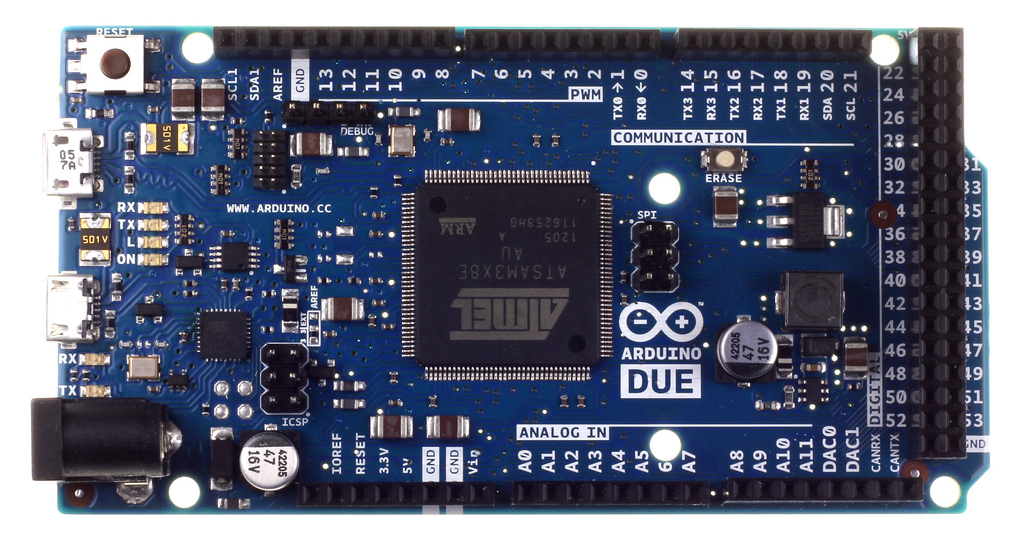 🇺🇸 United StatesAtmel ARM-based processors
32-bit ARM microcontrollers and microprocessors by MicrochipMicrocontroller · Arm · 1998
 🇺🇸 United StatesUltraSPARC
First 64-bit SPARC V9 microprocessor from Sun MicrosystemsCPU · SPARC · 1995