Atmel ARM-based processors
32-bit ARM microcontrollers and microprocessors by Microchip
Microchip Technology produces a broad range of 32-bit chips using licensed ARM cores. These integrated circuits combine processor logic with custom peripherals for embedded tasks. The product line spans from low-power microcontrollers to high-performance application processors.
- First licensed ARM core in 1995
- SAM4E was first Atmel MCU with FPU
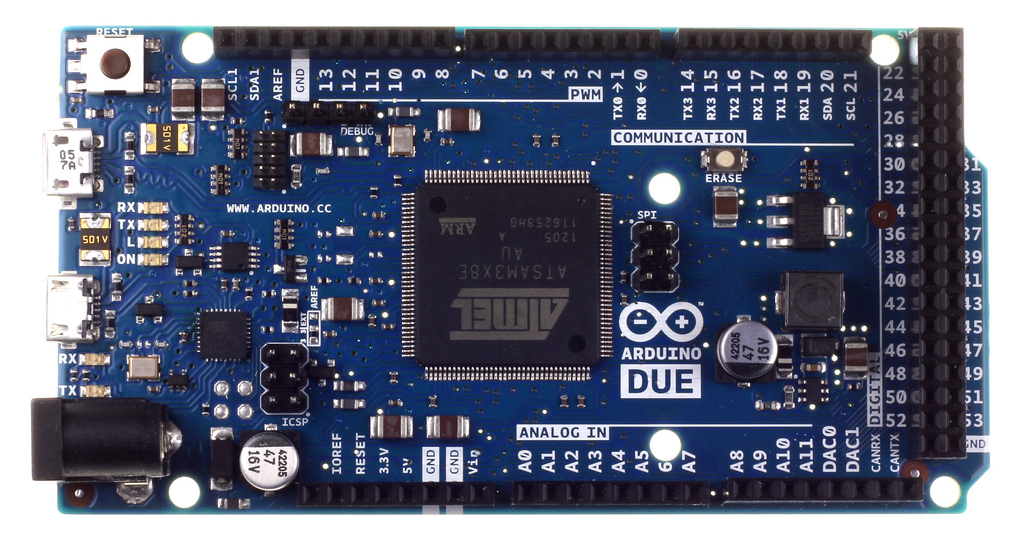
- Used in Arduino Due and Zero boards
- Supports sleepwalking power mode
- Automotive grade SAMV70 series available
What it is
These integrated circuits are 32-bit systems built around processor cores licensed from ARM Holdings. Microchip Technology, which acquired Atmel, designs the surrounding circuitry. The chips include analog-to-digital converters, communication interfaces, and memory controllers. They serve as the central brain for embedded devices, handling tasks from simple sensor reading to complex user interface management. The product range covers both microcontrollers with on-chip memory and microprocessors that rely on external storage.
How it came about
Atmel signed its first license for an ARM7TDMI core in 1995. The AT91M40800 arrived in 1998 as one of the earliest products. Subsequent agreements brought ARM9 and Cortex cores into the portfolio. The SAM7 series evolved from the initial ARM7 designs. In 2008, the company licensed Cortex technology, leading to the SAM3 and SAM4 families. The SAMA5 series introduced Cortex-A5 cores in 2013. Recent additions include the SAMA7G5 and SAMA7D6 based on Cortex-A7 architecture.
Inside the chip
The architecture combines standard ARM instruction sets with proprietary peripheral blocks. Some cores use Harvard architecture, separating data and instruction paths, while others use Von Neumann design. Features include direct memory access for efficient data transfer and power management modes that allow peripherals to run while the main processor sleeps. The SAM D series shares a reconfigurable serial communication module across variants. Higher-end models integrate floating-point units for mathematical calculations and hardware encryption engines for security.
How it was made
Microchip does not manufacture the silicon itself but licenses the core intellectual property from ARM. The company adds its own peripheral circuits to the base design. The chips are available in various pin counts, ranging from 14 pins for small devices to 144 pins for complex units. Packaging supports different voltage levels and operational requirements.
Where it went
These processors power a wide array of embedded systems. The SAM4CP variant is designed for smart-grid energy meters. Automotive applications use the SAMV70 series, which meets industry grade standards. Hobbyist and educational markets utilize the SAM D21 in Arduino Zero boards and the SAM3X in Arduino Due. Other applications include industrial controls, consumer electronics with touch interfaces, and devices requiring Ethernet or USB connectivity.
Versions and family
The product line is divided into several families. The SAM D and C series use Cortex-M0+ cores for low-power tasks. The SAM3 and SAM4 families employ Cortex-M3 and M4 cores, with some dual-core options. The SAM x70 series features high-performance Cortex-M7 cores. For application processing, the SAMA5 and SAMA7 lines use Cortex-A5 and A7 cores respectively. Legacy parts include the AT91SAM7 based on ARM7TDMI and the AT91SAM9 using ARM926EJ-S cores.
Why it matters
The transition from 8-bit AVR to 32-bit ARM architectures expanded the capabilities of Microchip's embedded offerings. Compatibility between certain families, such as the SAM3, SAM4, and SAM7 pinouts, simplifies hardware upgrades. The integration of advanced peripherals like Ethernet and CAN bus supports modern connectivity needs. Documentation complexity has grown, requiring users to consult both manufacturer datasheets and ARM architectural references.

Questions people ask about Atmel ARM-based processors
Who designs these processors?
Microchip Technology designs the chips, having acquired the original developer Atmel. They license the central processor core designs from ARM Holdings and add their own peripheral circuits.
What is the difference between SAM and SAMA series?
SAM series chips are typically microcontrollers with internal memory, often using Cortex-M cores. SAMA series are microprocessors using Cortex-A cores, designed for more complex applications requiring external memory and operating systems.
Are these chips used in Arduino boards?
Yes. The Arduino Due uses the SAM3X8E microcontroller. The Arduino Zero and MKR1000 use the SAMD21 and SAMW25 chips respectively. These are part of the SAM D family based on Cortex-M0+ cores.
Good reading and sources
- Atmel ARM-based processors on WikipediaEncyclopedia
- More photos on Wikimedia CommonsPhotos
- Wikidata recordOpen data
The facts on this page come from the Wikipedia article "Atmel ARM-based processors", written by its contributors and used under the CC BY-SA 4.0 licence, and from its Wikidata record (CC0). EveryChip rewrote the text in its own words, with AI assistance, and compares every page with the article to make sure no passage is copied. It may be reused under the same CC BY-SA 4.0 licence with a link back.
It may contain mistakes, and figures change over time. Nothing here is investment or buying advice. If something is wrong, tell us. Last refreshed 2026-11-14.
Like Atmel ARM-based processors
All microcontrollers 🇬🇧 United KingdomARM Cortex-R
Real-time ARM processor cores for safety-critical systemsCPU · Arm · 2020
 🇺🇸 United StatesIntel i960
RISC microprocessor for embedded systems and military useCPU · RISC · 1988
 🇺🇸 United StatesI.MX
ARM-based system-on-chip family for multimedia and embedded systems by NXP Semiconductors.SoC · Arm
 🇬🇧 United KingdomARM9
32-bit RISC processor core family for microcontrollersMicrocontroller · Arm · 1998
More from Microchip Technology
All of them 🇳🇴 NorwayAVR
8-bit RISC microcontroller family with on-chip flash memoryMicrocontroller · RISC · 1997
 🇺🇸 United StatesATtiny
Compact 8-bit AVR microcontroller family for simple embedded tasksMicrocontroller · Other · 1999
 WorldARM7
A family of 32-bit RISC cores licensed by ARM for microcontroller useCPU · Arm · 1993