
AVR
8-bit RISC microcontroller family with on-chip flash memory
AVR is a family of 8-bit RISC microcontrollers developed by Atmel since 1996. It was among the first to use on-chip flash memory for program storage, replacing older ROM types. Widely used in embedded systems, it gained popularity through Arduino boards.
- First microcontroller family to use on-chip flash memory
- Designed by students at Norwegian Institute of Technology
- Core of the original Arduino development boards
- Two-stage pipeline for fast instruction execution
- 500 million units shipped by 2003
What it is
AVR is a family of 8-bit reduced instruction set computing (RISC) microcontrollers. Atmel introduced the architecture in 1997 after developing it since 1996. These chips integrate program flash memory, data EEPROM, and SRAM on a single die. This integration removed the need for external memory in many applications. The design uses a modified Harvard architecture, keeping program and data storage separate. It became a standard choice for embedded systems due to its efficiency and ease of use.
How it came about
Two students at the Norwegian Institute of Technology, Alf-Egil Bogen and Vegard Wollan, conceived the architecture. They developed the original design at Nordic VLSI in Trondheim, Norway, where it was known as μRISC. Atmel acquired the technology and further developed it at their Norwegian subsidiary. The creators worked with IAR Systems to ensure the instruction set supported efficient C code compilation. By 2003, Atmel had shipped 500 million units. Microchip Technology acquired Atmel in 2016.
Inside the chip
The core uses a two-stage pipeline, fetching the next instruction while executing the current one. Most instructions complete in one or two clock cycles. It features 32 single-byte working registers. Program code resides in non-volatile flash memory, while data uses SRAM and EEPROM. The instruction set is orthogonal, allowing flexible register use. Special instructions allow reading data from program memory. GPIO ports are controlled by direction, output, and input registers. Some variants include hardware multipliers and extended I/O registers.
How it was made
Atmel manufactured the chips, originally based on designs from Nordic VLSI. The AT90S8515, an early model, came in a 40-pin dual in-line package. It shared pinouts with the 8051 microcontroller, except for the reset line polarity. Modern variants use various surface-mount packages.
Where it went
These microcontrollers are common in embedded systems, particularly for hobbyist and educational projects. Their inclusion in Arduino development boards, starting with the ATmega8 in 2005, drove widespread adoption. They serve in applications requiring simple control logic, sensor interfacing, and communication stacks. Variants with USB, CAN, or LCD controllers support specific industrial and consumer devices. The tinyAVR series suits space-constrained designs, while megaAVR handles more complex tasks.
Versions and family
The family includes tinyAVR, megaAVR, XMEGA, and AVR Dx series. TinyAVR offers small packages with limited peripherals. MegaAVR provides extended instruction sets and more pins. XMEGA adds direct memory access and cryptography support. AVR Dx focuses on analog signal conditioning and functional safety, with sub-series like DA, DB, DD, and EA. Atmel also released 32-bit AVR32 chips in 2006, though these were architecturally distinct and later lost support.
Why it matters
AVR popularized on-chip flash memory for microcontrollers, moving away from one-time programmable ROM. Its compatibility with high-level languages like C made it accessible to students and engineers. The Arduino platform leveraged AVR chips to simplify electronics prototyping, creating a large ecosystem of open-source hardware. This influence established AVR as a foundational technology in DIY electronics and education.


Questions people ask about AVR
What does AVR stand for?
Atmel states the name is not an acronym. However, it is commonly accepted to mean Alf and Vegard's RISC processor, named after its creators Alf-Egil Bogen and Vegard Wollan.
Why is AVR popular in hobbyist projects?
Its inclusion in Arduino boards made it easy to use. The chips support C programming, have integrated memory, and require minimal external components, simplifying circuit design for beginners.
How does AVR store program code?
Program instructions are stored in on-chip non-volatile flash memory. This allows reprogramming without removing the chip, unlike older ROM or EPROM technologies used in earlier microcontrollers.
Good reading and sources
- AVR microcontrollers on WikipediaEncyclopedia
- More photos on Wikimedia CommonsPhotos
- Wikidata recordOpen data
The facts on this page come from the Wikipedia article "AVR microcontrollers", written by its contributors and used under the CC BY-SA 4.0 licence, and from its Wikidata record (CC0). EveryChip rewrote the text in its own words, with AI assistance, and compares every page with the article to make sure no passage is copied. It may be reused under the same CC BY-SA 4.0 licence with a link back.
It may contain mistakes, and figures change over time. Nothing here is investment or buying advice. If something is wrong, tell us. Last refreshed 2026-11-14.
Like AVR
All microcontrollers 🇺🇸 United StatesBlackfin
Hybrid microprocessor and DSP family by Analog DevicesMicrocontroller · RISC · 2000
 🇺🇸 United StatesPIC16x84
8-bit microcontroller family with EEPROM and Flash memoryMicrocontroller · RISC · 1993
 🇺🇸 United StatesPSoC
Configurable microcontroller with mixed-signal blocksMicrocontroller · Arm · 2002
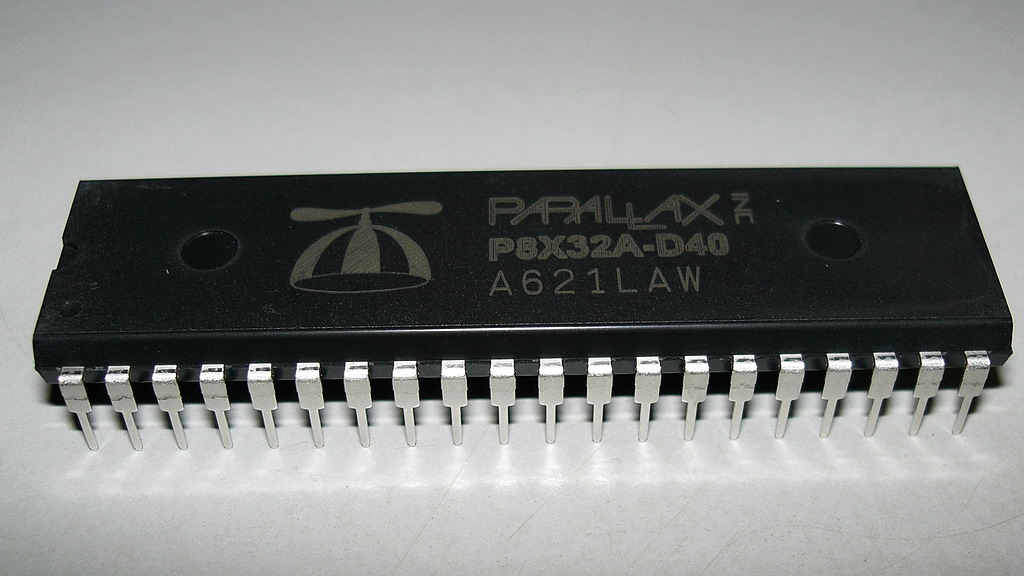 🇺🇸 United StatesParallax Propeller
Eight-core microcontroller with parallel processingMicrocontroller · RISC · 2006
More from Atmel
All of them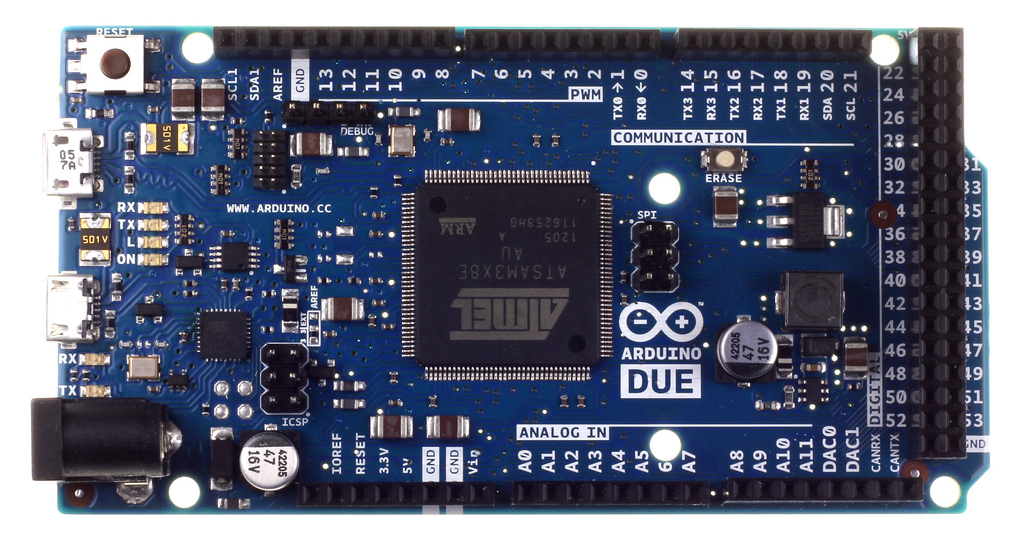 🇺🇸 United StatesAtmel ARM-based processors
32-bit ARM microcontrollers and microprocessors by MicrochipMicrocontroller · Arm · 1998
 🇺🇸 United StatesATtiny
Compact 8-bit AVR microcontroller family for simple embedded tasksMicrocontroller · Other · 1999
 WorldARM7
A family of 32-bit RISC cores licensed by ARM for microcontroller useCPU · Arm · 1993