
PSoC
Configurable microcontroller with mixed-signal blocks
Cypress Semiconductor created the PSoC family to merge a processor core with programmable analog and digital logic. This design lets engineers customise hardware functions without new silicon, serving products from toothbrushes to set-top boxes.
- First commercial shipments began in 2002
- Uses SONOS technology for manufacturing
- Includes programmable analog and digital blocks
- Infineon acquired Cypress in 2020
- Supports Bluetooth Low Energy integration
What it is
The Programmable System on a Chip is a line of microcontrollers that blends standard processing with flexible hardware blocks. Cypress Semiconductor launched the first commercial units in 2002. Unlike fixed-function chips, these devices allow engineers to configure analog and digital circuits internally. This approach reduces the need for external components and printed circuit board changes. Infineon Technologies took over production after buying Cypress in 2020.
How it came about
Cypress started shipping the initial PSoC 1 models in 2002. To build interest, the company sponsored design contests in Circuit Cellar magazine during 2002 and 2004. The fourth generation arrived in April 2013, bringing 32-bit Arm cores to the platform. In 2014, Bluetooth Low Energy radios were added to the die. The S-Series followed in 2016 with improved efficiency. Infineon completed its acquisition of the brand in April 2020 for roughly nine billion euros.
Inside the chip
The architecture separates memory into three areas: SRAM for data, Flash for code, and registers for control. It uses SONOS fabrication technology. Configurable blocks act like a mix between an application-specific integrated circuit and a field-programmable gate array. Digital blocks form state machines, while analog sections handle continuous signals or switched capacitors. Global buses route signals freely between pins, allowing complex logic without extra gates. Software tools generate the necessary startup code and application programming interfaces.
How it was made
Manufacturing relies on SONOS process technology. The chip does not need a custom fabrication run for each design change. Instead, configuration data loads from built-in Flash memory at power-up. This method avoids the high costs and delays associated with traditional custom silicon manufacturing. The physical layout supports flexible interconnects that link internal blocks to external pins.
Where it went
These chips appear in diverse consumer goods. Examples include Sonicare toothbrushes and Adidas footwear. They also power more complex electronics like TiVo set-top boxes. One notable application involved the touch-sensitive scroll wheel on the Apple iPod click wheel. The integration of Bluetooth Low Energy enables connected Internet of Things devices. Engineers use the programmable features to create custom peripherals for specific product needs.
Versions and family
Five main families exist, each with a different processor core. PSoC 1 uses an M8C core. PSoC 3 relies on an 8051 core. PSoC 4 features Arm Cortex-M0 processors. PSoC 5 and 5LP use Cortex-M3 cores. PSoC 6 combines Cortex-M4 and Cortex-M0+ cores. Some models include Bluetooth radios. The BLE variants support both peripheral and central roles in wireless networks.
Why it matters
The platform changed how embedded systems are designed by moving hardware definition into software tools. Developers can update peripheral functions without changing the physical chip. This flexibility reduces development time and component counts. The acquisition by Infineon integrated these capabilities into a larger microcontroller portfolio, expanding their reach in industrial and consumer markets.


Questions people ask about PSoC
What makes PSoC different from standard microcontrollers?
It combines a processor core with configurable analog and digital blocks. This allows designers to create custom hardware functions inside the chip, reducing the need for external components and enabling flexible signal routing.
Which companies have owned the PSoC brand?
Cypress Semiconductor originally developed and marketed the family. Infineon Technologies acquired Cypress in April 2020 and now manufactures and sells the PSoC line as part of its broader portfolio.
What types of processor cores are used in PSoC devices?
The family includes several cores: M8C in PSoC 1, 8051 in PSoC 3, and various Arm Cortex-M series cores in later generations. PSoC 4 uses Cortex-M0, while PSoC 6 may include both Cortex-M4 and Cortex-M0+ cores.
Good reading and sources
The facts on this page come from the Wikipedia article "Cypress PSoC", written by its contributors and used under the CC BY-SA 4.0 licence, and from its Wikidata record (CC0). EveryChip rewrote the text in its own words, with AI assistance, and compares every page with the article to make sure no passage is copied. It may be reused under the same CC BY-SA 4.0 licence with a link back.
It may contain mistakes, and figures change over time. Nothing here is investment or buying advice. If something is wrong, tell us. Last refreshed 2026-11-14.
Like PSoC
All microcontrollers 🇳🇱 NetherlandsNexperia
Brand for NXP media and mobile system-on-chipsSoC · Arm · 1999
 EuropeSTM32
32-bit ARM microcontrollers and microprocessors from STMicroelectronicsMicrocontroller · Arm · 2007
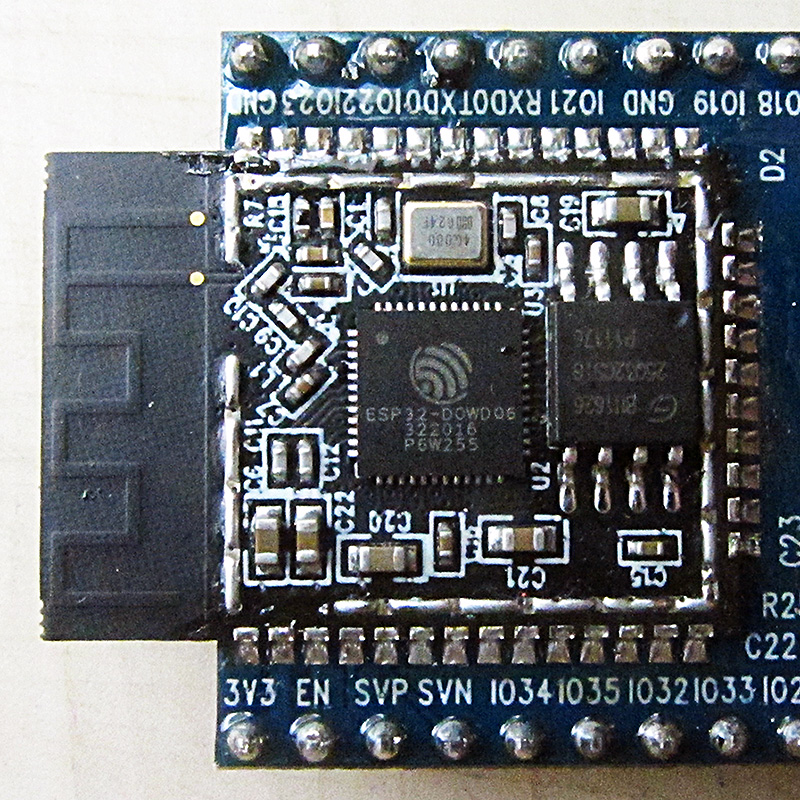 WorldESP32
Low-cost microcontroller with Wi-Fi and Bluetooth made by Espressif Systems.Microcontroller · Arm · 2016
 🇳🇱 NetherlandsNXP LPC
32-bit ARM microcontrollers by NXP SemiconductorsMicrocontroller · Arm · 1982
More from Cypress Semiconductor
All of them 🇩🇪 GermanyXC800
An 8-bit microcontroller series from Infineon for automotive and industrial control.Microcontroller · MCU family · 2005
 🇺🇸 United StatesHyperSPARC
SPARC V8 microprocessor by Ross Technology for CypressCPU · SPARC · 1993