
STM32
32-bit ARM microcontrollers and microprocessors from STMicroelectronics
STM32 is a family of 32-bit microcontroller and microprocessor chips made by STMicroelectronics, in production since 2007. Parts span Cortex-M0 to Cortex-M85 cores at 24 to 800 MHz, plus MP1 and MP2 microprocessors with Cortex-A cores that can run Linux.
- In production since 2007, still current
- Cores from Cortex-M0 up to Cortex-M85
- Clock speeds span 24 MHz to 800 MHz
- H7 series: first STM32 at 40 nm, up to 600 MHz
- MP1 and MP2 add Cortex-A cores that run Linux
What it is
STM32 is a broad family of 32-bit microcontrollers and microprocessors built by STMicroelectronics. Each part combines one or more ARM processor cores with on-chip flash memory, static RAM, a debug interface and a set of peripherals such as timers, ADCs, DACs, USB, CAN and serial ports. The range runs from tiny Cortex-M0+ devices at 24 to 48 MHz up to Cortex-M7 parts at 600 MHz and beyond, with process nodes from 180 nm down to 40 nm. The MP1 and MP2 lines add Cortex-A application cores with a memory management unit, so they can run Linux alongside a Cortex-M core.
How it came about
STM32 is STMicroelectronics' third ARM-based family. It came after the STR9 line, which used the ARM9E core, and the STR7 line, built on ARM7TDMI. Production began in 2007 and the family has kept growing since, with new series added for cost, low power, analog work and high performance.
Inside the chip
Every STM32 microcontroller pairs a 32-bit ARM Cortex-M core with flash, SRAM and peripherals on one die. Cores used include M0, M0+, M3, M4, M7, M33, M55 and M85. Some parts add core-coupled memory (fast RAM tied tightly to the CPU), hardware parity or ECC on memory, and math accelerators such as CORDIC and FMAC. Analog blocks are strong on some series: the F3 has four simultaneous 12-bit ADCs and four op-amps, while the G4 adds 16-bit ADCs with oversampling. Debug is over SWD or JTAG depending on the series.
How it was made
The family spans process nodes from 180 nm down to 40 nm. The H7 series was the first STM32 line built at 40 nm and the first Cortex-M7 part to reach 600 MHz. Packages range from small TSSOP20 and WLCSP64 parts up to LQFP208 and UFBGA216, with larger packages exposing an external memory bus.
Where it went
STM32 parts are aimed at embedded work of many kinds, from simple control tasks to connected devices. Low-cost C0 and F0 parts suit basic jobs, L0 and G0 target low-power and battery use, F3 and G4 handle precision analog and motor control, and F4, F7 and H7 cover demanding control and signal work. The MP1 and MP2 microprocessors, with Cortex-A cores and an MMU, run operating systems such as Linux.
Versions and family
The family is split into many series, each tied to one Cortex-M core. C0, F0, G0, L0 use M0 or M0+; F1, F2 use M3; F3, F4, G4 use M4F; F7, H7 use M7; later lines use M33, M55 and M85. F2 is pin-compatible with F4, and many F7 parts match F4 pinouts. The F1 line alone splits into Connectivity, Performance, USB Access, Access and Value groups.
Why it matters
STM32 became one of the widest microcontroller families available, covering cost, power and performance in one naming scheme and one toolchain. Its mix of cores, memory sizes and package options lets designers move between parts without redesigning a whole board. The H7 series set performance marks of 1284 DMIPS and 3174 CoreMark for Cortex-M parts.


Questions people ask about STM32
What is an STM32?
A 32-bit microcontroller or microprocessor from STMicroelectronics. It puts an ARM core, flash memory, RAM, a debug port and many peripherals on one chip, aimed at embedded tasks from simple control to connected devices.
Who designs and makes STM32 chips?
STMicroelectronics designs them and licenses the ARM processor IP from ARM Holdings, then adds its own peripherals. The family has been in production since 2007.
How fast are STM32 parts?
Across the family, clock speeds run from 24 MHz at the slow end to 800 MHz at the fast end. The H7 series reaches 600 MHz on a Cortex-M7 core, while entry parts sit far below that.
Can an STM32 run Linux?
The MP1 and MP2 microprocessor lines can. They use single or dual Cortex-A cores with a memory management unit, plus a Cortex-M core, which suits operating systems such as Linux.
What is inside each chip?
One or more ARM cores, flash memory for code, static RAM for data, a debug interface and a set of peripherals such as timers, ADCs, DACs, USB, CAN and serial ports. Some parts add crypto, LCD or Ethernet blocks.
Good reading and sources
The facts on this page come from the Wikipedia article "STM32", written by its contributors and used under the CC BY-SA 4.0 licence, and from its Wikidata record (CC0). EveryChip rewrote the text in its own words, with AI assistance, and compares every page with the article to make sure no passage is copied. It may be reused under the same CC BY-SA 4.0 licence with a link back.
It may contain mistakes, and figures change over time. Nothing here is investment or buying advice. If something is wrong, tell us. Last refreshed 2026-11-14.
Like STM32
All microcontrollers 🇺🇸 United StatesPSoC
Configurable microcontroller with mixed-signal blocksMicrocontroller · Arm · 2002
 WorldESP32
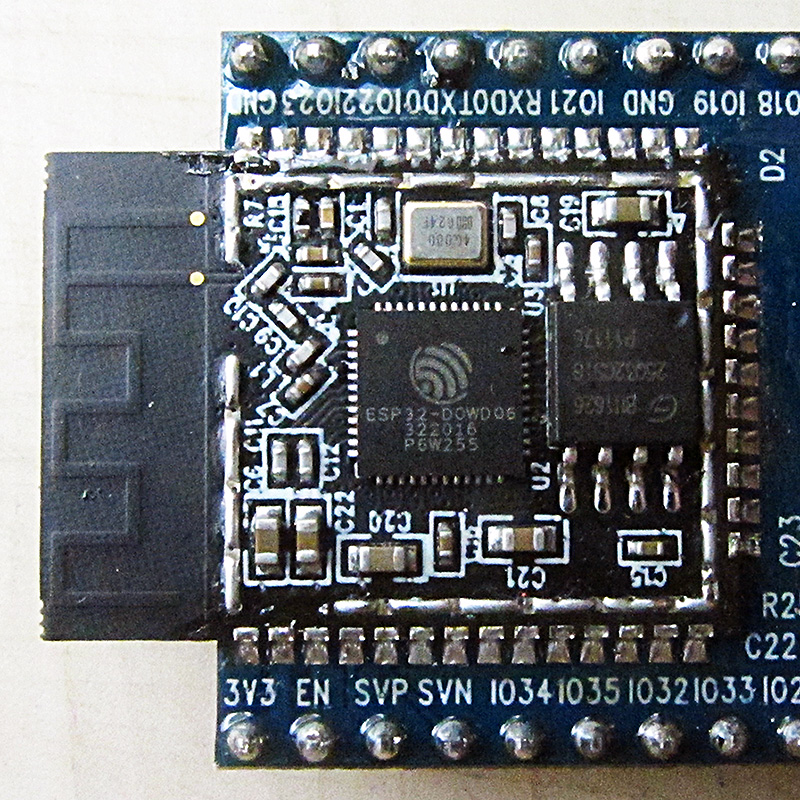
Low-cost microcontroller with Wi-Fi and Bluetooth made by Espressif Systems.Microcontroller · Arm · 2016
🇺🇸 United StatesSitara
Texas Instruments family of ARM-based microprocessors for embedded systemsSoC · Arm
 🇺🇸 United StatesIntel Quark
Low-power 32-bit x86 system on a chip for wearables and IoT.SoC · x86 · 2013
More from STMicroelectronics
All of them 🇺🇸 United StatesQualcomm Snapdragon
Qualcomm's brand of ARM-based systems on chip, modems and wireless controllersSoC · Arm · 2007
 🇬🇧 United KingdomARM Cortex-A9
32-bit multi-core processor core for mobile and embedded systemsCPU · Arm · 2007
🇺🇸 United StatesPowerPC e200
32-bit Power ISA microprocessor cores for automotive and industrial controlMicrocontroller · Power · 2007
 🇳🇴 NorwayMali
A family of graphics processing unit cores licensed by Arm for mobile and embedded chips.GPU · Other · 2005