Sitara
Texas Instruments family of ARM-based microprocessors for embedded systems
Texas Instruments designs the Sitara line of microprocessors using ARM cores. These chips power devices ranging from single-board computers to industrial controllers and consumer electronics.
- Clock speeds range from 450 MHz to 1.5 GHz
- Supports ARMv7 and ARMv8 instruction sets
- Used in BeagleBone Black and Lego Mindstorms EV3
- Includes C66x DSP cores for signal processing
- Designed and manufactured by Texas Instruments
What it is
The Sitara series consists of microprocessor units built by Texas Instruments. These integrated circuits combine central processing units with digital signal processors and multimedia accelerators. The lineup supports various ARM instruction sets, including ARMv7 and ARMv8. Engineers use these chips for applications requiring industrial communication protocols and image processing capabilities. The product range covers different performance levels, from basic control tasks to more complex application handling.
How it came about
Texas Instruments created this family to serve a wide variety of embedded markets. The company integrated multiple types of processing cores into single packages. This approach allows developers to handle real-time control and high-level operating systems on one chip. The open source Beagle community has played a significant role in supporting development efforts around these processors.
Inside the chip
The architecture relies on ARM technology for its main application processing. Specific models utilize cores such as the ARM9, Cortex-A8, Cortex-A9, Cortex-A15, and Cortex-A53. Some variants include C66x digital signal processor cores for heavy mathematical computations. Additional hardware blocks handle imaging, multimedia acceleration, and industrial networking. Clock speeds vary across the family, starting at 450 MHz for slower units like the AM18x and reaching up to 1.5 GHz for faster models like the AM57x.
How it was made
Texas Instruments handles both the design and manufacturing of these components. The production process integrates logic for general computing with specialized accelerators. While specific transistor counts and node sizes are not detailed in the available records, the fabrication remains under the control of the designing company. The chips are packaged to support diverse industrial and consumer form factors.
Where it went
These processors appear in many distinct products. The BeagleBone Black and BeagleBoard-X15 single-board computers rely on Sitara silicon. Consumer devices include the Nest learning thermostat and Lego Mindstorms EV3 bricks, which use the AM1x variant. Industrial applications feature in firewalls like the Netgate SG-1000. Other uses include GPS-enabled displays for snow goggles and low-power industrial systems based on the AM57x series.
Versions and family
The family includes several distinct series tailored for different needs. The AM18x represents the lower end of the speed spectrum, while the AM57x offers higher performance. Core configurations differ, with some using older ARM9 designs and others employing newer Cortex-A series cores. The AM1x variant is specifically noted for its use in educational robotics kits.
Why it matters
Sitara chips have enabled a broad base of embedded applications. Their presence in popular open-source hardware platforms has fostered a strong developer community. Integration of digital signal processing with application cores allows for compact system designs in industrial and consumer electronics.
Questions people ask about Sitara
What kind of processor cores does Sitara use?
The family employs various ARM cores, including ARM9, Cortex-A8, Cortex-A9, Cortex-A15, and Cortex-A53. Some models also integrate C66x digital signal processor cores for specialized tasks.
Which popular hobbyist boards use Sitara chips?
The BeagleBone Black and BeagleBoard-X15 are well-known single-board computers that utilize Sitara processors. These platforms are supported by an active open source community.
What is the clock speed range for these processors?
Speeds vary by model. The slower AM18x units run at 450 MHz, while the faster AM57x models reach up to 1.5 GHz.
Who manufactures the Sitara family?
Texas Instruments designs and manufactures the entire Sitara line of microprocessors. They handle both the silicon creation and the integration of specialized IP blocks.
Good reading and sources
The facts on this page come from the Wikipedia article "Sitara ARM processor", written by its contributors and used under the CC BY-SA 4.0 licence, and from its Wikidata record (CC0). EveryChip rewrote the text in its own words, with AI assistance, and compares every page with the article to make sure no passage is copied. It may be reused under the same CC BY-SA 4.0 licence with a link back.
It may contain mistakes, and figures change over time. Nothing here is investment or buying advice. If something is wrong, tell us. Last refreshed 2026-11-14.
Like Sitara
All systems on a chip 🇺🇸 United StatesPSoC
Configurable microcontroller with mixed-signal blocksMicrocontroller · Arm · 2002
 EuropeSTM32
32-bit ARM microcontrollers and microprocessors from STMicroelectronicsMicrocontroller · Arm · 2007
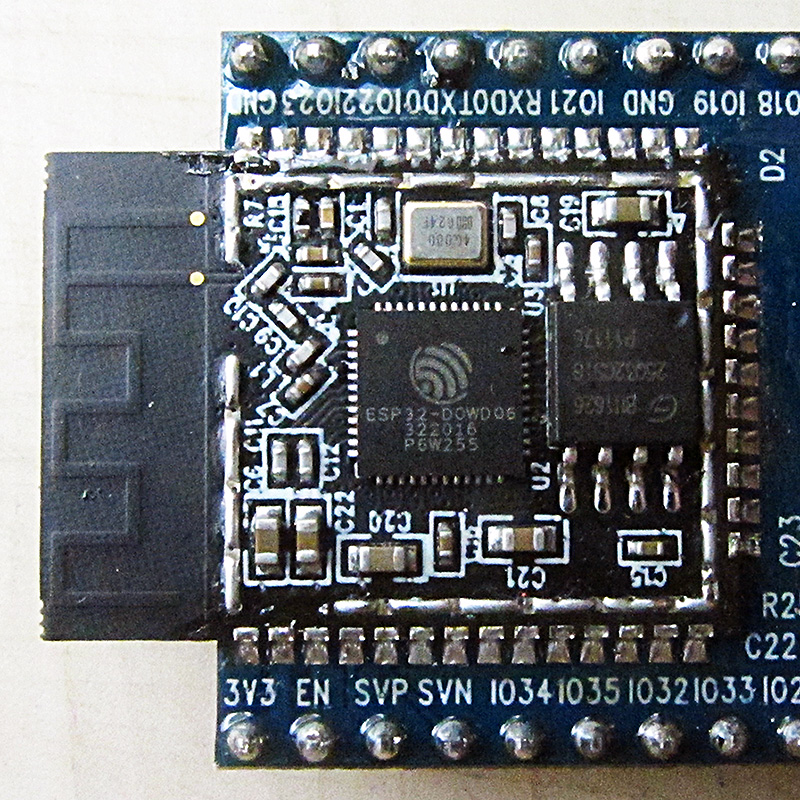 WorldESP32
Low-cost microcontroller with Wi-Fi and Bluetooth made by Espressif Systems.Microcontroller · Arm · 2016
 🇺🇸 United StatesI.MX
ARM-based system-on-chip family for multimedia and embedded systems by NXP Semiconductors.SoC · Arm
More from Texas Instruments
All of them 🇺🇸 United StatesLM3914
Analog display driver for LED bar graphs and dot metersAnalog
 🇺🇸 United StatesLM386
Low-voltage audio power amplifier integrated circuitAnalog
 World78xx
Family of fixed positive linear voltage regulator integrated circuitsAnalog
🇺🇸 United StatesLM3875
56-watt audio amplifier integrated circuitAnalog