
PIC16x84
8-bit microcontroller family with EEPROM and Flash memory
Microchip Technology launched the PIC16x84 series in 1993 as its first microcontrollers using EEPROM for program storage. The line later shifted to Flash memory, offering hobbyists and engineers a simple, reprogrammable 8-bit chip with serial programming capabilities.
- First PIC microcontroller with EEPROM program memory
- Introduced in March 1993 by Microchip Technology
- Uses a 14-bit instruction word architecture
- Popular for hobbyist use due to simple serial programming
- PIC16F84A supports clock speeds up to 20 MHz
What it is
The PIC16x84 is a family of 8-bit microcontrollers produced by Microchip Technology. Introduced in March 1993, the initial PIC16C84 model was notable for using EEPROM technology for its program memory, allowing easy erasure and reprogramming without special tools. Later variants like the PIC16F84 and PIC16F84A switched to Flash memory, which is cheaper to manufacture. These chips feature a 14-bit instruction word architecture and are widely used in embedded systems due to their simplicity and low cost.
How it came about
Microchip released the PIC16C84 in 1993 at a suggested retail price of $3.72 for bulk orders. It was the first PIC device to support a serial programming algorithm, making it accessible for hobbyists who could use simple, cheap programmers. Although Motorola had released similar EEPROM-based chips in the late 1980s, the PIC16x84 gained significant popularity in the DIY community. As supplies of the original EEPROM-based C84 dwindled, the Flash-based F84 became the standard drop-in replacement. In 1998, Microchip introduced the improved PIC16F84A with faster clock speeds and lower power consumption.
Inside the chip
These microcontrollers use a bank-switching memory architecture and a 14-bit instruction set. The devices include one 8-bit timer and 13 input/output pins. A key design feature is the inclusion of 64 bytes of EEPROM specifically mapped for user data storage. The PIC16C84 contains 36 bytes of RAM, while the later F84 and F84A models increased this to 68 bytes. The shift from EEPROM to Flash for program memory retained the floating gate technology but reduced manufacturing costs. The serial programming interface allows for straightforward development on older operating systems like DOS and Windows 3.X.
How it was made
Microchip Technology designs and produces the PIC16x84 series. The original PIC16C84 utilized EEPROM for program storage, a method later replaced by Flash memory in the F84 variants due to cost efficiency. Both memory types rely on similar floating gate technologies.
Where it went
The PIC16x84 family found widespread use in hobbyist projects and embedded applications because of its ease of programming. Developers used it as a prototype platform for other 14-bit PIC devices. Its simple serial programming algorithm meant that users did not need expensive equipment to erase or reprogram the chip. The later F84A variant supported clock speeds up to 20 MHz, making it suitable for slightly more demanding control tasks while maintaining pin compatibility with earlier models.
Versions and family
The family includes the PIC16C84, PIC16C84A, PIC16F84, and PIC16F84A. The F84A is an enhanced version with better security, faster programming, and lower current draw. Microchip has since released pin-compatible successors with more features, such as the PIC16F628A, PIC16F648A, and PIC16F88. These newer variants offer increased memory, additional timers, PWM modules, and analog-to-digital converters, though they may require code modifications to handle multi-function pins correctly.
Why it matters
The PIC16x84 series helped establish Microchip as a major player in the microcontroller market, particularly among hobbyists and educators. Its introduction of serial programming and EEPROM storage set a precedent for ease of use in 8-bit controllers. The availability of simple programming tools lowered the barrier to entry for embedded system design. Even after discontinuation of the original C84, the architecture influenced subsequent mid-range PIC cores, including those optimized for C programming.
Questions people ask about PIC16x84
What is the difference between PIC16C84 and PIC16F84?
The PIC16C84 uses EEPROM for program memory, while the PIC16F84 uses Flash memory. The F84 also has more RAM (68 bytes versus 36 bytes) and better program security. They are otherwise almost completely compatible.
Why was the PIC16x84 popular with hobbyists?
It featured a serial programming algorithm that allowed users to program, erase, and reprogram the chip using very simple and cheap hardware. This ease of use made it ideal for DIY electronics projects and learning.
Can I replace a PIC16C84 with a PIC16F84A?
Yes, the PIC16F84A is largely a drop-in replacement for the PIC16C84. However, you will need new programming software because the programming algorithm is different, even though the hardware programmer can remain the same.
Good reading and sources
The facts on this page come from the Wikipedia article "PIC16x84", written by its contributors and used under the CC BY-SA 4.0 licence, and from its Wikidata record (CC0). EveryChip rewrote the text in its own words, with AI assistance, and compares every page with the article to make sure no passage is copied. It may be reused under the same CC BY-SA 4.0 licence with a link back.
It may contain mistakes, and figures change over time. Nothing here is investment or buying advice. If something is wrong, tell us. Last refreshed 2026-11-14.
Like PIC16x84
All microcontrollers 🇳🇴 NorwayAVR
8-bit RISC microcontroller family with on-chip flash memoryMicrocontroller · RISC · 1997
 🇳🇴 NorwayAVR32
32-bit RISC microcontroller architecture by AtmelMicrocontroller · RISC · 2006
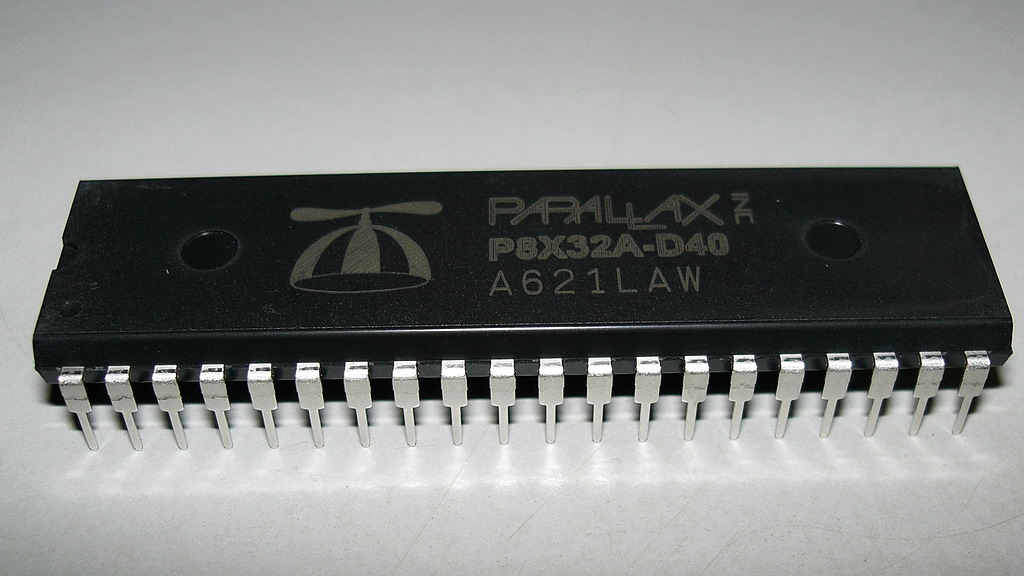 🇺🇸 United StatesParallax Propeller
Eight-core microcontroller with parallel processingMicrocontroller · RISC · 2006
 🇨🇳 ChinaESP8266
Low-cost Wi-Fi microcontroller chip by Espressif SystemsMicrocontroller · RISC · 2014
More from Microchip Technology
All of them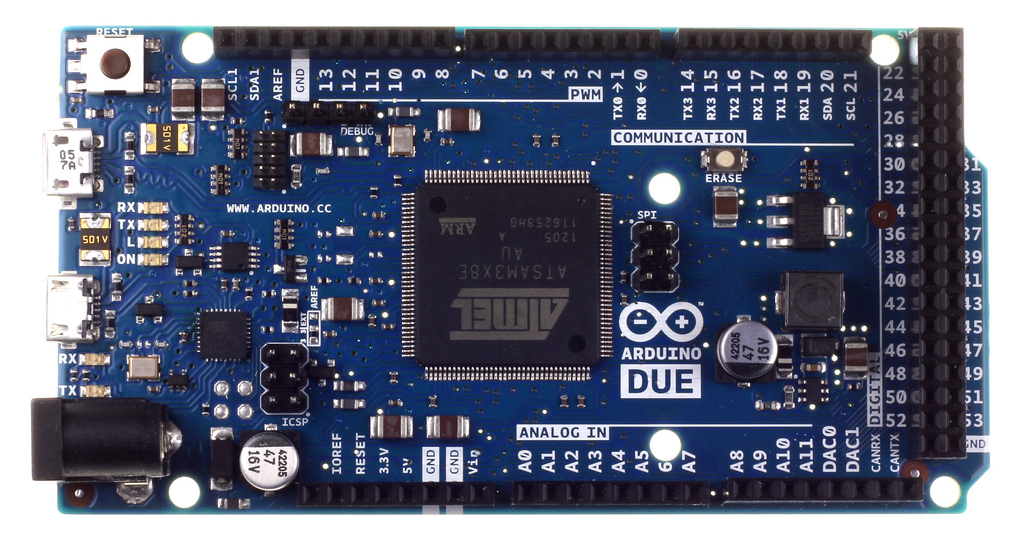 🇺🇸 United StatesAtmel ARM-based processors
32-bit ARM microcontrollers and microprocessors by MicrochipMicrocontroller · Arm · 1998
 🇺🇸 United StatesATtiny
Compact 8-bit AVR microcontroller family for simple embedded tasksMicrocontroller · Other · 1999
 🇺🇸 United StatesAY-3-8910
Three-voice programmable sound generator chip from 1978Analog · 1978
 🇺🇸 United StatesPIC microcontroller
Microchip's long-running family of 8-bit to 32-bit microcontrollersMicrocontroller · MIPS · 1976