
Intel i960
RISC microprocessor for embedded systems and military use
The Intel i960 is a 32-bit RISC microprocessor launched in 1988. It became a leading chip for embedded controllers and military hardware. Intel ended its marketing in the late 1990s after acquiring StrongARM rights from DEC.
- First single-chip superscalar RISC implementation
- Used in Sega Model 2 arcade boards
- Powers radar systems in HAL Tejas aircraft
- Clock speeds range from 10 MHz to 100 MHz
- Production lasted from 1988 to 2007
What it is
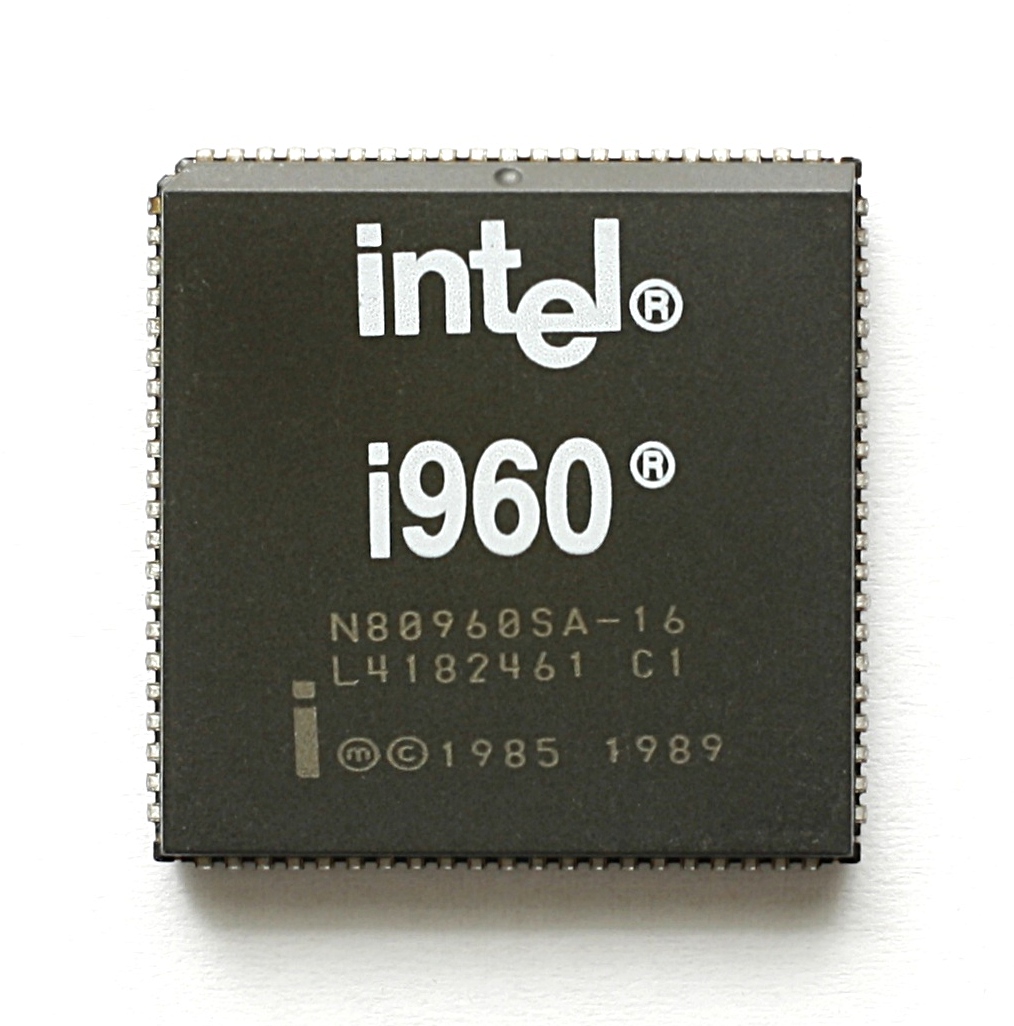
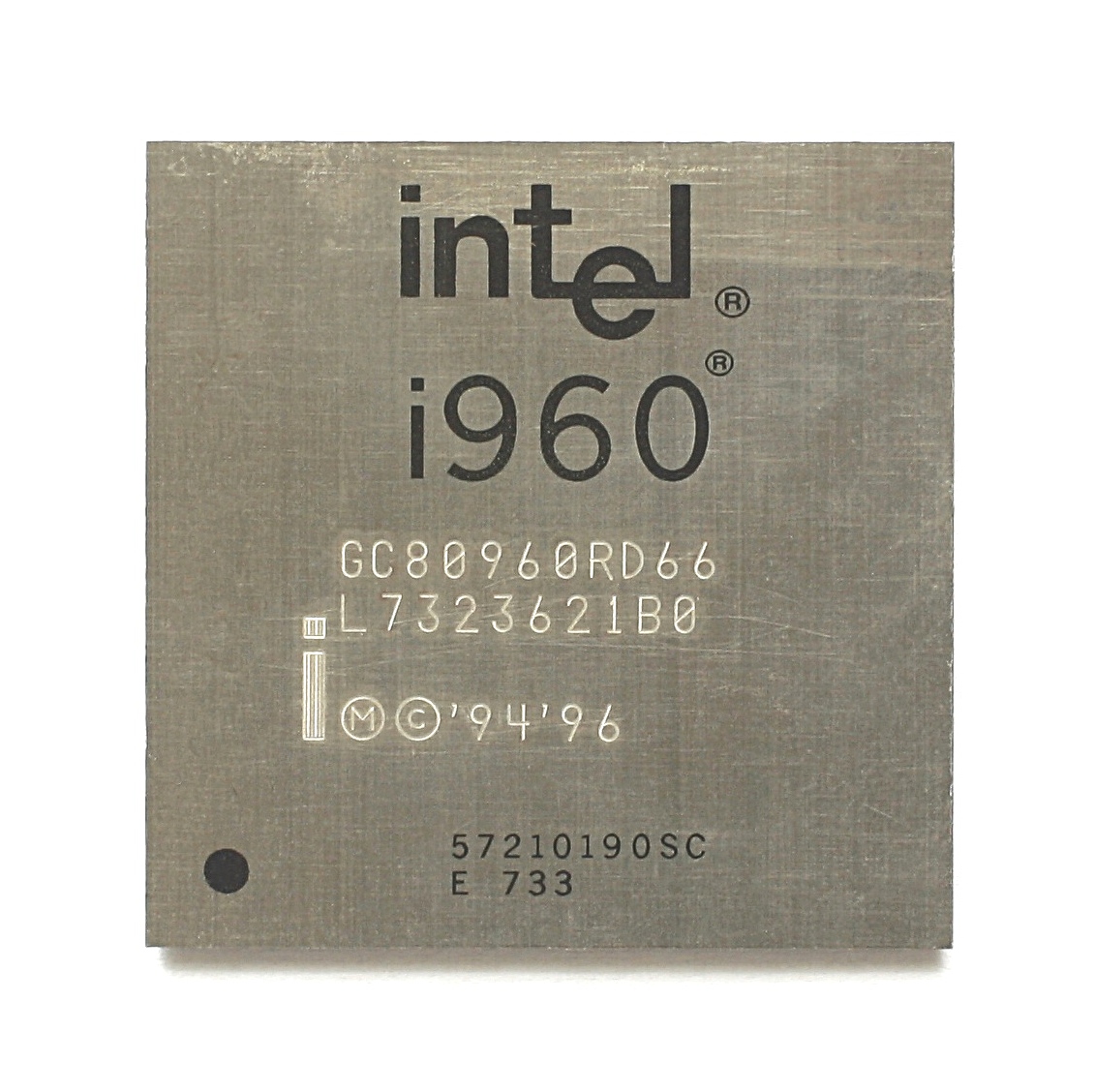
The Intel i960, also known as the 80960, is a 32-bit reduced instruction set computer (RISC) microprocessor. Introduced in April 1988, it served primarily as an embedded controller rather than a general-purpose central processing unit. The design prioritised reliability and performance for specialised tasks. It achieved significant commercial success in the early 1990s within the embedded market segment. Intel ceased active marketing of the line in the late 1990s following a legal settlement with Digital Equipment Corporation. Despite this, the chip remains in use for specific military and industrial applications today.
How it came about
Development began as a response to the failed iAPX 432 project. Intel and Siemens collaborated on the BiiN system, aiming for fault-tolerant computers using Ada. Glenford Myers led the architecture team after joining from IBM. The first chips were manufactured in late 1985. When the BiiN venture collapsed, Myers repurposed the processor for broader markets. He pitched it for Unix workstations and personal computers, but management declined. Instead, the chip found its niche in high-performance embedded systems. Fred Pollack later led the design team, bringing superscalar expertise to the project.
Inside the chip
The architecture supports four distinct levels of capability. The Core level provides basic RISC functions. Numerics adds floating-point support. Protected mode includes memory management and operating system features. Extended architecture introduces hardware object protection via a 33rd tag bit. Early models used register windows to speed up subroutine calls, similar to Berkeley RISC designs. The i960CA, announced in 1989, was the first single-chip superscalar RISC implementation. It could dispatch multiple instructions simultaneously. Later variants integrated caches and clock multiplication to boost performance without changing external bus speeds.
How it was made
Intel manufactured the processors using CHMOS-III technology. Initial versions like the KA and KB contained over 350,000 transistors. They were packaged in 132-pin pin grid arrays. The MC variant featured 53 pins marked as no-connect, though these were not internally bonded. Production started in 1988 and continued until 2007. Clock speeds ranged from 10 MHz in early models to 100 MHz in later I/O processors. The manufacturing process allowed for extended temperature samples, meeting military standards for reliability in harsh environments.
Where it went
The chip powered laser printers and early graphics terminals. It became a standard component in RAID storage controllers, including those by Adaptec and HP. Arcade enthusiasts recognise it from Sega Model 2 boards. Slot machines from IGT still utilise the architecture. Military applications include the radar systems of the HAL Tejas aircraft and onboard computers for ISRO launch vehicles. Other uses span Fibre Channel switches, ADSL modems, and elevator control boards. Its longevity stems from robust design suited for dedicated industrial tasks.
Versions and family
The family includes the KA and KB for basic and numeric tasks. The MC added memory management for fault-tolerant systems. The XA implemented the full Extended architecture for military use. The CA introduced superscalar execution, followed by the CF with larger caches. The Hx series offered clock multiplication for higher speeds. Jx variants targeted embedded I/O with testability features. Rx processors served as intelligent I/O controllers with PCI bus integration. The VH model combined a PCI interface with an embedded core for communication equipment.
Why it matters
The i960 established Intel as a major player in the embedded RISC market. It competed directly with the AMD 29000 series. Its success funded future Intel projects, including the Pentium Pro team. The architecture demonstrated that RISC principles could apply to complex embedded needs. Hardware object protection influenced later secure computing concepts. Although displaced by newer designs in consumer electronics, it maintained a stronghold in aviation and storage infrastructure. The chip proved that specialised processors could outlast general-purpose trends in specific industries.
Problems and reception
Market forces eventually eroded its price-to-performance advantage. Competing chips offered better efficiency for battery-powered devices, a segment Intel never fully addressed. The decision to halt development redirected talent to the P6 project. While some questioned the large pin count of early models, the silicon did not use those connections. Industry adoption remained strong in sectors valuing stability over raw speed. The transition to StrongARM marked the end of its mainstream evolution, but existing deployments ensured its continued relevance.


Questions people ask about Intel i960
What type of processor is the Intel i960?
It is a 32-bit RISC microprocessor designed primarily for embedded systems. It features various architectural levels, from basic core functions to extended object protection, making it suitable for industrial and military applications.
Why did Intel stop producing the i960?
Intel stopped marketing the chip in the late 1990s after a settlement with Digital Equipment Corporation. This agreement granted Intel rights to the StrongARM CPU, leading the company to shift focus away from its own RISC designs.
Where is the i960 still used today?
It remains in use for military applications, such as aircraft radar and space launch vehicles. It also powers RAID controllers, slot machines, and certain industrial equipment like elevator control boards and network switches.
Good reading and sources
The facts on this page come from the Wikipedia article "Intel i960", written by its contributors and used under the CC BY-SA 4.0 licence, and from its Wikidata record (CC0). EveryChip rewrote the text in its own words, with AI assistance, and compares every page with the article to make sure no passage is copied. It may be reused under the same CC BY-SA 4.0 licence with a link back.
It may contain mistakes, and figures change over time. Nothing here is investment or buying advice. If something is wrong, tell us. Last refreshed 2026-11-14.
Like Intel i960
All CPUs and microprocessors 🇺🇸 United StatesAMD Am29000
32-bit RISC microprocessor family for embedded systems and printersCPU · RISC · 1988
 🇯🇵 JapanV850
32-bit RISC microcontroller architecture for embedded systemsMicrocontroller · RISC · 1994
 🇺🇸 United StatesIntel 80186
16-bit microprocessor with integrated peripherals for embedded systemsCPU · x86 · 1982
 🇺🇸 United StatesAtmel ARM-based processors
32-bit ARM microcontrollers and microprocessors by MicrochipMicrocontroller · Arm · 1998
More from Intel
All of them 🇺🇸 United StatesIntel 80486
32-bit x86 CPU with pipelined execution and on-chip cache, launched 1989CPU · x86 · 1989
 🇺🇸 United StatesIntel 80387SX
Floating-point coprocessor for the Intel 80386SXCPU · x86 · 1987
 🇺🇸 United StatesIntel i860
First million-transistor RISC microprocessor by IntelCPU · RISC · 1989
 🇺🇸 United StatesI486
32-bit microprocessor with on-chip cache and FPUCPU · x86 · 1989