
AMD Am29000
32-bit RISC microprocessor family for embedded systems and printers
Advanced Micro Devices developed the Am29000, a 32-bit RISC processor family, from 1984 to 1995. It powered laser printers, graphics cards, and embedded systems before AMD shifted focus to x86 chips.
- Released in May 1988 after development since 1984
- Used variable register windows for efficient procedure calls
- Powered HP Color LaserJet printers and Macintosh graphics cards
- Cancelled superscalar Jaguar design influenced AMD K5 architecture
What it is
The AMD Am29000, often called the 29k, is a family of 32-bit reduced instruction set computing (RISC) microprocessors. Advanced Micro Devices designed and fabricated these chips starting in the mid-1980s. They targeted medium to high-performance embedded applications rather than general-purpose personal computers. The architecture drew inspiration from Berkeley RISC projects but introduced unique features like variable register windows. These processors became common in laser printers, graphics accelerators, and network equipment during the early 1990s.
How it came about
Development began around 1984, with the chip announced in March 1987 and released in May 1988. AMD continued to release updated versions, such as the Am29030 and Am29050, through the early 1990s. The final major variant, the Am29040, arrived in 1995. AMD initially planned a superscalar version codenamed Jaguar but cancelled it in late 1995. The company redirected its engineering resources toward x86 processors for desktop PCs. Many design concepts from the 29k family influenced the subsequent AMD K5 processor.
Inside the chip
The 29k uses variable-sized register windows to improve efficiency during procedure calls, unlike the fixed windows in SPARC. It avoids traditional condition codes, instead using compare instructions that set bits in general-purpose registers. A Branch Target Cache stores sequential instructions to reduce latency when branches are taken. The chip handles virtual memory translation via a translation lookaside buffer with a least recently used replacement policy. Some models integrate floating-point units capable of multiply-add operations per cycle, allowing integer and floating-point tasks to proceed simultaneously.
How it was made
Early models used a 1-micron manufacturing process, while later versions like the Am29040 utilized a 0.7-micron process. The initial Am29050 contained 428,000 transistors, whereas the Am29040 packed 1.2 million transistors into a 119 mm2 die. AMD fabricated these chips internally. The design allowed for flexible memory configurations, enabling designers to use dynamic RAM directly without external cache in some applications. This approach reduced system cost and complexity for embedded controllers.
Where it went
These processors powered high-end laser printers, including the HP Color LaserJet series. They served as graphics accelerators in Apple Macintosh systems, such as the Display Card 8·24 GC. Third-party vendors produced RISC coprocessor cards for Macintosh and IBM PC-compatible machines, offering performance comparable to Unix workstations. Other applications included X terminals, optical character recognition hardware, and network bridges. The Honeywell 29KII variant found use in real-time avionics systems.
Versions and family
The family includes the base Am29000, the Am29005 with disabled features, and the Am29030 with instruction cache. The Am29050 introduced a pipelined floating-point unit and larger branch target cache. The Am29040 added a data cache and multiplication unit. A cancelled superscalar design, Jaguar, was intended to run at 100 MHz on a 0.4-micron process. The Honeywell 29KII is a specialized derivative based on the Am29050 core for aviation use.
Why it matters
The 29k demonstrated that RISC architectures could succeed in embedded markets outside of workstations. Its register window design offered a distinct alternative to contemporary approaches by MIPS and SPARC. Although AMD abandoned the line to focus on x86 competition, the technology contributed to the company's future processor designs. The chips provided a cost-effective solution for graphics and printing tasks, influencing peripheral controller design in the 1990s.


Questions people ask about AMD Am29000
What type of processor is the AMD Am29000?
It is a 32-bit RISC microprocessor family designed for embedded applications. It features variable register windows and was used in printers and graphics accelerators.
Why did AMD stop making the Am29000?
AMD cancelled further development in late 1995 to redirect resources toward x86 processors for desktop PCs. The design team was transferred to support the PC side of the business.
Did the Am29000 have a floating-point unit?
Early models used an external FPU. Later versions like the Am29050 included an on-chip floating-point unit capable of one multiply-add operation per cycle.
Good reading and sources
The facts on this page come from the Wikipedia article "AMD Am29000", written by its contributors and used under the CC BY-SA 4.0 licence, and from its Wikidata record (CC0). EveryChip rewrote the text in its own words, with AI assistance, and compares every page with the article to make sure no passage is copied. It may be reused under the same CC BY-SA 4.0 licence with a link back.
It may contain mistakes, and figures change over time. Nothing here is investment or buying advice. If something is wrong, tell us. Last refreshed 2026-11-14.
Like AMD Am29000
All CPUs and microprocessors 🇺🇸 United StatesIntel i960
RISC microprocessor for embedded systems and military useCPU · RISC · 1988
 🇺🇸 United StatesIntel 80186
16-bit microprocessor with integrated peripherals for embedded systemsCPU · x86 · 1982
🇯🇵 JapanFujitsu FR
32-bit RISC processor family by Fujitsu for embedded controlCPU · RISC
 🇺🇸 United StatesIntel 80486
32-bit x86 CPU with pipelined execution and on-chip cache, launched 1989CPU · x86 · 1989
More from Advanced Micro Devices
All of them 🇺🇸 United StatesAthlon 64
A single-core x86-64 microprocessor by AMD for desktops and laptops.CPU · x86 · 2003
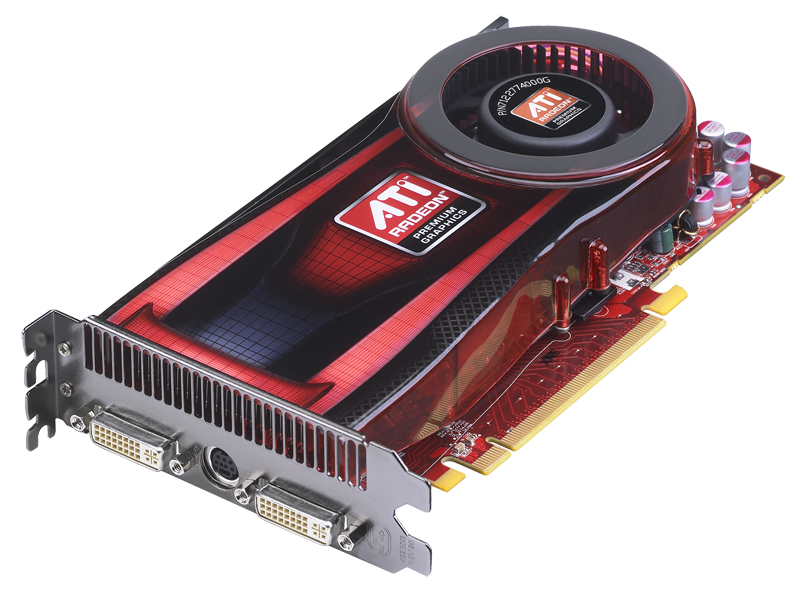 🇺🇸 United StatesRadeon HD 4000 series
AMD graphics processor series with GDDR5 supportGPU · GPU architecture · 2008
 🇺🇸 United StatesRadeon HD 5000 series
First DirectX 11 graphics processor family from AMDGPU · GPU architecture · 2009
 🇺🇸 United StatesAMD 800 chipset series
Chipset family for AMD Phenom and Opteron processorsAnalog · 2009