
RAD750
Radiation-hardened PowerPC processor for spacecraft and satellites
The RAD750 is a radiation-hardened single-board computer designed by IBM and manufactured by BAE Systems. Released in 2001, it serves as the central processing unit for numerous satellites and space probes, succeeding the RAD6000.
- Contains 10.4 million transistors on a 130 mm2 die
- Withstands radiation doses up to 10,000 grays
- First launched into space in 2005 on Deep Impact
- Consumes only 5 watts of power for the CPU
- Based on the PowerPC 750 microarchitecture
What it is
The RAD750 is a radiation-hardened single-board computer built for the harsh conditions of space. Designed by IBM and produced by BAE Systems, it launched in 2001 as the successor to the RAD6000. This processor handles high levels of ionizing radiation found on satellites and spacecraft. It uses PowerPC architecture and operates reliably across extreme temperature ranges. The chip ensures critical computing tasks continue despite cosmic rays and solar particles.
How it came about
IBM designed the processor based on the PowerPC 750 core. BAE Systems manufactures the final radiation-hardened units. The project aimed to replace the older RAD6000 with a more capable device. Development resulted in a chip with ten times more transistors than its predecessor. The first units flew into space in 2005 aboard the Deep Impact mission. Since then, it has become a standard component for NASA and other space agencies.
Inside the chip
The CPU relies on the PowerPC 750 microarchitecture, maintaining compatibility with the PowerPC 7xx family. It features a single core running between 110 and 200 MHz. The design includes 32 KB of instruction cache and 32 KB of data cache at level one. An extended L2 cache option exists to boost performance. The chip contains 10.4 million transistors spread across a 130 mm2 die. It processes over 266 million instructions per second while consuming only five watts.
How it was made
Manufacturing uses either 250 nm or 150 nm photolithography processes. BAE Systems produces the hardened components. The transistor count reached 10.4 million, a significant increase from the 1.1 million in the RAD6000. The physical die area measures 130 square millimetres. Packaging and logic functions align with standard PowerPC designs but include special hardening against radiation damage.
Where it went
This processor powers many notable space missions. The Deep Impact comet-chasing spacecraft was the first to use it in 2005. Other users include the Mars Reconnaissance Orbiter, the Kepler space telescope, and the Curiosity rover. The James Webb Space Telescope also relies on a RAD750 clocked at 118 MHz. By 2010, over 150 units were active in various spacecraft. It supports instruments like SECCHI on STEREO and the Fermi Gamma-ray Space Telescope.
Versions and family
The RAD750 succeeded the RAD6000 and precedes the RAD5500. While the core design remains consistent, manufacturing nodes vary between 250 nm and 150 nm. Clock speeds range from 110 MHz to 200 MHz depending on the specific unit requirements. The James Webb Space Telescope uses a variant running at 118 MHz. The system can include optional extended L2 cache for improved throughput.
Why it matters
The chip became a staple for deep space exploration and earth observation. Its reliability allows long-duration missions like Juno and Perseverance to operate safely. The design proved that commercial-derived architectures could survive space environments with proper hardening. Over 150 units were in orbit by 2010, demonstrating widespread adoption. It bridged the gap between older radiation-hardened tech and modern computing needs.
Problems and reception
The processor faced no major public controversies regarding bugs or recalls. Its high cost, comparable to the RAD6000 price of US$200,000 in 2002, reflects its specialized nature. Final prices depend on customer quantities and program requirements. Engineers value its proven track record in critical missions. The similarity to consumer PowerPC chips, such as those in 1998 iMacs, highlights its commercial origins.
Questions people ask about RAD750
What is the RAD750 used for?
It is a radiation-hardened computer used in satellites and spacecraft. It handles high-radiation environments that would damage standard electronics. Missions like the Mars rovers and the James Webb Space Telescope rely on it.
Who makes the RAD750 processor?
IBM designed the underlying PowerPC 750 architecture. BAE Systems Electronics, Intelligence & Support manufactures the radiation-hardened single-board computer. They produce the final units for space applications.
How much power does the RAD750 consume?
The CPU itself requires five watts of power. The complete single-board system, including the motherboard, needs ten watts. This low power draw is essential for spacecraft with limited energy resources.
Is the RAD750 still in use today?
Yes, it remains active in many missions. The James Webb Space Telescope, launched in 2021, uses one. The Perseverance rover, launched in 2020, also relies on this processor for its operations.
Good reading and sources
The facts on this page come from the Wikipedia article "RAD750", written by its contributors and used under the CC BY-SA 4.0 licence, and from its Wikidata record (CC0). EveryChip rewrote the text in its own words, with AI assistance, and compares every page with the article to make sure no passage is copied. It may be reused under the same CC BY-SA 4.0 licence with a link back.
It may contain mistakes, and figures change over time. Nothing here is investment or buying advice. If something is wrong, tell us. Last refreshed 2026-11-14.
Like RAD750
All CPUs and microprocessors WorldOpenRISC
Open-source RISC processor architecture and reference implementationsCPU · RISC · 2000
🇷🇺 RussiaKOMDIV-32
Radiation-hardened MIPS microprocessors for spacecraftCPU · MIPS · 1999
 🇺🇸 United StatesPowerPC e600
32-bit PowerPC microprocessor core for high-performance SoCsCPU · Power · 2004
EuropeLEON
Radiation-tolerant SPARC V8 microprocessor core for space applicationsCPU · SPARC · 1997
More from IBM
All of them 🇺🇸 United StatesPOWER4
First dual-core non-embedded microprocessor from IBMCPU · Power · 2001
 🇺🇸 United StatesPowerPC 970
IBM's 64-bit PowerPC desktop CPU family, sold by Apple as the G5.CPU · Power · 2002
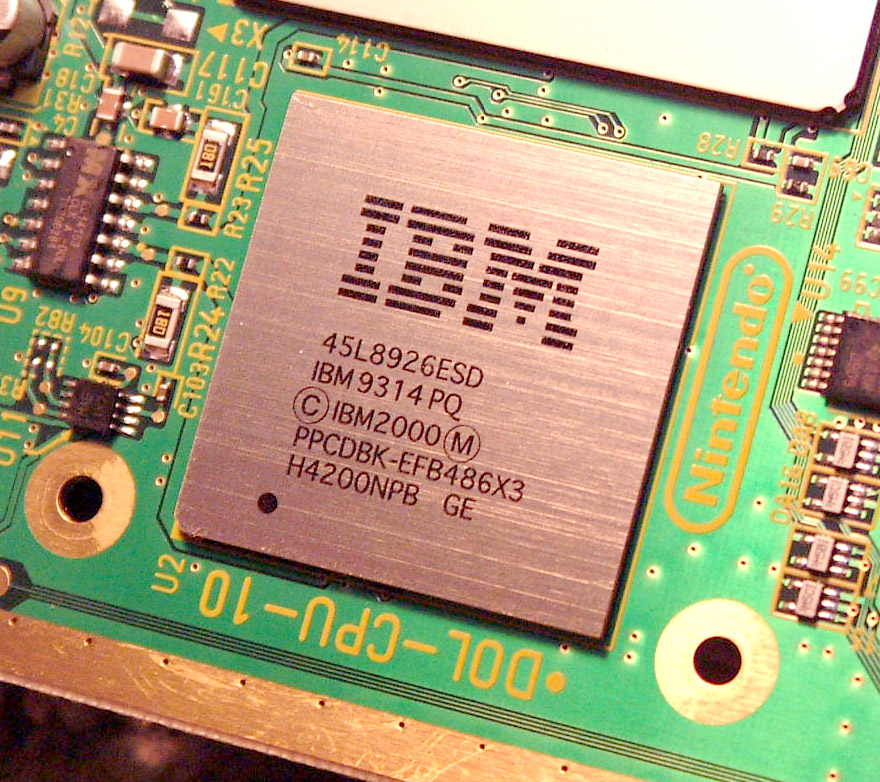 🇺🇸 United StatesGekko
Custom PowerPC CPU for the Nintendo GameCubeCPU · Power · 2000
🇺🇸 United StatesAlpha 21364
DEC microprocessor with integrated memory and network controllersCPU · 2002