Games consoles
The processors and graphics chips inside home and handheld consoles. 195 chips on EveryChip so far.
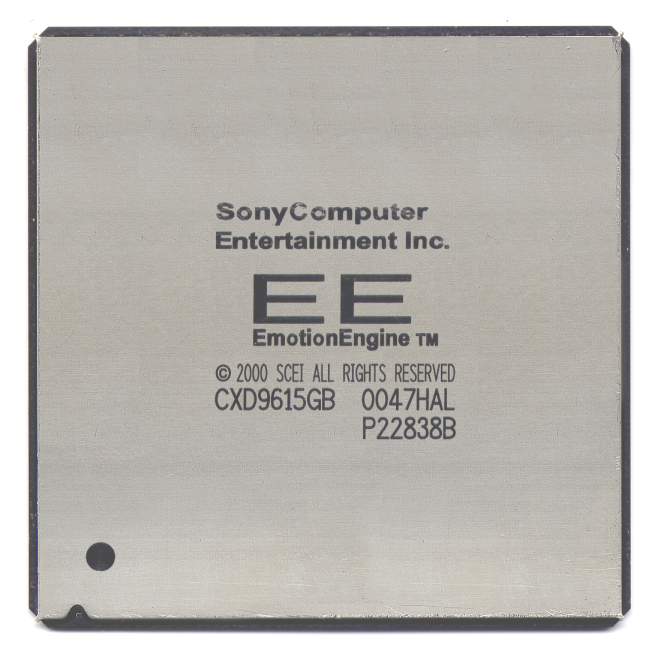
Games consoles have driven chip design since the 1970s. Each console uses a fixed set of chips for years, made in tens of millions, so its makers can afford custom designs. From the Atari 2600's TIA and the NES's Ricoh 2A03 to the PlayStation 2's Emotion Engine and the PlayStation 3's Cell, console chips were often unusual. Recent PlayStation and Xbox consoles use custom AMD SoCs.
Custom chips
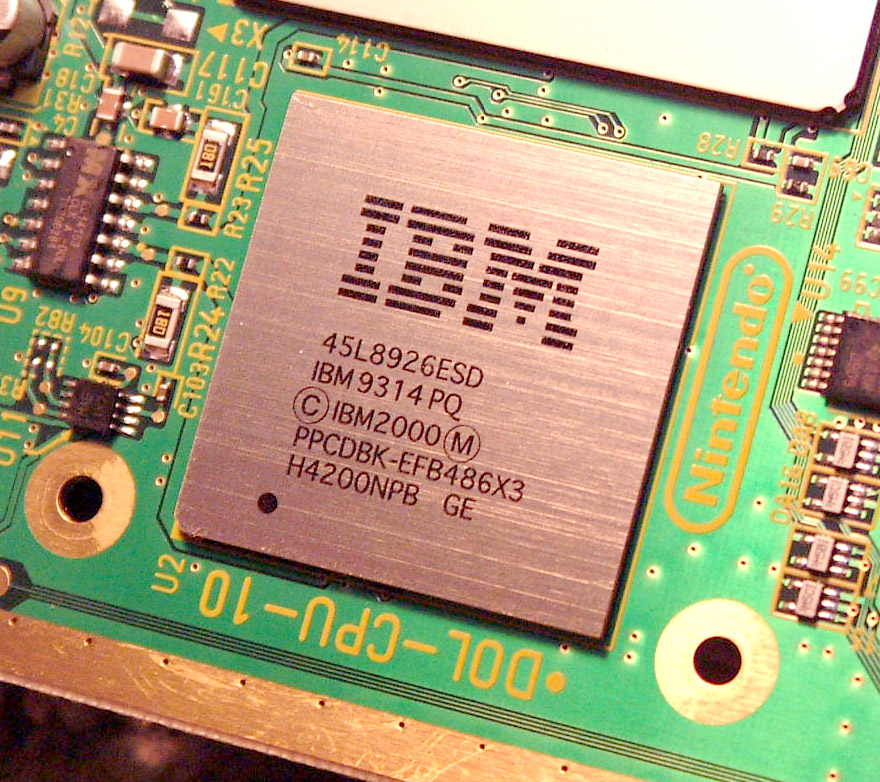
Early consoles needed chips that could draw sprites and scroll backgrounds on a TV with very little memory. Later, the PlayStation 2's vector units and the Cell's eight helper cores gave great power to developers who mastered them. IBM supplied the processors of the GameCube, Wii, Xbox 360 and PlayStation 3 in the same years.
PC-like consoles
The PlayStation 4 and Xbox One of 2013 both used AMD SoCs with x86 CPU cores and Radeon graphics, and their 2020 successors use AMD Zen 2 and RDNA 2. Nintendo chose Nvidia's Tegra X1 for the Switch of 2017 and a newer Nvidia chip for the Switch 2 of 2025. Handheld gaming PCs, such as Valve's Steam Deck, also use AMD chips.
Famous games consoles chips





Further reading
 🇯🇵 JapanHuC6270
Video display controller for the PC Engine consoleConsole chip · Other
 🇺🇸 United StatesPOKEY
Atari I/O chip for sound, keyboard and paddlesAnalog · Other · 1979
 WorldMOS 6507
A low-cost 8-bit 6502 variant in a 28-pin package with an 8 KB address rangeCPU · Other · 1975
 🇺🇸 United States and 1 moreDEC T-11
DEC's first single-chip PDP-11 microprocessor, built for embedded control workCPU · Other · 1982
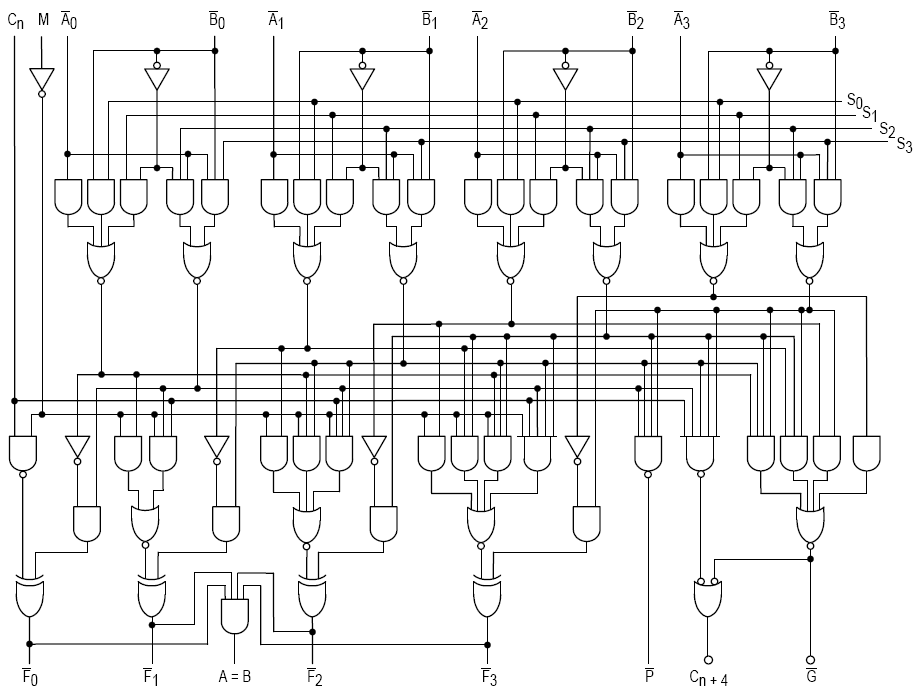 🇺🇸 United States74181
4-bit slice ALU, the first complete arithmetic logic unit on one chipCPU · Other · 1970
🇺🇸 United StatesMOS Technology 6532
Integrated circuit combining RAM, I/O ports and a timer for 1970s systems.Microcontroller · Other
 🇺🇸 United StatesANTIC
Video display controller for Atari 8-bit computers and the 5200 consoleSoC · Other · 1978
 🇯🇵 JapanYM2413
Cost-reduced FM synthesis sound chip by YamahaAnalog · Other · 1986
 🇺🇸 United StatesSN76477
Analog sound chip for arcade games and toysAnalog · Other · 1978
 🇺🇸 United StatesTexas Instruments LPC Speech Chips
Digital signal processors for speech synthesis in toys and arcades.DSP · Other · 1978
 🇺🇸 United StatesAY-3-8500
First dedicated video game chip for home consolesSoC · Other · 1976
🇺🇸 United StatesAmiga Advanced Graphics Architecture
Third-generation graphics chipset for Commodore Amiga computersGPU · Other · 1992
 🇩🇪 Germany and 3 moreU880
East German clone of the Zilog Z80 microprocessorCPU · Other · 1980
 🇯🇵 JapanNEC V60
32-bit CISC microprocessor family from NEC for embedded and arcade useCPU · Other · 1986
🇺🇸 United StatesAA+ Chipset
Planned low-cost Amiga graphics and sound chipset by CommodoreGPU · Other · 1992
 🇺🇸 United StatesPeripheral Interface Adapter
Parallel I/O chip for early microprocessor systemsAnalog · Other · 1976
🇺🇸 United StatesWDC 65C816
16-bit microprocessor from the 6502 family with 24-bit addressingCPU · Other · 1985
 🇺🇸 United StatesGeneral Instrument CP1600
A 16-bit microprocessor from 1975, best known inside the Intellivision consoleCPU · Other · 1975
 🇺🇸 United StatesZilog Z80
An 8-bit microprocessor released in 1976 that became a staple of early personal computing and embedded systems.CPU · Other · 1976
 🇺🇸 United StatesTMS34010
First programmable graphics processor integrated circuitGPU · Other · 1986
 🇺🇸 United StatesMCS-48
Intel's first microcontroller series from 1976Microcontroller · Other · 1976
 🇺🇸 United States and 1 moreCOP400
4-bit microcontroller family for embedded control tasksMicrocontroller · Other · 1977
 🇺🇸 United StatesTMS1100
PMOS microcontroller family from Texas Instruments launched in 1975Microcontroller · Other · 1975
 🇯🇵 JapanToshiba TLCS
Toshiba microcontroller families with CISC and RISC designsMicrocontroller · RISC · 1973
 🇯🇵 JapanNEC μCOM series
NEC microprocessor and microcontroller family from the 1970s and 1980sCPU · x86 · 1973
 🇺🇸 United StatesMOS Technology 6522
I/O controller chip for 6502 microprocessorsMicrocontroller · Other
 🇺🇸 United StatesMOS Technology VIC
Video and sound chip for the Commodore VIC-20 computerGPU · Other · 1979
 🇺🇸 United StatesVIC-II
Video and graphics chip for the Commodore 64 home computer.GPU · Other · 1982
 🇺🇸 United StatesTelevision Interface Adaptor
Custom video and audio chip for the Atari 2600 consoleConsole chip · Other · 1977
 🇺🇸 United StatesCTIA and GTIA
Video display controllers for Atari 8-bit computers and the 5200 console.SoC · Other · 1979
 🇯🇵 JapanYamaha V9938
Video display processor for MSX2 home computersGPU · Other · 1985
 🇺🇸 United StatesSP0256
Voice synthesis chip by General Instrument from the early 1980sAnalog · Other · 1981
 🇯🇵 JapanNEC µPD780C
Zilog Z80 compatible 8-bit microprocessor by NECCPU · Other
🇺🇸 United StatesZilog Z80
An 8-bit microprocessor that powered early personal computers and game consoles.CPU · Other · 1976
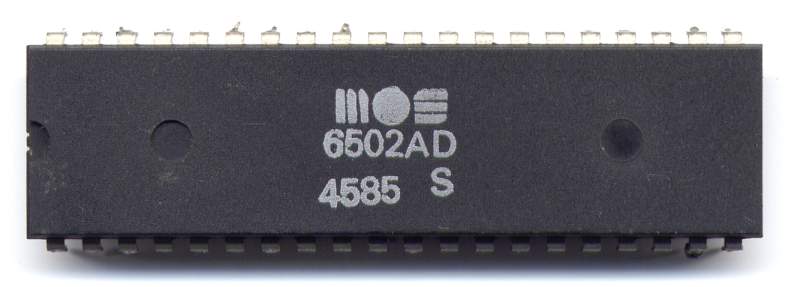 🇺🇸 United StatesMOS Technology 6502
Low-cost 8-bit microprocessor that powered the home computer revolutionCPU · Other · 1975
 🇺🇸 United StatesZilog Z80
An 8-bit microprocessor that powered early personal computers and game consoles.CPU · Other · 1976
 🇯🇵 JapanMemory Management Controller
Special chips in NES cartridges that expand console memory limitsMicrocontroller · Other · 1985
WorldMiSTer
Open-source FPGA platform for retro hardware emulationFPGA · Other · 2017
WorldAnalogue Nt Mini
FPGA-based console for NES and Famicom gamesConsole chip · Other · 2017
🇺🇸 United StatesSN76477
Analog sound chip for arcade games and toysAnalog · Other · 1978
Photo credits on this page
The small pictures above come from Wikimedia Commons under free licences. Some are cropped to fit.
- Cell Broadband Engine: Greenpro, CC BY-SA 3.0, source
- Microsoft XCPU (Xenon): Konstantin Lanzet, CC BY 3.0, source
- Peripheral Interface Adapter: Swtpc6800 en:User:Swtpc6800 Michael Holley, Public domain, source
- Emotion Engine: Unknown author, CC BY-SA 3.0, source
- MOS Technology 6502: Dirk Oppelt, CC BY-SA 3.0, source
- POKEY: RodCastler, CC BY-SA 3.0, source
- MOS 6507: Konstantin Lanzet, CC BY 3.0, source
- DEC T-11: Pauli Rautakorpi, CC BY 3.0, source
- 74181: Unknown author, CC BY-SA 3.0, source
- ANTIC: Rod Castler, CC BY-SA 3.0, source
- YM2413: Baz1521, CC BY-SA 3.0, source
- General Instrument CP1600: Evan-Amos, CC BY-SA 3.0, source
- Zilog Z80: Zilog Inc., Public domain, source
- TMS34010: Konstantin Lanzet, CC BY 3.0, source
- MCS-48: Konstantin Lanzet, CC BY-SA 3.0, source
- COP400: Seanriddle, CC BY-SA 4.0, source
- TMS1100: Konstantin Lanzet (with permission), CC BY-SA 3.0, source
- Toshiba TLCS: NobbiP, CC BY-SA 3.0, source
- NEC μCOM series: Konstantin Lanzet, CC BY-SA 3.0, source
- MOS Technology 6522: Raimond Spekking, CC BY-SA 4.0, source
- MOS Technology VIC: user:idrougge / sv:Användare:Jonas_H, Public domain, source
- VIC-II: Christian Taube, CC BY-SA 2.5, source
- Television Interface Adaptor: Evan-Amos, Public domain, source
- CTIA and GTIA: Rodrigo Castro, CC BY-SA 3.0, source
- Yamaha V9938: Yaca2671, CC BY-SA 3.0, source
- SP0256: Myself User:ZyMOS, CC BY-SA 4.0, source
- SN76477: Leomil72, Public domain, source
- Texas Instruments LPC Speech Chips: Orginal photo © Bill Bertram 2006, editing by user:Tomhannen, CC BY-SA 2.5, source
- AY-3-8500: Raimond Spekking, CC BY-SA 4.0, source
- Gekko: Baz1521, CC BY-SA 3.0, source
- Broadway: ZyMOS, CC BY-SA 4.0, source
- Ricoh 2A03: PantheraLeo1359531, CC BY 4.0, source
- U880: Konstantin Lanzet (with permission), CC BY-SA 3.0, source
- NEC V60: Pauli Rautakorpi, CC BY 3.0, source
- NEC µPD780C: Konstantin Lanzet, CC BY-SA 4.0, source
- Memory Management Controller: Evan-Amos, Public domain, source
- Tegra: Raimond Spekking, CC BY-SA 4.0, source
- Zilog Z80: User Baz1521 on ja.wikipedia, CC BY-SA 3.0, source
- HuC6270: The original uploader was Baz1521 at Japanese Wikipedia ., CC BY-SA 3.0, source