
Zilog Z80
An 8-bit microprocessor released in 1976 that became a staple of early personal computing and embedded systems.
Designed by Federico Faggin and Masatoshi Shima at Zilog, the Z80 launched in July 1976 as a software-compatible successor to the Intel 8080. It dominated the 8-bit market for decades due to its integrated features and lower power requirements.
- Released in July 1976 by Zilog
- Binary compatible with Intel 8080
- Used in ZX Spectrum and Game Gear
- Produced until June 2024
- Contains 8,500 transistors
What it is
The Zilog Z80 is an eight-bit central processing unit introduced in mid-1976. It was created to offer better performance and integration than the Intel 8080 while remaining binary compatible with it. This allowed existing software to run without modification. The chip featured a single five-volt power supply and built-in DRAM refresh capabilities, which reduced the complexity of computer designs. It played a pivotal role in the early personal computing revolution and remained in production until June 2024.
How it came about
Federico Faggin and Ralph Ungermann left Intel in late 1974 to form Zilog. They secured funding from Exxon Enterprises in 1975 to develop the processor. Masatoshi Shima joined the team and led the logic design, creating a unique dual-register system to handle interrupts efficiently. The first samples were delivered by Mostek in March 1976. Zilog established its own fabrication plant later that year to control production. The company used legal traps in the silicon layout to deter unauthorized copying by foreign manufacturers.
Inside the chip
The Z80 architecture extended the Intel 8080 instruction set with new commands for bit manipulation and block data operations. It included two additional sixteen-bit index registers and a complete duplicate set of general-purpose registers. This register swapping mechanism allowed the processor to respond rapidly to external events. The design also featured a sophisticated interrupt system with vectorized modes and a non-maskable interrupt line. These hardware improvements enabled more efficient programming and simpler peripheral interfaces compared to its predecessor.
How it was made
Manufacturing began on a four-micrometre process node. The initial production volume was handled by partners like Mostek and Synertek under exclusive licensing agreements. Zilog eventually built its own factory to capture the majority of the market share. The chip contained approximately 8,500 transistors. Common packaging options included forty-pin dual in-line packages and forty-four-pin plastic leaded chip carriers. CMOS variants produced by Japanese manufacturers later achieved higher clock speeds up to twenty megahertz.
Where it went
The processor powered numerous iconic home computers such as the ZX Spectrum and TRS-80. It was widely adopted in arcade cabinets like Pac-Man and video game consoles including the Sega Master System. In the 1980s, it became standard in portable devices like the Game Gear and TI graphing calculators. Embedded industrial applications also relied heavily on the Z80 for its reliability and low power consumption. British Telecom and other organizations continued using compatible derivatives for specialized tasks well into the modern era.
Versions and family
Zilog developed several successors to extend the original design life. The Z180 and Z280 added integrated peripherals and increased processing power. The Z380 offered further enhancements for complex embedded tasks. Later, the eZ80 provided backward compatibility while supporting newer instruction sets. Many third-party manufacturers produced clones or enhanced versions. Companies like NEC, Toshiba, and Sharp created their own implementations that maintained software compatibility with the original Z80 specification.
Why it matters
The Z80 displaced the Intel 8080 as the dominant eight-bit microprocessor of its generation. Its success validated the strategy of offering second-source manufacturing agreements to reduce supply risks. The chip influenced the development of subsequent processors through its innovative interrupt handling and register architecture. It remained relevant for nearly half a century due to its simplicity and widespread adoption. The long production lifespan demonstrated the enduring value of robust, well-documented semiconductor designs.
Problems and reception
Engineers praised the Z80 for reducing the number of external components required in computer systems. The built-in DRAM refresh feature was particularly valued in office and home computer markets. Some organizations preferred the older 8085 for specific embedded needs due to familiarity. Reverse engineering attempts by foreign firms were initially delayed by intentional circuit traps. Legal disputes over intellectual property were eventually resolved through licensing agreements.


Questions people ask about Zilog Z80
What makes the Z80 different from the Intel 8080?
The Z80 runs on a single five-volt supply instead of multiple voltages. It includes built-in DRAM refresh and a faster interrupt system. It also offers additional instructions for bit manipulation and block data operations while running 8080 code unchanged.
Who designed the Z80 microprocessor?
Federico Faggin and Masatoshi Shima designed the chip at Zilog. Faggin previously worked on the Intel 4004 and 8080. Shima handled the logic and transistor-level design, bringing experience from NEC minicomputers.
Why did the Z80 remain in production so long?
Its simplicity and low power consumption made it ideal for embedded systems. Many industrial and consumer products relied on it for decades. The availability of CMOS versions allowed for battery-powered applications like calculators and portable games.
Which famous devices used the Z80?
It powered the ZX Spectrum, TRS-80, and Osborne 1 computers. It was also found in the Sega Master System, Game Gear, and Pac-Man arcade cabinets. Many graphing calculators and industrial controllers used it as well.
Good reading and sources
The facts on this page come from the Wikipedia article "Zilog Z80", written by its contributors and used under the CC BY-SA 4.0 licence, and from its Wikidata record (CC0). EveryChip rewrote the text in its own words, with AI assistance, and compares every page with the article to make sure no passage is copied. It may be reused under the same CC BY-SA 4.0 licence with a link back.
It may contain mistakes, and figures change over time. Nothing here is investment or buying advice. If something is wrong, tell us. Last refreshed 2026-11-14.
Like Zilog Z80
All CPUs and microprocessors 🇺🇸 United StatesZilog Z80
An 8-bit microprocessor that powered early personal computers and game consoles.CPU · Other · 1976
 🇺🇸 United StatesZilog Z80
An 8-bit microprocessor that powered early personal computers and game consoles.CPU · Other · 1976
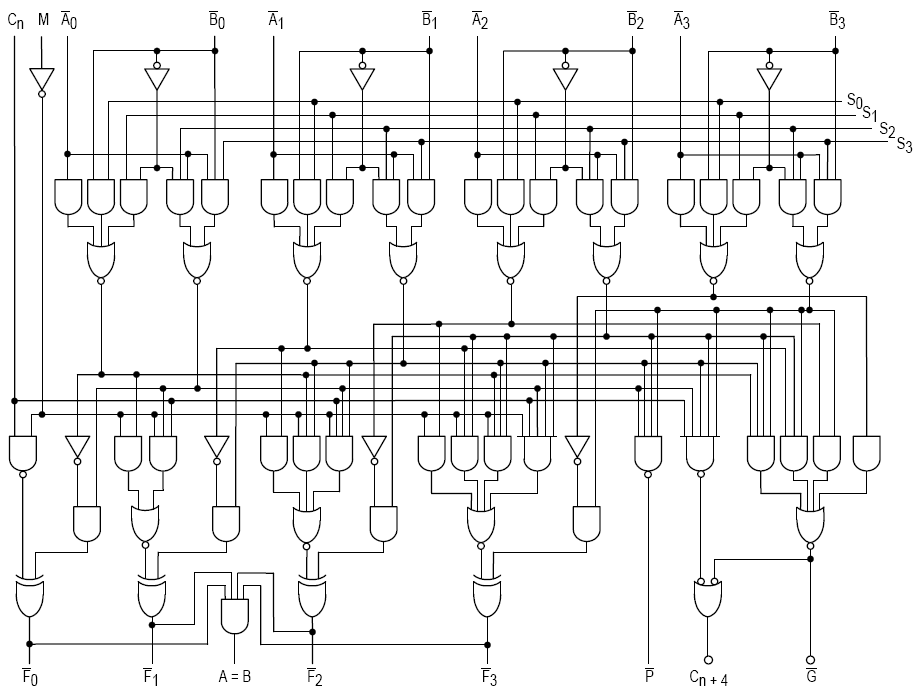 🇺🇸 United States74181
4-bit slice ALU, the first complete arithmetic logic unit on one chipCPU · Other · 1970
🇺🇸 United StatesWDC 65C816
16-bit microprocessor from the 6502 family with 24-bit addressingCPU · Other · 1985
More from Zilog
All of them 🇺🇸 United StatesElectronic Arrays 9002
An 8-bit CPU with on-chip RAM, sold briefly in the mid-1970s.CPU · Other · 1976
 WorldFloppy disk controller
Chip that manages reading and writing data to floppy disksAnalog · 1976
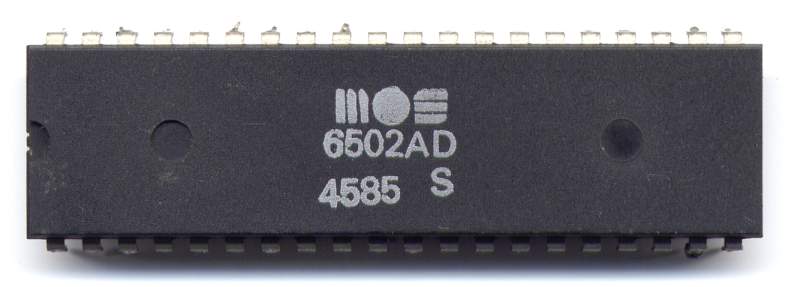 🇺🇸 United StatesMOS Technology 6502
An 8-bit microprocessor from 1975 that made cheap home computing possibleCPU · 8-bit · 1975
🇺🇸 United StatesMOS Technology 6502
Low-cost 8-bit microprocessor that powered the home computer revolutionCPU · Other · 1975