
NEC µPD780C
Zilog Z80 compatible 8-bit microprocessor by NEC
The NEC µPD780C is an 8-bit microprocessor from the µCOM-82 family. It offers full software compatibility with the Zilog Z80 architecture. Manufactured by NEC, it powered early home computers and game consoles in the late 1970s and early 1980s.
- Compatible with Zilog Z80 instruction set
- Maximum clock speed of 2.5 MHz
- Used in Sinclair ZX80 and ZX81 computers
- Featured in Sega SG-1000 game console
- Part of the NEC µCOM-82 series
What it is
The NEC µPD780C is an 8-bit central processing unit. It belongs to the µCOM-82 sub-series within the broader µCOM product line. This chip was designed to be fully compatible with the Zilog Z80 instruction set. NEC manufactured this component for use in various electronic devices. It represents one of several Z80-compatible options available during that era. The device operates at a maximum clock speed of 2.5 megahertz. This performance level matches the original Zilog Z80 specification. Engineers selected it for systems requiring proven 8-bit processing capabilities.
How it came about
NEC developed the µCOM series throughout the 1970s and 1980s. The company started with custom 4-bit and 16-bit designs. Later entries shifted toward compatibility with industry standards. The µCOM-82 line emerged as a Zilog Z80 alternative. The µPD780C variant matched the original Z80 speed. Faster versions followed, such as the µPD780C-1 and µPD780C-2. These later models supported higher clock rates up to 6 megahertz. The series eventually gave way to the V series and 78K family in the mid-1980s.
Inside the chip
This microprocessor implements the Zilog Z80 instruction set architecture. It functions as an 8-bit data processor. The µPD780C variant runs at speeds up to 2.5 MHz. Its internal design allows it to execute standard Z80 software without modification. This compatibility simplified software development for manufacturers. The chip integrates necessary control logic for memory and input/output operations. It does not include on-chip read-only memory or random-access memory in this specific model. Developers could pair it with external support chips for complete system functionality.
How it was made
NEC produced the µPD780C in their own facilities. The chip was part of the µCOM-82 family. NEC offered multiple speed grades within this family. The base µPD780C corresponded to the standard Z80. Faster variants used different suffixes to indicate performance levels. The company also released a complementary metal-oxide-semiconductor version later, known as the µPD70008.
Where it went
System integrators adopted the µPD780C-1 variant for several notable products. Sinclair Research used it in the ZX80 and ZX81 home computers. Early versions of the ZX Spectrum also relied on this chip. It appeared in MSX standard computers and NEC personal computers like the PC-6000 and PC-8000 series. Musical instrument makers included it in synthesizers such as the Oberheim OB-8. Sega utilized the processor in their SG-1000 home video game console. These applications highlight its role in early personal computing and entertainment electronics.
Versions and family
The µCOM-82 family includes three main speed variants. The µPD780C runs at 2.5 MHz. The µPD780C-1 supports up to 4 MHz, matching the Z80A. The µPD780C-2 reaches 6 MHz, equivalent to the Z80B. A CMOS version called the µPD70008 was released later for lower power consumption. The broader µCOM series included 4-bit, 8-bit, and 16-bit families. Most of these lines were replaced by the V series or 78K series in 1984.
Why it matters
The µPD780C provided a viable alternative to Zilog components. Its presence in popular home computers helped establish the Z80 ecosystem. By offering compatible parts, NEC ensured supply chain diversity for manufacturers. The chip supported the growth of the home computer market in Europe and Japan. It enabled affordable computing platforms like the ZX81. Its use in game consoles contributed to the early video game industry. The eventual shift to the V series marked NEC's move toward x86 compatibility.


Questions people ask about NEC µPD780C
Is the NEC µPD780C compatible with Zilog Z80 software?
Yes, the µPD780C is fully software-compatible with the Zilog Z80. It can run programs written for the Z80 without modification. This compatibility made it a popular choice for designers familiar with the Z80 architecture.
What computers used the NEC µPD780C?
The faster µPD780C-1 variant was used in the Sinclair ZX80, ZX81, and early ZX Spectrum. It also appeared in MSX computers, NEC PC-6000 and PC-8000 series, and the Sega SG-1000 game console.
How fast does the µPD780C run?
The standard µPD780C operates at a maximum clock speed of 2.5 MHz. This matches the speed of the original Zilog Z80. Faster variants in the same family reach 4 MHz and 6 MHz.
Good reading and sources
- NEC μCOM series on WikipediaEncyclopedia
- More photos on Wikimedia CommonsPhotos
- Wikidata recordOpen data
The facts on this page come from the Wikipedia article "NEC μCOM series", written by its contributors and used under the CC BY-SA 4.0 licence, and from its Wikidata record (CC0). EveryChip rewrote the text in its own words, with AI assistance, and compares every page with the article to make sure no passage is copied. It may be reused under the same CC BY-SA 4.0 licence with a link back.
It may contain mistakes, and figures change over time. Nothing here is investment or buying advice. If something is wrong, tell us. Last refreshed 2026-11-14.
Like NEC µPD780C
All CPUs and microprocessors 🇩🇪 Germany and 3 moreU880
East German clone of the Zilog Z80 microprocessorCPU · Other · 1980
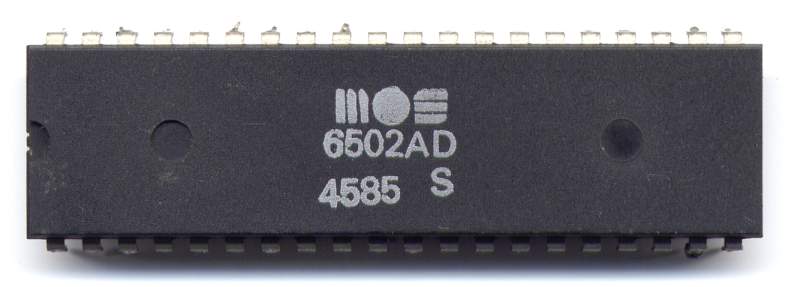 🇺🇸 United StatesMOS Technology 6502
Low-cost 8-bit microprocessor that powered the home computer revolutionCPU · Other · 1975
 🇺🇸 United States and 1 moreSignetics 8X300
A 1976 bipolar microcontroller and signal processor from SigneticsCPU · Other · 1976
 🇺🇸 United StatesZilog Z80
An 8-bit microprocessor that powered early personal computers and game consoles.CPU · Other · 1976
More from NEC
All of them 🇺🇸 United StatesIntel 8282
8-bit latch for Intel 8086 and 8080 systemsAnalog · Other
 🇨🇦 CanadaXenos
Custom GPU for the Xbox 360 console by ATIGPU · GPU architecture
 🇯🇵 JapanHuC6280
8-bit microprocessor for the TurboGrafx-16 consoleCPU · 8-bit