
R420
ATI GPU core for Radeon X800 graphics cards
The R420 is a graphics processing unit designed by ATI Technologies in 2004. It powers the third generation of DirectX 9 capable cards, including the Radeon X800 series. Built on a 130 nm process, it introduced wider pixel pipelines and new compression techniques to boost gaming performance.
- Built on 0.13 micrometre low-K process
- Features 16 pixel pipelines and 6 vertex shaders
- Introduced 3Dc normal map compression
- Supports DirectX 9.0b and OpenGL 2.0
- Driver support ended with Catalyst 9.4
What it is
The R420 is a graphics processor developed by ATI Technologies. It serves as the foundation for the company's third generation of cards supporting DirectX 9.0 and OpenGL 2.0. First appearing in the Radeon X800 line, this chip was manufactured using a 0.13 micrometre low-K photolithography process. It utilises GDDR-3 memory and was primarily designed for Accelerated Graphics Port interfaces. The architecture focuses on increasing parallel processing resources compared to earlier models.
How it came about
ATI originally planned a more advanced fourth generation core codenamed Crayola. This project aimed for unified Shader Model 3 support but was scrapped due to complexity and manufacturing risks. Instead, the company refined the existing R300 design. The resulting R420, internally named Loki, adopted a wider approach to performance. It doubled the pixel and vertex resources of its predecessor. This strategy allowed ATI to deliver high end performance while avoiding the pitfalls of an unproven manufacturing process.
Inside the chip
The chip features sixteen pixel pipelines and six vertex shader engines. These are arranged in four groups called quads. This layout allows defective sections to be disabled for lower tier models. A quad dispatch system spreads work evenly across these groups to optimise throughput. The design supports Pixel Shader 2.0b, offering more instructions than standard 2.0. It also introduces 3Dc compression for normal maps and Temporal Anti-Aliasing. The latter smooths edges by rotating sampling patterns between frames, provided the framerate stays above sixty per second.
How it was made
Manufacturing used a 0.13 micrometre low-K process. Later variants like the RV410 moved to a 0.11 micrometre node to reduce die size and cost. The R430 and R480 cores also used the 110 nm process for mid range parts. High end R480 chips remained on the reliable 130 nm process. This flexibility allowed ATI to bin dies with varying numbers of active quads. Defective units with fewer working pipelines were sold as lower specification cards, maximising yield from each wafer.
Where it went
This GPU powers the Radeon X800, X850, and X700 series of graphics cards. These components were installed in personal computers for gaming and general use. The X800 XT Platinum Edition represented the top tier performance. Mid range options included the X800 Pro and X700 Pro. Mobile versions appeared in laptops via the Mobility Radeon series. The architecture also influenced the Xenos chip in the Xbox 360 console. Driver support ended with Catalyst 9.4, leaving no official Windows 7 compatibility.
Versions and family
The family includes the R420, R430, R480, and RV410 cores. The X800 GT and GTO models used dies with disabled quads. The GTO2 variant could often be unlocked to enable all pipelines via a BIOS change. The X850 series used the R480 core for higher clock speeds. The RV410 powered the X700 line with eight pipelines but retained six vertex shaders. An unreleased X700 XT was planned but cancelled due to production costs and competitive pressures.
Why it matters
The R420 established a strong foothold in the high end market against NVIDIA. Its wide pipeline design proved effective for pixel heavy games of the era. The introduction of 3Dc compression helped improve texture detail without bandwidth penalties. Temporal anti-aliasing offered a novel approach to edge smoothing. The binning strategy allowed ATI to cover multiple price points with a single design. This efficiency helped sustain sales through various SKU releases like the GTO and GT series.
Problems and reception
Overclockers favoured the X800 Pro VIVO for its potential to unlock disabled quads. The X800 GTO gained popularity for its high performance relative to cost. Some users reported flickering with Temporal Anti-Aliasing when framerates dropped. The lack of Windows 7 support later limited its longevity in modern systems. Reviews praised the geometry throughput improvements over the previous generation. The cancelled X700 XT was seen as a missed opportunity in the mid range segment.


Questions people ask about R420
What is the R420 GPU?
The R420 is a graphics processing unit designed by ATI Technologies. It powers the Radeon X800 series and supports DirectX 9.0 and OpenGL 2.0. It was released in 2004 using a 130 nm manufacturing process.
Does the R420 support Windows 7?
No, there is no official Windows 7 support for R420 based products. Driver support was discontinued with the release of Catalyst 9.4, which predates the operating system.
What is 3Dc compression?
3Dc is a normal map compression technology introduced with the R420. It reduces bandwidth usage for surface details by modifying the DXT5 format, preventing artifacts common with standard texture compression.
How many pipelines does the R420 have?
The full R420 core features sixteen pixel pipelines arranged in four quads. Lower end models may have fewer active pipelines if defective quads were disabled during manufacturing.
Good reading and sources
The facts on this page come from the Wikipedia article "Radeon R400 series", written by its contributors and used under the CC BY-SA 4.0 licence, and from its Wikidata record (CC0). EveryChip rewrote the text in its own words, with AI assistance, and compares every page with the article to make sure no passage is copied. It may be reused under the same CC BY-SA 4.0 licence with a link back.
It may contain mistakes, and figures change over time. Nothing here is investment or buying advice. If something is wrong, tell us. Last refreshed 2026-11-14.
Like R420
All graphics processors 🇺🇸 United StatesRankine
Nvidia GPU microarchitecture from 2003 for DirectX 9GPU · GPU architecture · 2003
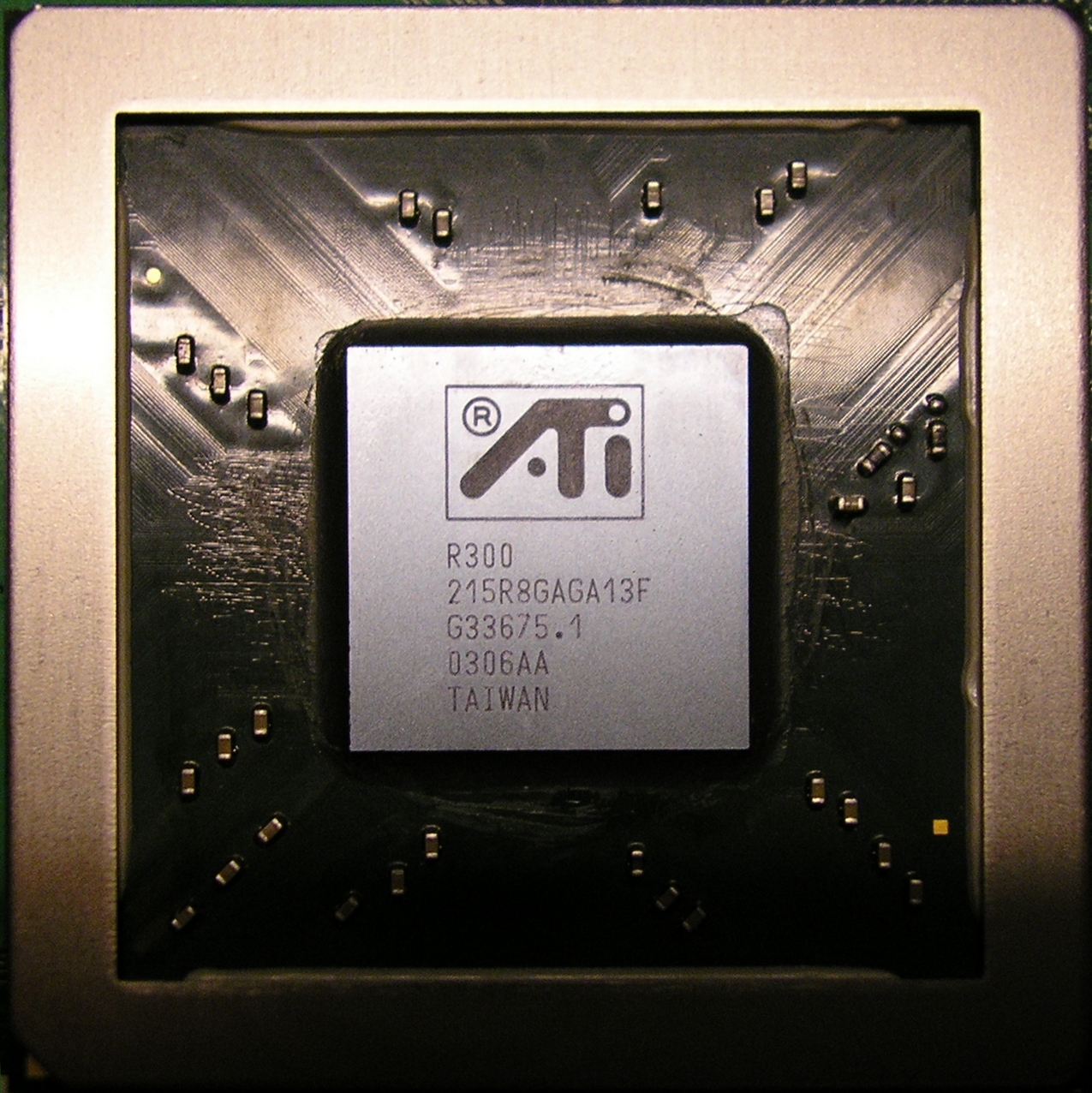 🇨🇦 CanadaRadeon R300
First consumer GPU with full Direct3D 9 supportGPU · GPU architecture · 2002
 🇺🇸 United StatesGeForce 8 series
Nvidia's first unified shader GPU generationGPU · GPU architecture · 2006
 🇺🇸 United StatesKelvin
Nvidia GPU microarchitecture for GeForce 3 and 4 seriesGPU · GPU architecture · 2001
More from ATI Technologies
All of them WorldGDDR3 SDRAM
Memory standard for graphics cards and game consolesMemory · 2004
 🇨🇦 CanadaRadeon Xpress 200
ATI chipset for AMD and Intel desktops with integrated graphicsGPU · 2004
 🇨🇦 CanadaRadeon X1000 series
ATI graphics cards from 2005 using the R500 architectureGPU · GPU architecture · 2005
🇺🇸 United StatesAMD FireStream
GPGPU co-processor cards for supercomputing and stream processing.GPU · GPU architecture · 2006