Alchemy
Ultra low power MIPS embedded microprocessor family
Alchemy is a family of ultra low power system on chip processors designed for communication and media devices. Originally created by Alchemy Semiconductor in 2000 using the MIPS32 instruction set, the line was later owned by AMD, RMI, and Broadcom.
- First unveiled in June 2000 at Embedded Processor Forum
- Uses MIPS32 instruction set with no hardware FPU
- Consumes no more than 500 mW at 400 MHz
- Fabricated on TSMC 180 nm and 130 nm processes
- Acquired by AMD in 2002 to compete with XScale
What it is
Alchemy is a series of embedded microprocessors built as systems on a chip. These devices combine a central processing unit with memory controllers and various peripheral interfaces on a single piece of silicon. The family targets communication equipment and media players where power efficiency is critical. Alchemy Semiconductor introduced the first model in 2000. The chips use the MIPS32 instruction set architecture. They are designed to handle tasks such as wireless networking, video playback, and data storage management in compact devices.
How it came about
Alchemy Semiconductor started in Austin, Texas, in 1999 with funding from Cadence Design Systems. The founding team included engineers who had worked on the StrongARM project at DEC. They licensed the MIPS architecture to create high performance, low power chips. The first processor, the Au1000, was unveiled in June 2000. Advanced Micro Devices acquired the company in February 2002 to compete with Intel. AMD expanded the product line before selling the assets to Raza Microelectronics in 2006. Raza later became RMI Corporation, which merged with NetLogic Microsystems. Broadcom acquired NetLogic in 2012 and continued supporting the chips.
Inside the chip
The Au1 core is a scalar, in-order design with a five stage pipeline. It implements MIPS32 Release 1 but lacks a hardware floating point unit. Software must emulate floating point operations. The core includes separate instruction and data caches, each 16 KiB in size. A hardware interlock manages pipeline hazards. The system bus runs at half the core frequency. Later models added a 64 bit side bus for higher bandwidth peripherals. The chips integrate direct memory access controllers, timers, and power management units. Some versions include security engines for encryption or media acceleration engines for video decoding.
How it was made
Early Alchemy processors were manufactured by TSMC using an 180 nanometre logic process. The Au1100 moved to a 130 nanometre node to reduce power consumption further. Manufacturing details for subsequent models were not publicly disclosed. All members of the family used a lead free fine pitch plastic ball grid array package. The package size varied from 17 mm square to 23 mm square depending on the pin count. Ball counts ranged from 324 for the earliest models to 537 for the latest graphics enabled versions.
Where it went
These processors powered wireless gateways, voice over internet protocol phones, and network attached storage devices. They were found in set top boxes, thin clients, and portable media players. Specific products included the Sun Ray 2 thin client and Cowon personal media players. Dell used them in remote administration cards. Networking equipment such as the AirPort Extreme Base Station also utilized Alchemy chips. The Au1300 series supported automotive television and digital photo frames due to its integrated graphics capabilities.
Versions and family
The family began with the Au1000, followed by the Au1500 and Au1100. AMD added the Au1550 for security networks and the Au1200 for media players. Raza Microelectronics introduced the Au1210 and Au1250, which were pin compatible with the Au1200. The Au1300 series integrated a graphics processor based on ARM Mali technology. Each variant offered different core frequencies and peripheral sets. The Au1550 included a security engine, while the Au12xx and Au13xx models featured enhanced media acceleration and camera interfaces.
Why it matters
Alchemy processors provided a viable alternative to ARM based designs in the early 2000s embedded market. Their low power consumption made them suitable for battery operated devices and always on networking gear. The integration of media acceleration engines allowed for efficient video playback without heavy CPU load. The transition through multiple owners demonstrated the value of the intellectual property. Long term availability commitments by Broadcom ensured continued use in industrial applications well after the original launch.
Questions people ask about Alchemy
What instruction set does the Alchemy processor use?
All members of the Alchemy family use the Au1 CPU core which implements the MIPS32 instruction set architecture Release 1. It supports the MIPS EJTAG interface but omits some optional features like Supervisor Mode.
Who currently owns the Alchemy processor technology?
Broadcom Corporation owns the Alchemy assets. They acquired NetLogic Microsystems in February 2012, which had previously merged with RMI Corporation. Broadcom continued to sell the processors under long term availability obligations.
Does the Alchemy chip have a floating point unit?
No, the Au1 CPU core does not include a hardware floating point unit. Floating point instructions generate an exception and must be emulated by software. This design choice helped keep power consumption low for embedded applications.
What was the power consumption of the original Au1000?
At a core frequency of 400 MHz and 1.5 V operation, the Au1000 consumes no more than 500 milliwatts. It was rated for core frequencies up to 500 MHz and offered high performance per watt for its time.
Good reading and sources
The facts on this page come from the Wikipedia article "Alchemy (processor)", written by its contributors and used under the CC BY-SA 4.0 licence, and from its Wikidata record (CC0). EveryChip rewrote the text in its own words, with AI assistance, and compares every page with the article to make sure no passage is copied. It may be reused under the same CC BY-SA 4.0 licence with a link back.
It may contain mistakes, and figures change over time. Nothing here is investment or buying advice. If something is wrong, tell us. Last refreshed 2026-11-14.
Like Alchemy
All systems on a chip 🇨🇳 ChinaESP32
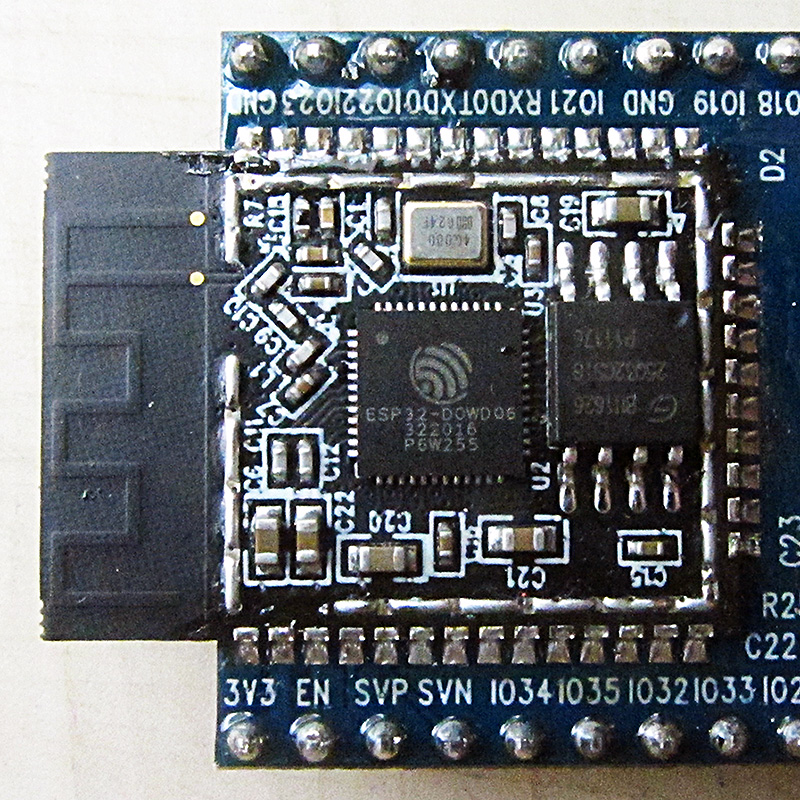
Low-cost Wi-Fi and Bluetooth microcontroller family from Espressif SystemsMicrocontroller · RISC · 2016
 WorldESP32
Low-cost microcontroller with Wi-Fi and Bluetooth made by Espressif Systems.Microcontroller · Arm · 2016
🇨🇳 ChinaESP32
Low-cost Wi-Fi and Bluetooth microcontroller familyMicrocontroller · RISC · 2016
🇨🇳 ChinaESP32
Low-cost Wi-Fi and Bluetooth microcontroller family by EspressifMicrocontroller · RISC · 2016
More from Alchemy Semiconductor
All of them 🇺🇸 United StatesDuron
Budget x86 microprocessor line by AMDCPU · x86 · 2000
 🇺🇸 United StatesAthlon
AMD's x86 desktop processor brand, from the first 1 GHz chip to entry-level Zen APUsCPU · x86 · 1999
 🇺🇸 United StatesAMD K6-III
x86 desktop processor with on-die L2 cacheCPU · x86 · 1999