Chips of North America
742 chips from North America on EveryChip so far.
Chip hubs
Austin 19East Fishkill 9Silicon Valley 8Hillsboro 2Phoenix and Chandler 2Rochester 2San Diego 2Burlington and Essex Junction 1Albany and MaltaBoiseDallas and Sherman
Events
ISSCC: International Solid-State Circuits ConferenceIEDM: International Electron Devices MeetingHot ChipsDAC: Design Automation ConferenceSPIE Advanced Lithography and PatterningRISC-V Summit North AmericaSC: The International Conference for High Performance ComputingCES
Countries
KindCPUGPUAI acceleratorSoCMicrocontrollerMemoryFPGADSPNetwork chipModemSensorAnalogConsole chipMining or securityQuantum
 🇺🇸 United StatesATmega88
8-bit AVR microcontroller with 8K flash memoryMicrocontroller · Other
 🇺🇸 United StatesAT89 series
Intel 8051-compatible 8-bit microcontrollers by AtmelMicrocontroller · MCU family
🇺🇸 United StatesSmartFusion
Flash-based FPGA with an ARM Cortex-M3 coreMicrocontroller · Arm
 🇺🇸 United StatesPSoC
Configurable microcontroller with mixed-signal blocksMicrocontroller · Arm · 2002
 🇺🇸 United StatesMAX232
RS-232 to TTL level shifter integrated circuitAnalog · 1986
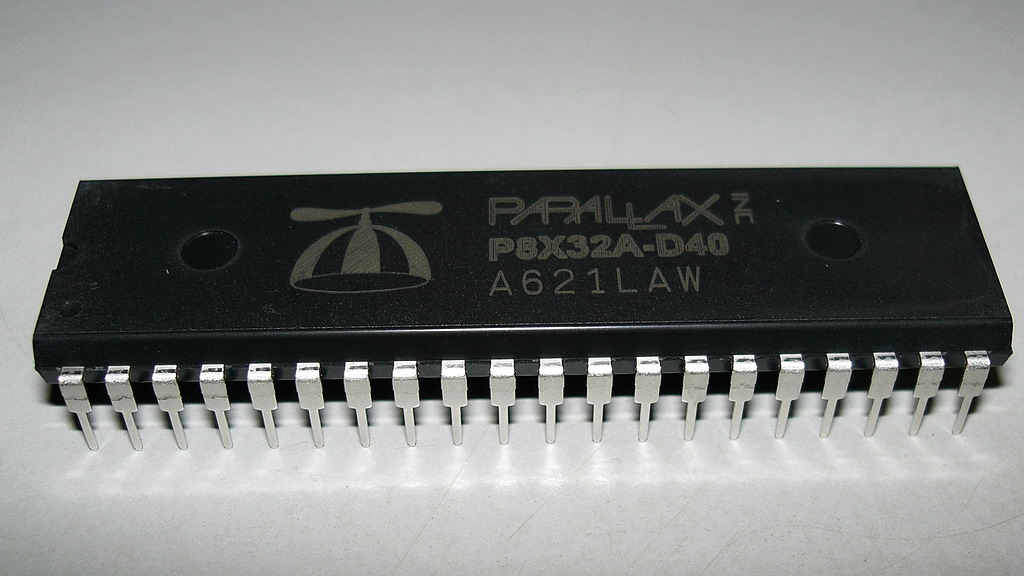 🇺🇸 United StatesParallax Propeller
Eight-core microcontroller with parallel processingMicrocontroller · RISC · 2006
 🇺🇸 United StatesPIC16x84
8-bit microcontroller family with EEPROM and Flash memoryMicrocontroller · RISC · 1993
🇺🇸 United StatesParallax SX
High-speed 8-bit RISC microcontroller line by ParallaxMicrocontroller · RISC
 🇺🇸 United StatesRabbit 2000
High-performance 8-bit microcontroller for embedded systemsMicrocontroller · 8-bit
🇺🇸 United StatesDS80C390
8051-based microcontroller with CAN and math coprocessorMicrocontroller · MCU family
🇺🇸 United StatesM·CORE
Low-power 32-bit RISC microcontroller architecture by MotorolaMicrocontroller · RISC · 1997
 🇺🇸 United StatesMotorola 68881
External floating-point coprocessor for Motorola 68020 and 68030 CPUsAnalog · 68k · 1984
 🇺🇸 United States1T-SRAM
High-density pseudo-static memory technology for embedded systemsMemory · 1998
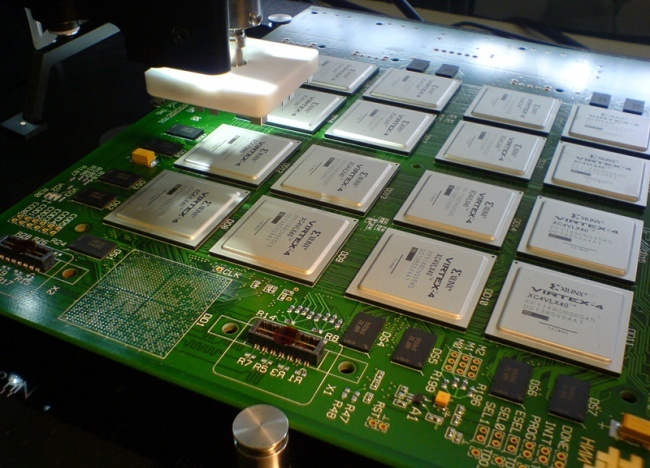 🇺🇸 United StatesVirtex
High-performance FPGA family by AMD and XilinxFPGA · Other · 1999
🇺🇸 United StatesICE
Low-power FPGAs for portable and battery-powered devicesFPGA · 2008
 🇺🇸 United StatesMotorola 56000
A 24-bit digital signal processor for audio and communications.DSP · Other · 1986
🇺🇸 United StatesAm2045
Parallel processor array for embedded video and imaging tasksAI accelerator · RISC · 2003
 🇺🇸 United StatesNCR 5380
First single-chip SCSI-1 controller for early computersAnalog
 🇺🇸 United StatesAm7990
Ethernet media access controller introduced in 1985Network chip · Other · 1985
🇺🇸 United StatesNCR 53C9x
SCSI controller family for workstations and consolesAnalog
 🇺🇸 United StatesSiRFstarIII
High sensitivity GPS microcontroller chip range by SiRFMicrocontroller · 2004
 🇺🇸 United States7400 series
Standardised transistor-transistor logic integrated circuits for digital electronics.Analog · 1964
 🇺🇸 United StatesIntel 8259
Programmable interrupt controller for early Intel microprocessorsAnalog · Other · 1976
 🇺🇸 United StatesIntel 8282
8-bit latch for Intel 8086 and 8080 systemsAnalog · Other
🇺🇸 United StatesNorthPole
Brain-inspired AI inference chip by IBM ResearchAI accelerator · Other
🇺🇸 United StatesLoihi 2
Second-generation neuromorphic research processor from Intel LabsAI accelerator · Other
🇺🇸 United StatesEdge TPU
AI accelerator chip for edge devices by Google CoralAI accelerator · RISC-V
🇺🇸 United StatesQualcomm Cloud AI 100
AI inference accelerator for data centres and edge devicesAI accelerator · VLIW · 2021
 🇺🇸 United StatesMotorola 68000 series
32-bit CISC microprocessor family from MotorolaCPU · 68k · 1979
 🇺🇸 United StatesIntel 80186
16-bit microprocessor with integrated peripherals for embedded systemsCPU · x86 · 1982
 🇺🇸 United StatesI486
32-bit microprocessor with on-chip cache and FPUCPU · x86 · 1989
 🇺🇸 United StatesPowerQUICC
Freescale PowerPC microcontrollers for networking and embedded systemsMicrocontroller · Power · 1995
🇺🇸 United StatesIBM PALM processor
16-bit CPU module used in early IBM portable computersCPU · Other · 1975
 🇺🇸 United StatesATtiny
Compact 8-bit AVR microcontroller family for simple embedded tasksMicrocontroller · Other · 1999
 🇺🇸 United StatesMC68451
Memory management unit for Motorola 68000 series processorsAnalog · 68k
 🇺🇸 United StatesIntel 2700G
Mobile graphics co-processor for XScale PXA27xGPU · GPU architecture · 2004
 🇺🇸 United StatesCyrix Cx486
x86 desktop microprocessor competing with Intel 486CPU · x86 · 1993
 🇺🇸 United States and 1 moreMC10800
4-bit bit-sliced processor in ECL logic from 1979CPU · Other · 1979
🇺🇸 United StatesAxcent
Audio-visual control microcontroller by AMXMicrocontroller · Other
🇺🇸 United StatesMC68340
32-bit microprocessor with integrated DMA and system functionsMicrocontroller · 68k
🇺🇸 United StatesSandy Bridge-E
32 nm server and workstation processors from IntelCPU · x86 · 2011
 🇺🇸 United States and 2 moreEEPROM
Byte-erasable non-volatile memory for small data storageMemory · 1978
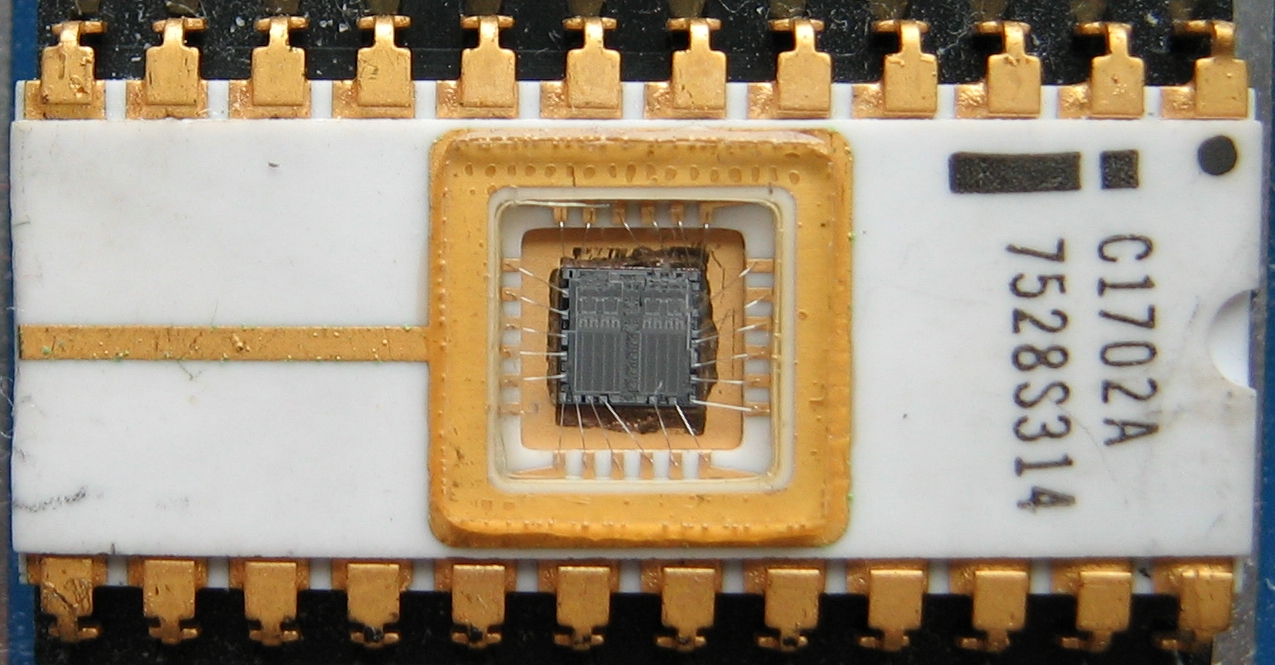 🇺🇸 United StatesEPROM
Non-volatile memory chip erased by ultraviolet lightMemory · 1971
 🇺🇸 United StatesUART
Chip for serial data communication between devicesAnalog · 1971
 🇺🇸 United StatesIntel Core
Multi-core x86 CPUs for PCs and servers by Intel.CPU · x86 · 2006
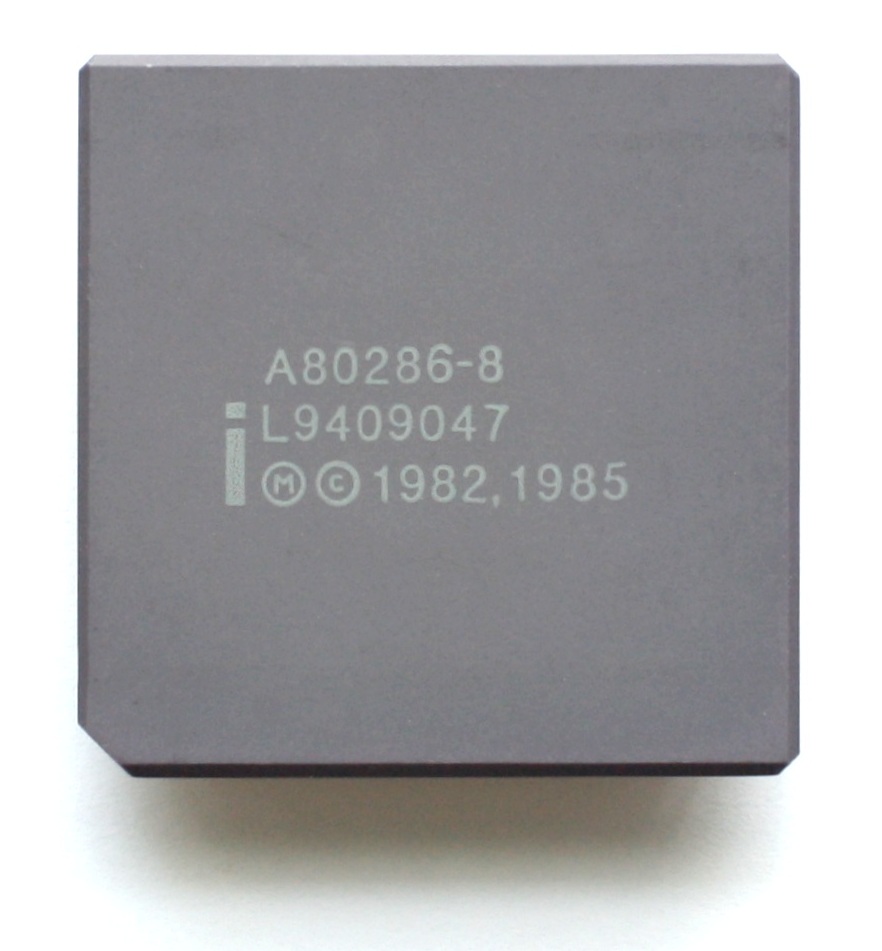 🇺🇸 United StatesIntel 80286
16-bit microprocessor with protected mode and 16 MB memory supportCPU · x86 · 1982
 🇺🇸 United StatesIntel Edison
Small computer module for wearables and IoT devicesSoC · x86 · 2014
 🇺🇸 United StatesPlatform Controller Hub
Intel single-chip chipset for I/O controlAnalog · 2009
Photo credits on this page
The small pictures above come from Wikimedia Commons under free licences. Some are cropped to fit.
- Intel 80286: Konstantin Lanzet (with permission), CC BY-SA 3.0, source
- Intel 2700G: Pinchies, CC BY-SA 4.0, source
- ATtiny: Torsten Landschoff, Public domain, source
- EEPROM: Nevit Dilmen ( talk ), CC BY-SA 3.0, source
- MC68451: David Monniaux, CC BY-SA 3.0, source
- Motorola 68000: en:User:ArnoldReinhold, CC BY-SA 3.0, source
- ATmega88: Raimond Spekking, CC BY-SA 4.0, source
- AT89 series: User Bb3cxv on en.wikipedia, CC BY-SA 3.0, source
- PSoC: NobbiP, CC BY-SA 3.0, source
- MAX232: Raimond Spekking, CC BY-SA 4.0, source
- Parallax Propeller: MOS6502, CC BY-SA 2.5, source
- PIC16x84: _brouhaha_, CC BY-SA 2.0, source
- Rabbit 2000: Konstantin Lanzet, CC BY-SA 3.0, source
- Motorola 68881: NaSH at French Wikipedia, CC BY-SA 3.0, source
- 1T-SRAM: Unknown author, CC BY-SA 3.0, source
- Virtex: Антракт, CC BY-SA 4.0, source
- Motorola 56000: Konstantin Lanzet, CC BY-SA 3.0, source
- NCR 5380: Alecv, CC BY-SA 4.0, source
- Am7990: Phiarc, CC BY-SA 4.0, source
- SiRFstarIII: Raimond Spekking, CC BY-SA 4.0, source
- 7400 series: User:Stefan506 ( dewiki userpage ), CC BY-SA 3.0, source
- Intel 8259: Nixdorf, CC BY-SA 3.0, source
- Intel 8282: JWBE, CC BY-SA 3.0, source
- Cyrix Cx486: Appaloosa, CC BY-SA 3.0, source
- I486: Konstantin Lanzet, GFDL, source
- Intel 80186: Armin Kübelbeck, CC BY-SA 3.0, source
- MC10800: Konstantin Lanzet, CC BY-SA 3.0, source
- UART: Raimond Spekking, CC BY-SA 4.0, source
- EPROM: Author : Poil 01:10, 17 Apr 2005 (UTC), CC BY-SA 3.0, source
- Intel Core: Köf3, CC BY-SA 3.0, source
- Intel Edison: Mwilde2, CC BY-SA 4.0, source
- Platform Controller Hub: Raimond Spekking, CC BY-SA 4.0, source
- PowerQUICC: Henrik Wannheden, CC BY-SA 4.0, source