
MC68451
Memory management unit for Motorola 68000 series processors
The MC68451 is a memory management unit designed by Motorola to work with the MC68010 microprocessor. It enabled virtual memory and protected access within a 16 MB address space using segment-based mapping.
- Supported a 16 MB address space for memory management
- Mapped up to 32 variable-size memory segments
- Enabled virtual memory when paired with MC68010
- Multiple units could be used simultaneously for more segments
- Successor was the Motorola 68851 MMU
What it is
The MC68451 is an integrated circuit that acts as a memory management unit. Motorola developed this chip to pair with its MC68010 microprocessor. Its main job was to handle memory protection and manage how software accessed physical hardware resources. By supporting a 16 MB address space, it allowed older processor designs to use more sophisticated memory techniques. This component translated logical addresses from software into physical locations in hardware memory. It served as a bridge between the central processing unit and the system memory, ensuring that programs could not overwrite each other’s data accidentally.
How it came about
Motorola created the MC68451 to extend the capabilities of its 68000 family. The earlier MC68000 processor could not support virtual memory on its own because it failed to save its state correctly during memory errors. This limitation meant that implementing virtual memory required two processors working together, which was inefficient. The MC68010 fixed the error handling issue, allowing the MC68451 to enable virtual memory with just one CPU. Motorola demonstrated this combination on a single-board computer module. Some companies, such as Sun Microsystems, chose to build their own proprietary units instead of using this chip.
Inside the chip
This unit used a segment-based approach to manage memory. It could map up to 32 segments or pages of variable size from logical to physical addresses. This block size flexibility helped organize memory efficiently for different tasks. However, the limit of 32 entries per chip often slowed down systems. The processor had to frequently update the segment table because it was so small. To overcome this limit, designers could connect multiple MC68451 chips at the same time. This setup allowed for more segments and better performance in complex applications requiring large address spaces.
How it was made
Specific details about the manufacturing process, transistor count, or physical package are not available in the provided records. Motorola, which later became part of Freescale, was the organization responsible for its development. The chip was designed to interface directly with the MC68010 and MC68000 processors. As a specialized support chip, it focused on logic and control rather than raw computation power. Its production details remain unspecified in the current documentation.
Where it went
The primary application for this chip was in systems running the MC68010 processor that needed virtual memory. H. Berthold AG utilized twelve of these units in their UNOS variant called vBertOS. This configuration supported their specific operating system requirements. Motorola also produced demonstration modules to show developers how to integrate the MMU with the CPU. While some major tech firms opted for custom solutions, this chip provided a standard off-the-shelf option for memory management in embedded and industrial computing environments during its era.
Versions and family
The MC68451 was followed by the Motorola 68851, which served as its successor. The earlier MC68000 processor was incompatible with efficient virtual memory implementation without significant hardware workarounds. The MC68010 was the specific processor partner that made this MMU viable for single-CPU systems. No other direct siblings or alternative model numbers are listed in the available information. The design remained focused on the 68000 family architecture throughout its lifecycle.
Why it matters
This chip provided a standardized way to add memory protection and virtual memory to Motorola-based systems. It addressed a critical gap in the MC68000 architecture by working with the improved MC68010. Although the 32-segment limit caused performance bottlenecks, it allowed developers to implement complex memory schemes. The existence of this unit influenced how third-party manufacturers approached memory management for this processor family. It demonstrated that external support chips could extend the life and utility of existing CPU designs.
Problems and reception
Systems using this MMU often suffered from slow performance due to the small segment table. Frequent modifications to the table were necessary, which consumed processing time. Some industry leaders, including Convergent Technologies and Sun Microsystems, decided against using it. They preferred to develop their own proprietary memory management units instead. This suggests that while the chip solved the technical problem of virtual memory, its performance characteristics did not meet the needs of all high-end users.

Questions people ask about MC68451
What processor does the MC68451 work with?
It was primarily designed to work with the Motorola MC68010 microprocessor. It could also support the earlier MC68000, but virtual memory implementation was difficult and inefficient with that older chip due to error handling limitations.
How many memory segments can it manage?
A single MC68451 chip supports up to 32 memory segments or pages. These segments can be of variable size. If a system requires more than 32 segments, multiple MMU chips can be used at the same time.
Why did some companies avoid using this chip?
The limit of 32 segment entries often made systems slow because the table had to be modified frequently. Companies like Sun Microsystems and Convergent Technologies chose to build their own proprietary MMUs instead of using this standard part.
Good reading and sources
- Motorola 68451 on WikipediaEncyclopedia
- More photos on Wikimedia CommonsPhotos
- Wikidata recordOpen data
The facts on this page come from the Wikipedia article "Motorola 68451", written by its contributors and used under the CC BY-SA 4.0 licence, and from its Wikidata record (CC0). EveryChip rewrote the text in its own words, with AI assistance, and compares every page with the article to make sure no passage is copied. It may be reused under the same CC BY-SA 4.0 licence with a link back.
It may contain mistakes, and figures change over time. Nothing here is investment or buying advice. If something is wrong, tell us. Last refreshed 2026-11-14.
Like MC68451
All analog, power and mixed-signal WorldMotorola 68851
External memory management unit for Motorola 68020 processorsAnalog · 68k
 🇺🇸 United StatesMotorola 68881
External floating-point coprocessor for Motorola 68020 and 68030 CPUsAnalog · 68k · 1984
 🇺🇸 United StatesLM3914
Analog display driver for LED bar graphs and dot metersAnalog
 🇺🇸 United StatesLM358
Low-power dual operational amplifier for single-supply circuitsAnalog
More from Motorola
All of them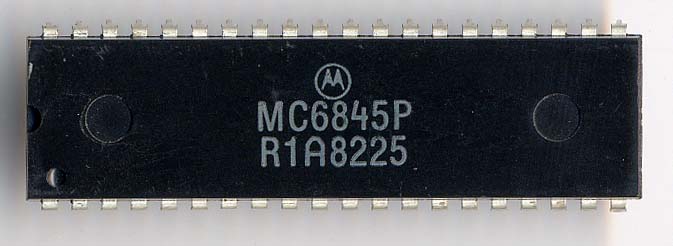 🇺🇸 United StatesMotorola 6845
Display controller for 1980s home computers and early PC graphics cardsGPU
 WorldMotorola 96000
32-bit floating point digital signal processor by MotorolaDSP · Other