EPROM
Non-volatile memory chip erased by ultraviolet light
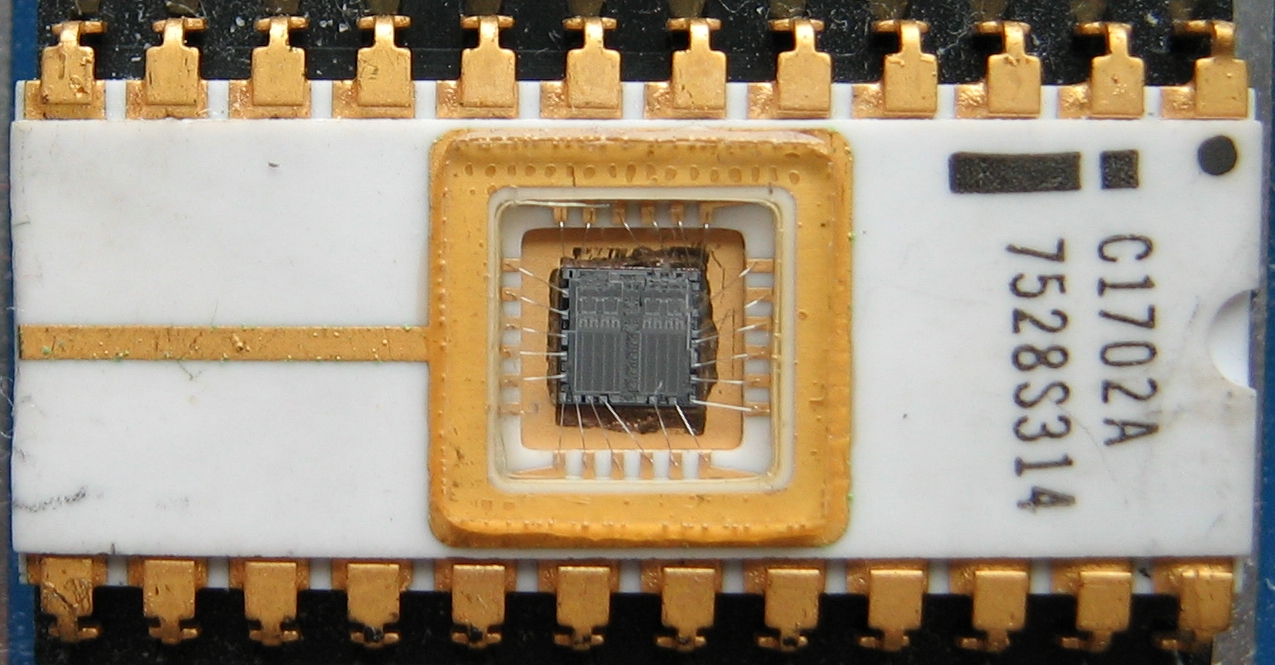
Invented by Dov Frohman at Intel in 1971, the EPROM is a non-volatile memory chip that retains data without power. It uses floating-gate transistors and is erased by exposing the silicon die to strong ultraviolet light through a quartz window.
- Invented by Dov Frohman at Intel in 1971
- Erased by exposing silicon to ultraviolet light
- Features a transparent quartz window on the package
- Retains data for ten to twenty years minimum
- First device was the 2048-bit Intel 1702
What it is
An EPROM is a type of programmable read-only memory that keeps its stored information even when the power is turned off. This non-volatile characteristic makes it useful for storing firmware. The chip contains an array of transistors with floating gates that trap electrical charge. A distinctive feature is the transparent window on the package, which allows ultraviolet light to reach the silicon die for erasing. Dov Frohman invented this technology at Intel in 1971.
How it came about
The concept originated from studies of faulty integrated circuits where broken gate connections trapped charge. Frank Wanlass observed charge movement in MOSFET structures in 1963. Dawon Kahng and Simon Min Sze later proposed using the floating gate for reprogrammable memory. Building on this, Dov Frohman created the first EPROM, the Intel 1702, in 1971. He received a patent for the invention the following year. Early devices used p-MOS technology before switching to n-MOS and later CMOS processes.
Inside the chip
Each storage cell uses a field-effect transistor with an insulated floating gate. Programming involves applying high voltage to force electrons through an oxide layer onto the gate. These trapped electrons change the transistor threshold voltage, representing data bits. The charge remains for decades due to high insulation. Erasure requires ultraviolet light, which ionizes the oxide and lets the charge escape. Because the entire array is exposed to light, all data is erased simultaneously. This process takes several minutes under a UV lamp.
How it was made
Early generations used p-MOS and n-MOS fabrication methods. Later versions adopted CMOS technology to reduce costs. The package includes a fused quartz or resin window to permit UV exposure during erasing. One-time programmable variants use opaque packages to lower costs by eliminating the window. Manufacturing mask-programmed ROMs takes weeks, but EPROMs allow faster updates for small production volumes. Dust inside the package can interfere with erasure, and repeated cycling damages the oxide layers.
Where it went
EPROMs were widely used in personal computer BIOS chips before flash memory became common. The quartz window was often covered with a label containing version details. Microcontrollers like the Intel 8051 and PIC series used on-chip EPROM for program storage. Windowed versions aided debugging, while cheaper opaque one-time programmable parts served in final products. They are suitable for development and low-volume production where firmware updates are needed.
Versions and family
The Intel 1702 was the first device, followed by the 2704 and 2708 series using n-MOS. Third-generation chips like the 2716 required only a single five-volt supply for reading. Texas Instruments produced non-standard pinout variants such as the TMS2516. CMOS versions added a C to the part number. As densities increased, UV erasure became less practical, leading to the adoption of EEPROM and flash memory which support electrical erasure.
Why it matters
This technology enabled rapid firmware upgrades during development, avoiding the long lead times of mask ROMs. It proved economical for small-volume production. The signature mode allowed programmers to identify chip manufacturers automatically. Although largely replaced by electrically erasable alternatives, EPROMs demonstrated the viability of floating-gate storage. They remain a key step in the evolution of non-volatile semiconductor memory.


Questions people ask about EPROM
How do you erase data from an EPROM?
You must expose the silicon die to strong ultraviolet light through the quartz window. This ionizes the oxide layer and allows the trapped charge on the floating gates to dissipate. The process typically takes twenty to thirty minutes using a dedicated UV lamp.
Why does an EPROM have a window on top?
The transparent fused quartz window allows ultraviolet light to reach the internal silicon chip. Since erasure is not electrically reversible, this optical access is necessary to clear the memory cells. Opaque labels are often used to prevent accidental erasure by sunlight.
What replaced EPROM technology?
Electrically Erasable Programmable Read-Only Memory (EEPROM) and flash memory have mostly displaced EPROMs. These newer technologies allow electrical erasure, which is more convenient than removing the chip for UV exposure. They also avoid the cost and fragility of the quartz window.
Good reading and sources
The facts on this page come from the Wikipedia article "EPROM", written by its contributors and used under the CC BY-SA 4.0 licence, and from its Wikidata record (CC0). EveryChip rewrote the text in its own words, with AI assistance, and compares every page with the article to make sure no passage is copied. It may be reused under the same CC BY-SA 4.0 licence with a link back.
It may contain mistakes, and figures change over time. Nothing here is investment or buying advice. If something is wrong, tell us. Last refreshed 2026-11-14.
Like EPROM
All memory chips 🇺🇸 United StatesIntel 1103
First commercially available DRAM integrated circuitMemory · 1970
 🇺🇸 United States and 2 moreEEPROM
Byte-erasable non-volatile memory for small data storageMemory · 1978
 WorldSIMM
Early computer memory module with redundant contacts on both sides.Memory · 1983
 🇩🇪 GermanyU61000
First 1-Mbit DRAM chip from the German Democratic RepublicMemory · 1988
More from Intel
All of them 🇺🇸 United StatesIntel 4004
The first commercial microprocessor, a 4-bit chip released by Intel in 1971.CPU · Other · 1971
 🇺🇸 United StatesUART
Chip for serial data communication between devicesAnalog · 1971
 🇺🇸 United States74181
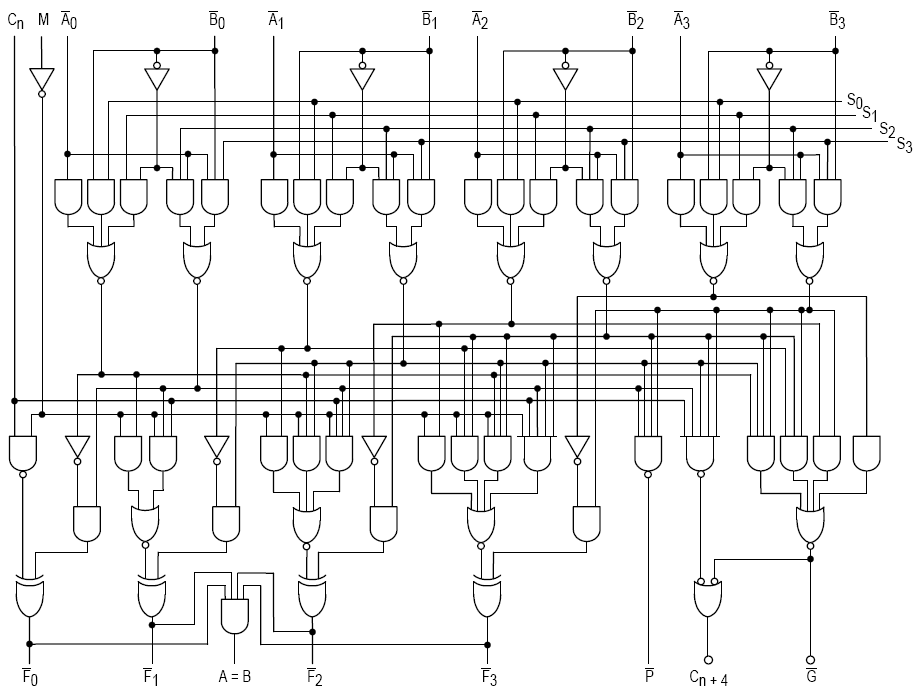
4-bit slice ALU, the first complete arithmetic logic unit on one chipCPU · Other · 1970
 🇺🇸 United StatesIntel 8255
Programmable parallel input/output interface chip for early microprocessorsAnalog · 1970