
SIMM
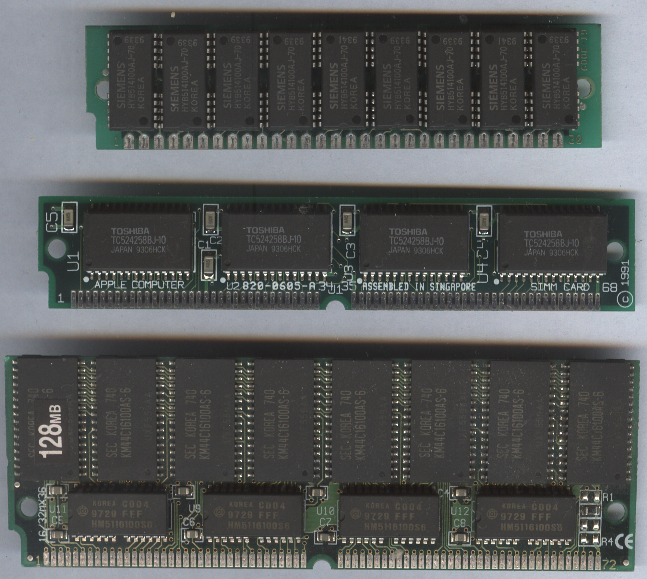
Early computer memory module with redundant contacts on both sides.
James E. Clayton invented this memory format in 1983 at Wang Laboratories. It simplified motherboard design by grouping multiple DRAM chips onto one board, replacing individual socketed chips. The format dominated personal computing from the mid-1980s until dual in-line modules took over in the late 1990s.
- Invented in 1983 by James E. Clayton at Wang Laboratories
- 30-pin modules provide 8-bit data width
- 72-pin modules support up to 128 MB capacity
- Contacts are redundant on both sides of the board
- Replaced by DIMMs in the late 1990s
What it is
This component is a printed circuit board holding several random-access memory chips. It served as the primary storage expansion method for personal computers and workstations between the early 1980s and early 2000s. By integrating multiple chips into a single unit, it reduced the space required on motherboards compared to earlier discrete chip designs. The format was standardised under JEDEC JESD-21C specifications.
How it came about
James E. Clayton developed the concept in 1983 while working at Wang Laboratories. Patents followed in 1987, leading to legal actions against other manufacturers. Early versions used ceramic substrates and pin-based packaging, often called SIP modules. The technology evolved from these initial pin-based designs to the more common edge-connector variants that became industry standards for IBM-compatible PCs and Apple Macintosh systems.
Inside the chip
The module features identical electrical contacts on both faces, unlike later dual in-line designs. Two main variants existed. The 30-pin version offered an 8-bit data path, while the 72-pin version provided 32 bits. Systems with wider data buses required installing these modules in pairs or groups of four to fill a memory bank. Later iterations supported presence detect signals, allowing hardware to automatically identify capacity and speed.
How it was made
Manufacturers attached multiple DRAM integrated circuits to a single printed circuit board. Early units used ceramic bases with flip-chip parts. The industry moved toward edge connectors for easier installation. Sockets evolved from simple push-types to zero insertion force mechanisms with metal clips, improving reliability over earlier plastic retainers that were prone to breaking.
Where it went
These modules powered a wide range of hardware, including IBM PC compatibles based on 286, 386, and 486 processors. Apple Macintosh models such as the Plus, II, and Quadra series relied on them. They also appeared in Atari STE and TT computers, Roland samplers, and Wang VS minicomputers. Some UNIX workstations used proprietary non-standard versions.
Versions and family
The 30-pin type supported capacities up to 16 MB using Fast Page Mode memory. The 72-pin variant reached 128 MB and later adopted EDO DRAM for better performance. Proprietary forms included 64-pin modules for Commodore Amiga accelerator cards and Apple Macintosh IIfx systems. HP LaserJet printers also used custom 72-pin versions with unique detection wiring.
Why it matters
This format bridged the gap between discrete chip memory and modern dual in-line modules. It enabled significant capacity growth in personal computers during the 1990s. By consolidating multiple chips into one slot, it simplified upgrades and manufacturing. Its eventual replacement by DIMMs reflected the need for wider data paths in Pentium-era systems.


Questions people ask about SIMM
What does SIMM stand for?
It stands for Single In-line Memory Module. This name refers to the fact that the electrical contacts on both sides of the circuit board are connected together, making them electrically identical rather than separate.
How is a SIMM different from a DIMM?
A SIMM has redundant contacts on both sides, meaning the pins carry the same signal. A DIMM, which replaced it, has separate electrical contacts on each side, allowing for wider data paths and higher performance in modern systems.
Why did older computers need multiple SIMMs?
Processors like the 386DX had 32-bit data buses, but 30-pin SIMMs only provided 8 bits. Users had to install four 30-pin modules to fill one bank. Pentium systems needed two 72-pin modules to match their 64-bit bus width.
Good reading and sources
The facts on this page come from the Wikipedia article "SIMM", written by its contributors and used under the CC BY-SA 4.0 licence, and from its Wikidata record (CC0). EveryChip rewrote the text in its own words, with AI assistance, and compares every page with the article to make sure no passage is copied. It may be reused under the same CC BY-SA 4.0 licence with a link back.
It may contain mistakes, and figures change over time. Nothing here is investment or buying advice. If something is wrong, tell us. Last refreshed 2026-11-14.
Like SIMM
All memory chips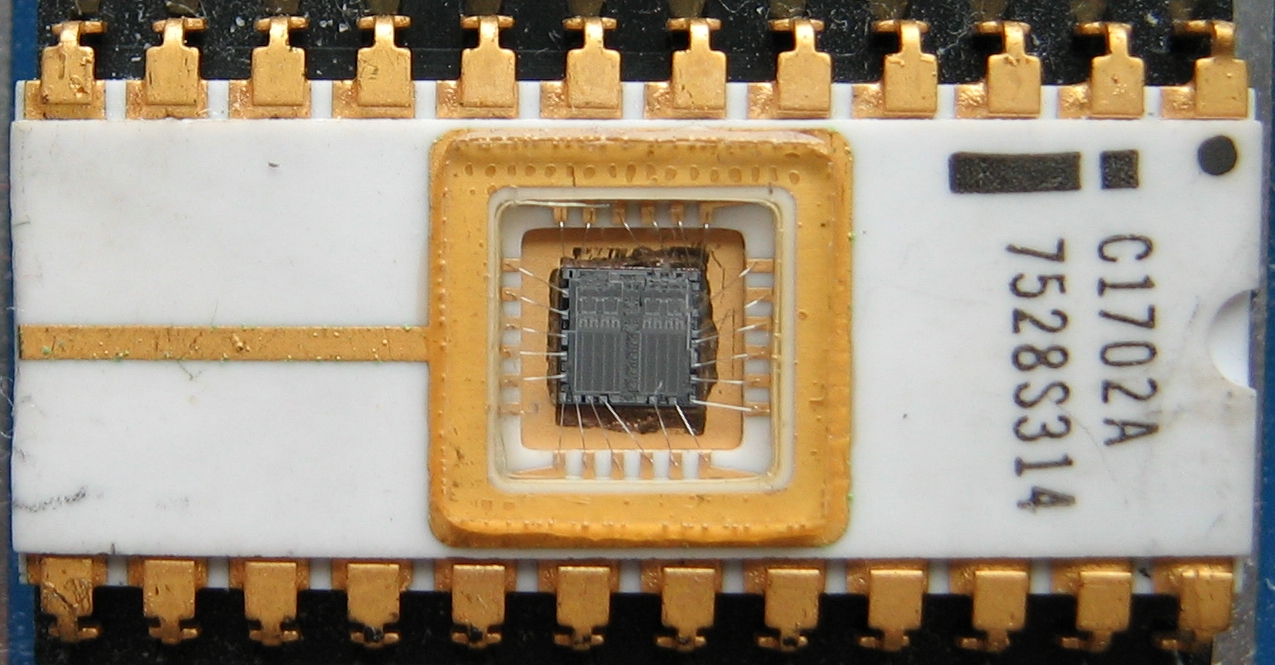 🇺🇸 United StatesEPROM
Non-volatile memory chip erased by ultraviolet lightMemory · 1971
 WorldMagnetoresistive RAM
Non-volatile memory storing data in magnetic domainsMemory · 1980
 🇺🇸 United StatesCommodore REU
External RAM expansion modules for Commodore home computersMemory · 1986
🇺🇸 United StatesTMS6100
Serial mask ROM for speech synthesis data storageMemory · Other · 1978