
UART
Chip for serial data communication between devices
The UART is an integrated circuit that handles asynchronous serial communication by converting parallel data into sequential bits. Developed initially for teletypewriters and early computers, it remains a standard interface in microcontrollers and embedded systems today.
- First single-chip UART released by Western Digital around 1971
- Uses start and stop bits for synchronization without a clock line
- Commonly integrated into modern microcontroller chips
- Supports RS-232, RS-485, and TTL signal levels
What it is
A Universal Asynchronous Receiver-Transmitter (UART) is a hardware device that manages serial communication between computers and peripherals. It converts parallel data from a system into a serial stream of bits for transmission, then reassembles incoming serial bits back into parallel data. This chip handles the timing and framing of data without a shared clock signal, relying instead on start and stop bits to synchronize the sender and receiver. It is a fundamental component in many microcontrollers and embedded systems.
How it came about
Gordon Bell at Digital Equipment Corporation designed the first UART for the PDP-1 computer series. This initial version occupied an entire circuit board known as a line unit. Western Digital later condensed this design into the WD1402A, the first widely available single-chip UART, around 1971. National Semiconductor followed with the 8250 chip, which became standard in the original IBM PC. Later models like the 16550 added internal buffers to support higher speeds without data loss.
Inside the chip
The UART uses shift registers to convert between serial and parallel data formats. An internal clock generator samples the incoming signal at a multiple of the bit rate to detect start bits accurately. Data frames typically include a start bit, five to nine data bits, an optional parity bit for error checking, and one or two stop bits. The receiver resynchronizes its clock on each signal change, allowing it to tolerate slight speed differences between transmitting and receiving devices.
How it was made
Early UARTs were medium-scale integrated circuits. Modern versions are often embedded directly within microcontroller chips rather than sold as standalone components. Manufacturers produce variants with different buffer sizes, such as the 16-byte FIFO found in the 16550 model. Some specialized chips combine multiple UART channels into a single package, known as DUARTs or QUARTs, to save space on circuit boards.
Where it went
UARTs connect teletypewriters, modems, and debugging tools to computers. They are common in automobiles, smart cards, and SIM cards for internal communication. Although external RS-232 ports have largely been replaced by USB on personal computers, UARTs remain essential for internal hardware interfacing. Engineers use USB-to-UART bridge chips to connect modern devices to legacy serial equipment.
Versions and family
Related devices include the USART, which supports synchronous operation, and the SCI used by Motorola. Intel marketed their 8251 as a Programmable Communication Interface because it handled both synchronous and asynchronous modes. Multi-channel variants like the NXP 28L194 combine four UARTs in one chip. Software emulation, known as bit-banging, can replicate UART functions on systems lacking the hardware.
Why it matters
The UART enabled early computer networking and internet hardware by providing a reliable method for serial data exchange. Its simple wiring requirements reduced costs compared to parallel interfaces. The standard 8N1 configuration offers consistent protocol efficiency for small messages, outperforming Ethernet in specific low-latency scenarios. It remains a critical interface for embedded system development and hardware debugging.

Questions people ask about UART
What does a UART do?
It converts parallel data from a computer into serial bits for transmission and vice versa. It manages the timing and framing of data using start and stop bits, allowing two devices to communicate without a shared clock signal.
Why is it called asynchronous?
It is asynchronous because the transmitter and receiver do not share a common clock signal. Instead, they agree on a baud rate beforehand and use start bits to synchronize the beginning of each data character.
Can UARTs handle high speeds?
Early models struggled above 9600 bit/s due to small buffers. Later chips like the 16550 added FIFO buffers to prevent data loss at higher speeds, allowing more efficient communication without constant processor attention.
Good reading and sources
- Universal asynchronous receiver-transmitter on WikipediaEncyclopedia
- More photos on Wikimedia CommonsPhotos
- Wikidata recordOpen data
The facts on this page come from the Wikipedia article "Universal asynchronous receiver-transmitter", written by its contributors and used under the CC BY-SA 4.0 licence, and from its Wikidata record (CC0). EveryChip rewrote the text in its own words, with AI assistance, and compares every page with the article to make sure no passage is copied. It may be reused under the same CC BY-SA 4.0 licence with a link back.
It may contain mistakes, and figures change over time. Nothing here is investment or buying advice. If something is wrong, tell us. Last refreshed 2026-11-14.
Like UART
All analog, power and mixed-signal 🇯🇵 JapanHD44780
Alphanumeric dot matrix LCD controller and driver chipAnalog · Other · 1980
 🇬🇧 United KingdomZN414
Single-chip AM radio receiver integrated circuitAnalog · 1972
 🇺🇸 United States555 timer IC
A versatile integrated circuit for timing and pulse generation.Analog · 1972
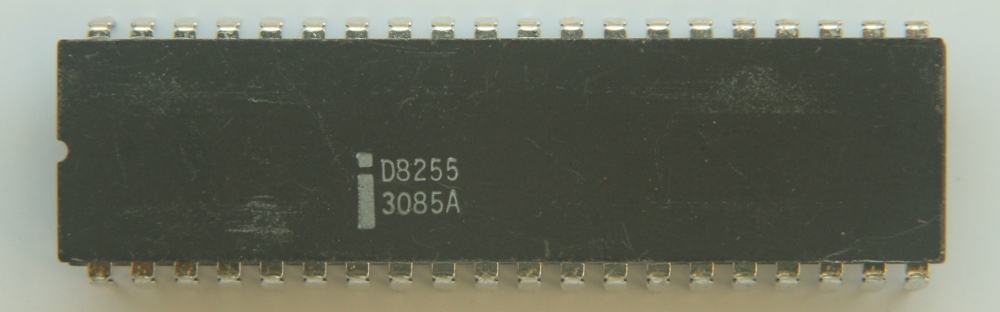 🇺🇸 United StatesIntel 8255
Programmable parallel input/output interface chip for early microprocessorsAnalog · 1970
More from Western Digital
All of them 🇺🇸 United StatesIntel 4004
The first commercial microprocessor, a 4-bit chip released by Intel in 1971.CPU · Other · 1971
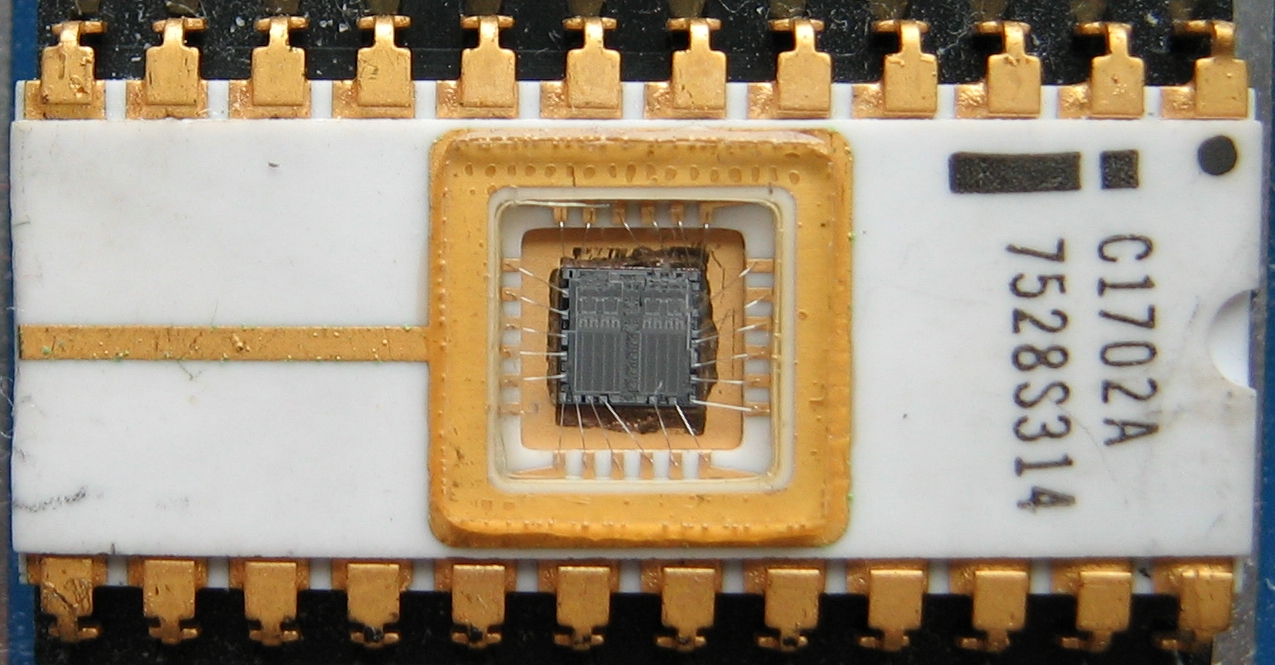 🇺🇸 United StatesEPROM
Non-volatile memory chip erased by ultraviolet lightMemory · 1971
 🇺🇸 United StatesIntel 1103
First commercially available DRAM integrated circuitMemory · 1970
 🇺🇸 United StatesIntel 8008
Early 8-bit microprocessor from Intel, launched April 1972CPU · 8-bit · 1972