Loihi 2
Second-generation neuromorphic research processor from Intel Labs
Loihi 2 is a neuromorphic chip designed by Intel Labs to mimic brain-like processing. It uses spiking neural networks and event-driven computation to achieve high efficiency. Built on the preproduction Intel 4 process, it offers ten times the speed of its predecessor for adaptive AI tasks.
- Contains one million digital neurons on a 30 mm² die
- Built on preproduction Intel 4 process with EUV lithography
- Up to 10x faster processing than the first-generation Loihi
- Uses asynchronous event-based spiking neural networks
- Supported by the open-source Lava software framework
What it is
Loihi 2 is a second-generation neuromorphic processor developed by Intel Labs. Unlike standard chips that rely on central clocks and separate memory banks, this device mimics the physical structure of biological brains. It employs asynchronous, event-based spiking neural networks where data storage and processing occur together across a mesh of digital neurons. This architecture allows the chip to remain nearly idle when not active, consuming minimal power, while reacting quickly to sensory inputs such as sound, gestures, or touch. The system is designed for researchers rather than consumer electronics, aiming to solve complex optimization problems and enable adaptive artificial intelligence at the edge.
How it came about
Intel Labs created Loihi 2 to advance neuromorphic computing beyond the limitations of traditional deep-learning hardware. The project builds on the first-generation Loihi chip, which saw limited production runs. By moving to the new Intel 4 manufacturing process, the team aimed to increase neuron density and improve performance. The development involved collaboration with the Intel Neuromorphic Research Community, including academic and government partners. This effort seeks to transition brain-inspired AI from experimental prototypes toward practical industrial applications, addressing the energy sustainability challenges of modern artificial intelligence.
Inside the chip
The chip contains one million digital neurons, each capable of connecting to thousands of others. These connections are sparse and can change continuously, resembling biological synaptic plasticity. Instead of binary on-off signals, Loihi 2 assigns varying strengths to signals, adding computational sophistication. The design eliminates a global clock, relying instead on local events to trigger processing spikes. This event-driven approach minimizes data movement and activity. An open-source software framework called Lava supports programming these complex networks, helping developers configure neuron connections and manage tasks across multiple chips for larger scale workloads.
How it was made
Intel manufactured Loihi 2 using a preproduction version of its Intel 4 process. This node marks the company’s first use of extreme ultraviolet lithography, allowing for denser circuit patterns on silicon wafers. The chip measures 30 square millimeters. While mainstream production of Intel 4 chips was scheduled for later years, Loihi 2 served as an early testbed for this technology. Production volumes remain small, similar to the first generation, as the chip is intended for laboratory research rather than mass market distribution. The dense packing of neurons within this small area demonstrates the capabilities of the new fabrication method.
Where it went
Researchers in robotics, healthcare, and telecommunications utilize Loihi 2 for specific edge workloads. Applications include detecting slippage in robotic hands via artificial skin, optimizing train schedules for railway networks, and developing custom AI models for telecom infrastructure. The chip’s low power profile makes it suitable for autonomous systems and sensing tasks. Projects have also explored its use in helping wheelchair-bound patients and enabling robots to process tactile and visual data simultaneously. These implementations highlight its strength in handling sparse, real-time sensory information efficiently.
Versions and family
Loihi 2 succeeds the original Loihi processor. It features an eightfold increase in digital neuron count and up to ten times faster processing capability. Networking improvements allow multiple chips to link together, shortening communication pathways. For example, the Kapoho Point board stacks eight Loihi 2 chips to handle larger problems, supporting AI models with up to one billion parameters. The larger Hala Point system expands this further, integrating 1.15 billion neurons for industrial-scale neuromorphic computing tasks.
Why it matters
The chip represents a step toward sustainable AI by reducing the energy costs associated with conventional computing. It provides a platform for exploring brain-inspired algorithms that differ fundamentally from standard artificial intelligence. By offering a flexible hardware base, Intel aims to foster a community of developers who can adapt neuromorphic principles to real-world problems. The use of the Intel 4 process also serves as a strategic milestone for the company’s manufacturing roadmap, demonstrating advanced lithography techniques before wider commercial deployment.
Questions people ask about Loihi 2
How does Loihi 2 differ from standard AI chips?
Standard chips use central clocks and separate memory. Loihi 2 mimics brain structures with integrated memory and processing. It operates asynchronously using event-based spikes, which reduces power consumption significantly when idle.
What manufacturing process is used for Loihi 2?
Intel produced the chip using a preproduction version of the Intel 4 process. This was the company’s first application of extreme ultraviolet lithography, enabling denser circuit patterns on the 30 square millimeter die.
Can consumers buy Loihi 2 for personal computers?
No. The chip is designed for researchers in universities, national labs, and industry. It is not available for phones or laptops. Production volumes are small, intended for experimental and developmental purposes only.
What software is used to program Loihi 2?
Intel provides Lava, an open-source software framework. It helps developers configure neuron connections and manage tasks. Lava supports multiple AI methods and allows scaling across multiple chips for larger workloads.
Good reading and sources
There is no English Wikipedia article on Loihi 2 yet, so the facts on this page come from the sources listed above: intel.com/content/www/us/en/research/neuromorphic-computing.html, cnet.com/tech/computing/intels-loihi-2-speeds-effort-to-make-neuromorp. Some are the subject's own pages, so its claims about itself are reported as its claims. EveryChip wrote the text in its own words, with AI assistance, and compares it with the sources to make sure no passage is copied.
It may contain mistakes, and figures change over time. Nothing here is investment or buying advice. If something is wrong, tell us. Last refreshed 2026-11-14.
Like Loihi 2
All AI accelerators 🇺🇸 United StatesTrueNorth
IBM neuromorphic chip mimicking brain structureAI accelerator · Other · 2014
WorldNVDLA
Open-source AI accelerator hardware by NvidiaAI accelerator · Other · 2017
🇺🇸 United StatesGP5
Analog co-processor for belief propagation and machine learning tasksAI accelerator · Other
More from Intel
All of them WorldIntel 8279
Programmable keyboard and display controller for Intel microprocessorsAnalog
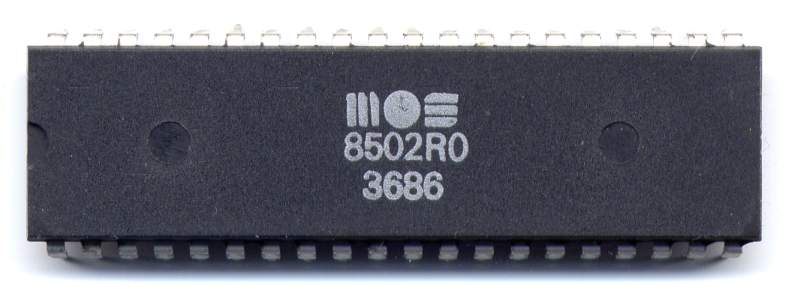 WorldMOS Technology 8502
An 8-bit CPU from MOS Technology that powered the Commodore 128CPU · 8-bit
 🇺🇸 United StatesRapidCAD
A 486DX in a 386 socket, with a dummy FPU chip to match.CPU · x86
🇺🇸 United StatesTolapai
Intel embedded SoC with Pentium M core and security accelerationSoC · x86