Other in-house fabs
Motorola, AMD before 2009, NEC, Toshiba, Fujitsu, Hitachi, Zilog, MOS and others that made their own chips. 86 chips on EveryChip so far.
For most of chip history, companies that designed chips also made them. Motorola, AMD (until 2009), NEC, Toshiba, Fujitsu, Hitachi, DEC, National Semiconductor, Fairchild, Zilog, MOS Technology, Sony and many others ran their own fabs. Japanese firms led memory in the 1980s, and several of today's foundries and memory makers grew out of these in-house fabs.
The integrated era
In the 1970s and 1980s, owning a fab was part of being a chip company, and process and design were developed together. MOS Technology's fab made the 6502 cheaply enough to start the home computer boom. DEC made its Alpha processors in Hudson, Massachusetts. In the 1980s Japanese firms such as NEC, Toshiba and Hitachi made most of the world's DRAM, which led to the US-Japan semiconductor agreement of 1986.
The move to foundries
As each new node cost more, most firms could no longer afford to keep up. Some merged their fabs, as Hitachi, NEC and Mitsubishi did to form Elpida and Renesas; others spun them off, as AMD did with GlobalFoundries; many closed them and turned fabless. Sony still makes image sensors in its own fabs, and Infineon, ST and NXP keep fabs for their power, car and analog chips.
Famous other in-house fabs chips


Further reading
 🇺🇸 United StatesCVAX
DEC's second-generation single-chip VAX microprocessor with DRAM cacheCPU · Other · 1987
 🇺🇸 United StatesPowerPC 600
Early PowerPC processor family for PCs, workstations and embedded gearCPU · Power · 1993
 🇺🇸 United StatesCell Broadband Engine
A multi-core RISC processor pairing one PowerPC core with eight vector coprocessors.CPU · Power · 2007
 🇺🇸 United StatesTMS9900
A 16-bit single-chip microprocessor from Texas Instruments, launched in 1976.CPU · Other · 1976
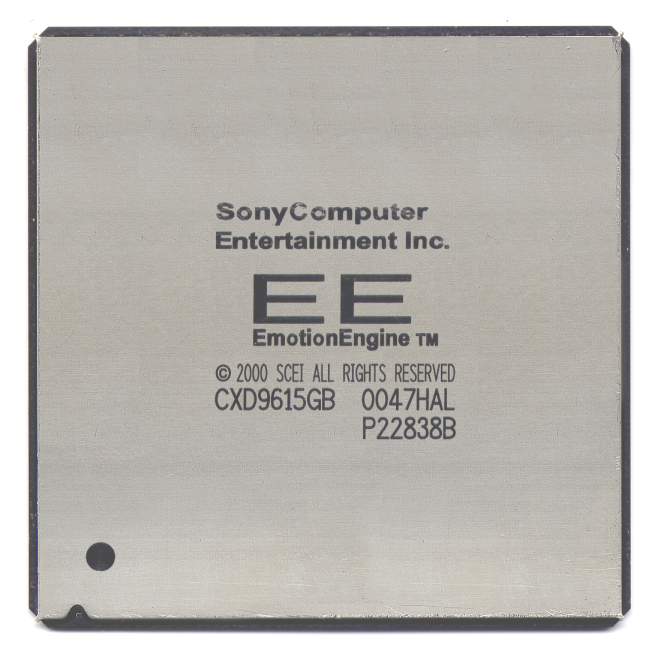 🇯🇵 JapanEmotion Engine
Sony and Toshiba's CPU for the PlayStation 2 consoleCPU · MIPS · 1999
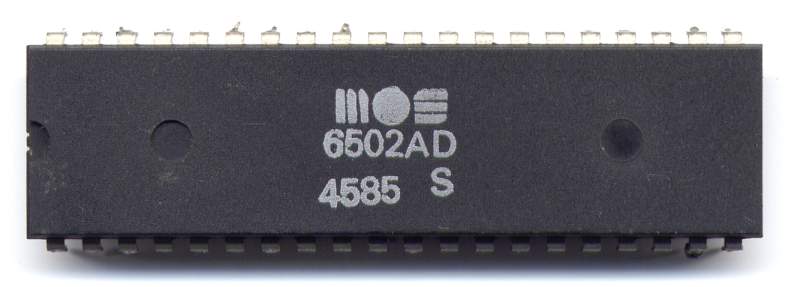 🇺🇸 United StatesMOS Technology 6502
An 8-bit microprocessor from 1975 that made cheap home computing possibleCPU · 8-bit · 1975
 🇺🇸 United StatesMotorola 6800
An 8-bit microprocessor from Motorola, launched in 1974 as the core of the M6800 family.CPU · Other · 1974
 🇺🇸 United StatesIntel 4040
Intel's second 4-bit microprocessor, a 1974 upgrade of the 4004CPU · Other · 1974
 🇺🇸 United StatesNational Semiconductor SC/MP
Early 8-bit microprocessor built for low-cost systems and shared-bus multiprocessor useCPU · 8-bit · 1976
 WorldIntersil 6100
A 12-bit CMOS microprocessor that runs the PDP-8 instruction set on one chipCPU · Other · 1975
 WorldMOS 6507
A low-cost 8-bit 6502 variant in a 28-pin package with an 8 KB address rangeCPU · Other · 1975
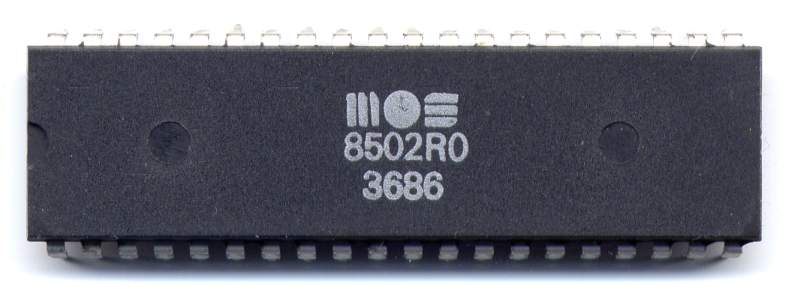 WorldMOS Technology 8502
An 8-bit CPU from MOS Technology that powered the Commodore 128CPU · 8-bit
 🇯🇵 JapanHitachi 6309
Hitachi's CMOS 8-bit microprocessor, a faster and richer 6809CPU · 8-bit · 1985
WorldZilog eZ80
8-bit Z80-compatible microprocessor with 24-bit addressing, up to 50 MHzCPU · 8-bit · 2001
 🇬🇧 United KingdomFerranti F100-L
A 16-bit military microprocessor built on Ferranti's bipolar CDI processCPU · Other · 1977
 🇺🇸 United States and 1 moreDEC T-11
DEC's first single-chip PDP-11 microprocessor, built for embedded control workCPU · Other · 1982
 🇺🇸 United States and 1 moreDEC J-11
Two-chip CMOS implementation of the PDP-11 ISA for high-end DEC machinesCPU · Other
🇺🇸 United StatesHP Saturn
HP's 4-bit calculator microprocessor family, introduced in 1984CPU · Other · 1984
🇺🇸 United StatesBellmac 32
Bell Labs CMOS microprocessor, first to move 32 bits per clock cycleCPU · Other · 1980
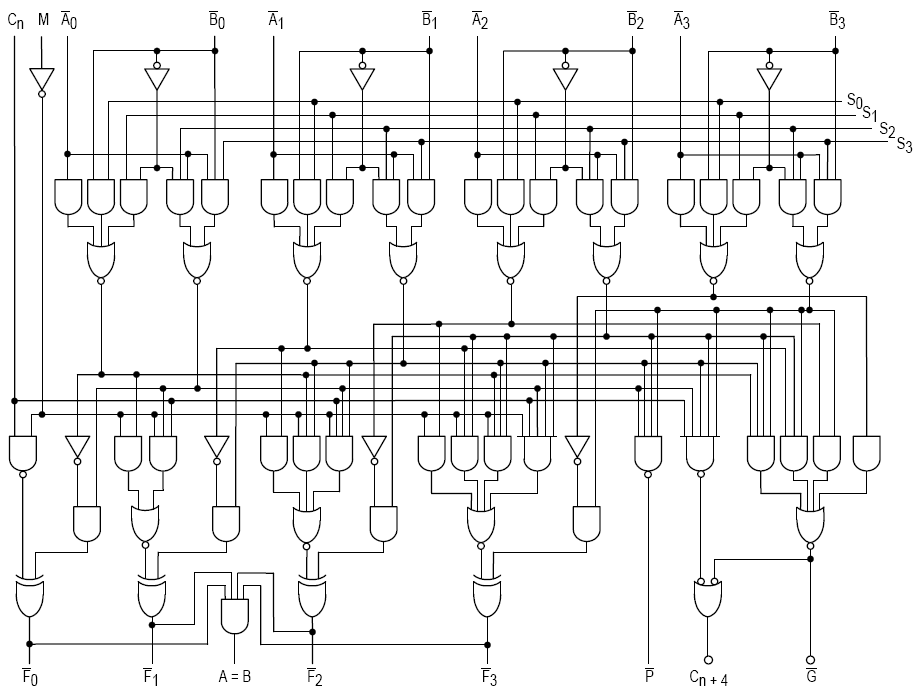 🇺🇸 United States74181
4-bit slice ALU, the first complete arithmetic logic unit on one chipCPU · Other · 1970
 🇳🇱 NetherlandsTriMedia
VLIW media processors for audio and video streams, from Philips and NXPDSP · VLIW · 1996
 🇺🇸 United States and 2 moreMicroVAX 78032
DEC's first single-chip VAX microprocessor, used in MicroVAX II systems from 1985CPU · Other · 1985
 🇺🇸 United StatesCapricorn
HP's 8-bit microprogrammed CPU for the Series 80 scientific microcomputersCPU · 8-bit · 1980
🇺🇸 United StatesMostek MK5065
Early 8-bit PMOS microprocessor from Mostek, aimed at control tasksCPU · Other · 1974
🇺🇸 United StatesRockwell PPS-8
An early 8-bit microprocessor from Rockwell with unusual code-saving featuresCPU · 8-bit · 1974
 🇺🇸 United StatesWD16
A 16-bit CISC microprocessor from Western Digital, built from five DIP chips.CPU · Other · 1976
🇯🇵 JapanSony Handheld Engine
ARM-based SoC for Sony CLIE PDAs with integrated multimedia featuresSoC · Arm · 2003
 🇸🇪 SwedenETRAX CRIS
Embedded RISC processors by Axis CommunicationsSoC · RISC · 1993
 🇺🇸 United StatesAlpha 21064
First commercial microprocessor implementing the Alpha instruction set architecture.CPU · Other · 1992
 🇺🇸 United StatesAlpha 21164
High-performance 64-bit microprocessor from Digital Equipment CorporationCPU · Other · 1995
🇺🇸 United StatesIBM Eagle
127-qubit quantum processor from IBMQuantum · Other · 2021
 WorldMOS Technology 6510
8-bit 6502-derived CPU with a built-in I/O port, used in the Commodore 64CPU · 8-bit
 🇺🇸 United StatesTMS320
Texas Instruments' long-running family of digital signal processorsDSP · Other · 1983
 🇺🇸 United StatesOriginal Chip Set
Custom chipset for early Commodore Amiga computersGPU · Other · 1985
 🇺🇸 United StatesFairchild F8
An early 8-bit microprocessor family built for small controller jobsCPU · 8-bit · 1974
 🇺🇸 United StatesDigital micromirror device
MEMS chip of tiny tilting mirrors that forms images in DLP projectorsSensor · Other · 1990
 🇺🇸 United StatesTMS7000
Texas Instruments 8-bit single-chip microcontroller family with custom instruction optionsMicrocontroller · 8-bit
 🇺🇸 United StatesTMS1000
A 4-bit microcontroller family with on-chip ROM, RAM and I/O from 1974.Microcontroller · Other · 1974
 🇺🇸 United StatesFairchild 9440
16-bit single-chip microprocessor running the Data General Nova 2 instruction setCPU · Other · 1977
 🇮🇳 IndiaShakti
Open-source RISC-V processor family from IIT Madras, spanning microcontrollers to 128-core designsCPU · RISC-V · 2018
 🇺🇸 United States and 1 moreAMD Am2900
AMD's 1975 bipolar bit-slice IC family for building custom control unitsCPU · Other · 1975
 🇺🇸 United StatesHewlett-Packard Nanoprocessor
An 8-bit control microcontroller with no arithmetic unit, released by HP in 1974Microcontroller · Other · 1974
🇺🇸 United StatesWDC 65C816
16-bit microprocessor from the 6502 family with 24-bit addressingCPU · Other · 1985
 🇺🇸 United StatesPowerPC 970
IBM's 64-bit PowerPC desktop CPU family, sold by Apple as the G5.CPU · Power · 2002
WorldRTX 2010
Radiation-hardened 16-bit stack processor for real-time space workCPU · Other · 1988
 🇯🇵 JapanHD64180
A Z80-based embedded microprocessor with on-chip MMU and peripheralsCPU · 8-bit · 1985
🇺🇸 United States and 1 moreMCP-1600
A 1975 multi-chip 16-bit microprocessor from Western DigitalCPU · Other · 1975
 🇺🇸 United StatesElectronic Arrays 9002
An 8-bit CPU with on-chip RAM, sold briefly in the mid-1970s.CPU · Other · 1976
Photo credits on this page
The small pictures above come from Wikimedia Commons under free licences. Some are cropped to fit.
- TriMedia: Pauli Rautakorpi, CC BY 3.0, source
- PowerPC 600: Konstantin Lanzet, CC BY-SA 3.0, source
- Cell Broadband Engine: Greenpro, CC BY-SA 3.0, source
- TMS9900: Konstantin Lanzet, CC BY-SA 3.0, source
- Emotion Engine: Unknown author, CC BY-SA 3.0, source
- MOS Technology 6502: Dirk Oppelt, CC BY-SA 3.0, source
- Intel 4040: Thomas Nguyen, CC BY-SA 4.0, source
- Motorola 6800: Swtpc6800 en:User:Swtpc6800 Michael Holley, Public domain, source
- National Semiconductor SC/MP: AquariaNR, CC BY-SA 3.0, source
- Intersil 6100: Christian Bassow, CC BY-SA 4.0, source
- MOS 6507: Konstantin Lanzet, CC BY 3.0, source
- MOS Technology 8502: Unknown author, CC BY-SA 3.0, source
- Hitachi 6309: No machine-readable author provided. Lamune~commonswiki assumed (based, Public domain, source
- DEC T-11: Pauli Rautakorpi, CC BY 3.0, source
- Ferranti F100-L: Logg Tandy, CC BY 4.0, source
- DEC J-11: Konstantin Lanzet, CC BY-SA 3.0, source
- CVAX: wdwd, CC BY-SA 3.0, source
- 74181: Unknown author, CC BY-SA 3.0, source
- Capricorn: Thomas Schanz, CC BY-SA 3.0, source
- MicroVAX 78032: Pauli Rautakorpi, CC BY 3.0, source
- WD16: RastaKins, CC BY-SA 4.0, source
- Shakti: Martin.J, CC BY-SA 3.0, source
- AMD Am2900: Konstantin Lanzet (with permission), CC BY-SA 3.0, source
- Hewlett-Packard Nanoprocessor: Pauli Rautakorpi, CC BY 3.0, source
- PowerPC 970: Henriok, CC0, source
- HD64180: User:Fuwuyuan, Public domain, source
- Electronic Arrays 9002: Electronics Arrays, Inc., Public domain, source
- Motorola 68000: en:User:ArnoldReinhold, CC BY-SA 3.0, source
- AMD K9: The original uploader was Smial at German Wikipedia . ( Original text:, CC BY-SA 2.0 de, source
- Agnus: Raimond Spekking, CC BY-SA 4.0, source
- ETRAX CRIS: Polto at English Wikipedia, CC BY-SA 3.0, source
- Alpha 21064: Dirk Oppelt, CC BY-SA 3.0, source
- Alpha 21164: Appaloosa, CC BY-SA 3.0, source
- Athlon 64: Astraera, CC BY-SA 4.0, source
- MOS Technology 6510: Konstantin Lanzet, CC BY 3.0, source
- TMS320: Raimond Spekking, CC BY-SA 4.0, source
- Fairchild F8: Konstantin Lanzet (with permission), CC BY-SA 3.0, source
- Digital micromirror device: mitopencourseware, CC BY-SA 4.0, source
- TMS7000: Electrickery, CC BY-SA 4.0, source
- TMS1000: Pauli Rautakorpi, CC BY 3.0, source
- Fairchild 9440: Pauli Rautakorpi, CC BY 3.0, source