Consumer electronics
Calculators, TVs, cameras, set-top boxes and wearables. 352 chips on EveryChip so far.
Consumer electronics were the first mass market for chips. Pocket calculators drove early chip design: the Intel 4004 was built for a Busicom calculator, and Texas Instruments' TMS1000 went into calculators, toys and microwave ovens. Since then chips have filled TVs, cameras, music players, set-top boxes, projectors, smart speakers and watches, usually as SoCs designed for one kind of product.
Calculators to cameras
In 1969 the Japanese company Busicom asked Intel for a set of chips for a printing calculator; Intel's answer was the 4004, released in 1971. Calculator prices fell sharply in the 1970s as single-chip designs arrived. Digital cameras were made possible by image sensors and image processors, and Texas Instruments' DLP chips, with millions of tiny mirrors, went into projectors and cinema screens.
Smart devices
Today's TVs, streaming sticks and smart speakers run SoCs from MediaTek, Realtek, Amlogic, Broadcom and others, combining Arm cores with video decoders for formats such as HEVC and AV1. Wearables such as Apple's watch use tiny SoCs in system-in-package modules, in which many chips are sealed together into one small block.
Famous consumer electronics chips
 Intel 4004Built for the Busicom 141-PF calculator, 1971
 TMS1000Microcontroller of calculators and toys
 Texas Instruments LPC Speech ChipsSpeech chips of TI's Speak and Spell toy
 Digital micromirror deviceTI's DLP mirror chip for projectors
 Apple S1The first Apple Watch's system in package, 2015
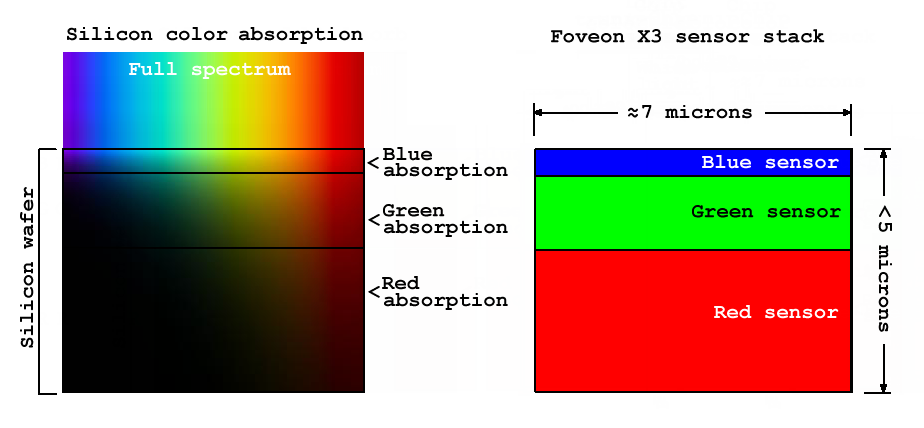 Foveon X3 sensorImage sensor of Sigma cameras
Further reading
 🇯🇵 JapanYM3526
First Yamaha FM synthesis sound chip for computers and gamesAnalog · 1984
 WorldCSG 65CE02
Enhanced 8-bit microprocessor from Commodore Semiconductor GroupCPU · Other · 1988
 🇺🇸 United StatesApple S3
System in a package for the Apple Watch Series 3SoC · Arm
 🇰🇷 South KoreaDDR2 SDRAM
Second-generation double data rate memory standard for computers.Memory · 2003
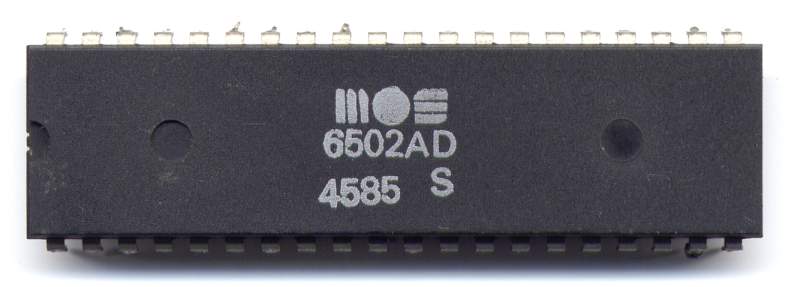 🇺🇸 United StatesMOS Technology 6502
Low-cost 8-bit microprocessor that powered the home computer revolutionCPU · Other · 1975
 🇩🇪 GermanyU61000
First 1-Mbit DRAM chip from the German Democratic RepublicMemory · 1988
 🇺🇸 United StatesApple H1
Wireless connectivity system on a chip for Apple audio devicesSoC · Arm · 2019
 🇯🇵 JapanMSX-Engine
Integrated circuit combining MSX computer functions into one chip.SoC · Other
 🇯🇵 JapanYamaha YM2164
FM synthesis sound chip for MIDI synthesizers and expansion cardsAnalog · Other
 🇯🇵 JapanYamaha YMF278
Sound chip combining FM and PCM synthesis by Yamaha.Analog · 1995
 🇨🇳 ChinaAllwinner A20
Dual-core ARM Cortex-A7 system on a chip for tablets and media devices.SoC · Arm · 2012
🇺🇸 United StatesApple R1
Apple system on a chip for mixed reality devicesSoC · Arm
🇯🇵 JapanYM2414
Eight-channel FM synthesis sound chip by YamahaAnalog
 🇯🇵 JapanNikon CX format
Image sensor format for Nikon 1 mirrorless camerasSensor · 2011
 🇺🇸 United StatesApple W1
Wireless connectivity system on a chip for Apple audio devicesSoC · Arm
🇳🇱 NetherlandsXetal
Massively parallel image processor from Philips ResearchAI accelerator · Other · 2001
WorldMDSP
Multiprocessor digital signal processor family for video tasksDSP · RISC
WorldNanophotonic coherent imager
Image sensor capturing 3D depth and appearance via LIDAR arraysSensor
 WorldNRF51 Series
Ultra low-power wireless system on a chip familySoC · Arm
WorldOpenRISC 1200
Open source 32-bit RISC processor core for embedded systemsCPU · RISC · 2000
 🇺🇸 United StatesApple W2
Wireless connectivity chip for Apple Watch Series 3SoC · Arm
 🇺🇸 United StatesTI-AR7
Single-chip ADSL router solution with MIPS processor and DSPSoC · MIPS
🇨🇳 ChinaXiaomi Surge and Xring
In-house system-on-chips and specialized silicon for Xiaomi devices.SoC · Arm · 2017
 World6264
JEDEC-standard 64 Kbit static RAM chipMemory
 WorldAtari FREDDIE
RAM address multiplexer for Atari 8-bit computersAnalog
World2N7000
Popular N-channel MOSFET for low-power switchingAnalog
 WorldAmiga custom chips
Support logic chips for Commodore Amiga computersAnalog
 🇺🇸 United StatesMicrobolometer
Uncooled infrared sensor for thermal imaging camerasSensor · 1992
WorldIOIO
Open source microcontroller board for Android hardware controlMicrocontroller · Other · 2011
🇺🇸 United StatesMillipede memory
IBM experimental non-volatile memory using atomic force probesMemory · 2003
 🇯🇵 JapanYamaha YMF292
Sound chip for Sega Saturn and arcade boardsAnalog
🇺🇸 United StatesLatticeMico8
8-bit RISC soft processor core for FPGAsMicrocontroller · RISC
 🇺🇸 United StatesCharge-coupled device
Integrated circuit sensor that converts light into digital images.Sensor · 1969
🇺🇸 United StatesField-programmable object array
Programmable logic device bridging FPGA and ASIC gapsFPGA · Other · 2006
 🇺🇸 United StatesQuantum well infrared photodetector
Infrared sensor using quantum wells for detectionSensor · 1987
WorldMiSTer
Open-source FPGA platform for retro hardware emulationFPGA · Other · 2017
🇺🇸 United StatesBlockscale
Intel crypto-mining accelerator ASIC for SHA-256Mining or security · Other · 2022
🇯🇵 JapanHole accumulation diode
Noise reduction structure for imaging sensorsSensor
🇺🇸 United StatesApple H2
System on a chip for Apple audio and tracking devicesSoC · Arm
 🇺🇸 United StatesApple W3
System on a chip for Apple Watch Series 4 and 5SoC · Arm
WorldStaring array
Two-dimensional image sensor for infrared and optical detectionSensor
 🇯🇵 JapanYamaha YMF7xx
Yamaha family of ISA and PCI sound controller chipsAnalog
 🇺🇸 United StatesApple A series
ARM-based system on a chip family for iPhone and iPadSoC · Arm · 2010
 🇺🇸 United StatesApple S1
System in package for the first Apple WatchSoC · Arm · 2015
 🇺🇸 United StatesTMS320
A long-running series of digital signal processors from Texas Instruments.DSP · Other · 1983
🇺🇸 United StatesApple U1
Ultra-wideband system on a chip for spatial awarenessSoC · Arm · 2019
 🇦🇺 AustraliaMaximite
A series of hobbyist microcomputers based on PIC32 and ARM processors running MMBasic.Microcontroller · MIPS · 2011
Photo credits on this page
The small pictures above come from Wikimedia Commons under free licences. Some are cropped to fit.
- MOS Technology 6502: Dirk Oppelt, CC BY-SA 3.0, source
- Intel 4004: the Science Museum, CC BY 4.0, source
- Foveon X3 sensor: Anoneditor at English Wikipedia, CC BY-SA 3.0, source
- Apple S3: Henriok, CC0, source
- Allwinner A20: PersephoneII, CC BY-SA 3.0, source
- Yamaha YMF278: Higs, CC BY-SA 3.0, source
- Yamaha YMF292: Unknown author, CC BY-SA 3.0, source
- Charge-coupled device: Merzperson ( talk ) ( Uploads ), Public domain, source
- Apple S1: Henriok, CC0, source
- Quantum well infrared photodetector: SK, CC BY-SA 4.0, source
- Apple U1: Henriok, CC0, source
- Apple A14 Bionic: Henriok, CC0, source
- Apple S1: Henriok, CC0, source
- Texas Instruments LPC Speech Chips: Orginal photo © Bill Bertram 2006, editing by user:Tomhannen, CC BY-SA 2.5, source
- Yamaha OPL: Original uploader was Shiru at ru.wikipedia, CC BY-SA 3.0, source
- CSG 65CE02: Machine Later versions were uploaded by Chaddy ., CC BY-SA 3.0, source
- NRF51 Series: Raimond Spekking, CC BY-SA 4.0, source
- DDR2 SDRAM: Raimond Spekking, CC BY-SA 4.0, source
- U61000: Jan Peter Kasper, CC BY-SA 3.0 de, source
- MSX-Engine: Yaca2671, CC BY-SA 3.0, source
- Yamaha YM2164: Metroplex, CC BY-SA 3.0, source
- Apple W1: Henriok, CC0, source
- Nikon CX format: decltype, CC BY-SA 3.0, source
- Apple W2: Henriok, CC0, source
- TI-AR7: Raimond Spekking, CC BY-SA 4.0, source
- 6264: Raimond Spekking, CC BY-SA 4.0, source
- Atari FREDDIE: Rodrigo Castro, CC BY-SA 3.0, source
- Amiga custom chips: LTAC, FAL, source
- Microbolometer: Unknown author, Public domain, source
- Yamaha YMF7xx: Raimond Spekking, CC BY-SA 4.0, source
- Maximite: RSeverson, CC BY-SA 3.0, source
- TMS320: Konstantin Lanzet, CC BY 3.0, source
- Digital micromirror device: mitopencourseware, CC BY-SA 4.0, source
- TMS1000: Pauli Rautakorpi, CC BY 3.0, source
- Apple W3: Henriok, CC0, source