YM2414
Eight-channel FM synthesis sound chip by Yamaha
The YM2414, also known as OPZ, is an eight-channel sound chip developed by Yamaha for phase and frequency modulation synthesis. It powered mid-market synthesizers like the TX81Z and DX11, offering four operators per channel and dual low frequency oscillators.
- Features eight concurrent FM synthesis channels
- First used in the Yamaha TX81Z synthesizer
- Includes four operators per channel
- Successor YM2424 used only in Yamaha V50
What it is
The YM2414, commonly referred to as OPZ, is a dedicated sound chip created by Yamaha. It handles phase and frequency modulation synthesis across eight concurrent channels. Each channel supports four operators, allowing for complex tone generation. The chip includes eight selectable waveforms and dual low frequency oscillators for modulation effects. It served as the core audio engine for various mid-range musical instruments and modules during its production era.
How it came about
Yamaha developed the YM2414 to provide affordable FM synthesis capabilities for mid-market equipment. The TX81Z rack-mounted synthesizer was the first product to feature this chip, taking its name from the OPZ moniker. Following its introduction, the chip appeared in several other Yamaha models and third-party devices. An upgraded version, the YM2424 or OPZII, was later released with enhanced fixed-frequency modes, appearing exclusively in the Yamaha V50 workstation.
Inside the chip
This chip processes audio using eight independent channels of FM synthesis. Every channel contains four operators, which are the basic building blocks for creating sound waves. Users can select from eight different waveforms to shape the timbre. The design includes two low frequency oscillators to add movement and depth to the sound. A fixed-frequency mode allows for very low carrier rates, enabling native chorusing effects, a feature improved in the successor model to support zero Hertz carriers.
How it was made
Specific details regarding the manufacturing process, transistor count, or physical packaging of the YM2414 are not provided in the available records. The chip was developed by Yamaha, a company based in Japan.
Where it went
The YM2414 powered a wide range of musical gear. It was central to the Yamaha TX81Z, DX11, and the YS200 family of synthesizers. Keyboard models like the PortaTone PSR-80 and PSR-6300 utilized the chip, as did the YS-100, YS-200, and DS55 synthesizers. Other applications included the DSR-1000 and DSR-2000 digital sound processors, the TQ5 Tone Generator, and the EMT-1 half-rack module. The Korg Z3 guitar synthesizer and Yamaha WT11 wind controller also featured this sound engine.
Versions and family
The primary variant is the original YM2414, known as OPZ. Its direct successor is the YM2424, also called OPZII. This upgraded version offered improvements to the fixed-frequency mode, allowing for lower rates and zero Hertz carriers. The YM2424 was used exclusively in the Yamaha V50 music workstation, distinguishing it from the broader adoption of the original YM2414 across multiple product lines.
Why it matters
The chip enabled Yamaha to bring FM synthesis technology to more affordable and compact devices. By integrating these features into rack units and keyboards, it expanded access to complex sound design for musicians. Its use in popular models like the TX81Z and DX11 helped establish FM synthesis as a staple in mid-market electronic music production during the late twentieth century.
Questions people ask about YM2414
What is the Yamaha YM2414?
The YM2414, also known as OPZ, is an eight-channel sound chip developed by Yamaha. It uses phase and frequency modulation synthesis to generate audio for various musical instruments and modules.
Which synthesizers used the YM2414 chip?
It was used in the Yamaha TX81Z, DX11, YS200 family, PortaTone PSR-80, and PSR-6300. It also powered the Korg Z3 guitar synthesizer and the Yamaha WT11 wind tone generator.
What is the difference between YM2414 and YM2424?
The YM2424, or OPZII, is an upgraded version of the YM2414. It features an enhanced fixed-frequency mode that supports lower rates and zero Hertz carriers, and was used exclusively in the Yamaha V50.
Good reading and sources
- Yamaha YM2414 on WikipediaEncyclopedia
- More photos on Wikimedia CommonsPhotos
- Wikidata recordOpen data
The facts on this page come from the Wikipedia article "Yamaha YM2414", written by its contributors and used under the CC BY-SA 4.0 licence, and from its Wikidata record (CC0). EveryChip rewrote the text in its own words, with AI assistance, and compares every page with the article to make sure no passage is copied. It may be reused under the same CC BY-SA 4.0 licence with a link back.
It may contain mistakes, and figures change over time. Nothing here is investment or buying advice. If something is wrong, tell us. Last refreshed 2026-11-14.
Like YM2414
All analog, power and mixed-signal World78xx
Family of fixed positive linear voltage regulator integrated circuitsAnalog
 🇺🇸 United StatesLM3914
Analog display driver for LED bar graphs and dot metersAnalog
 🇺🇸 United StatesLM358
Low-power dual operational amplifier for single-supply circuitsAnalog
 🇺🇸 United StatesLM386
Low-voltage audio power amplifier integrated circuitAnalog
More from Yamaha
All of them 🇯🇵 JapanYM2608
Yamaha FM synthesis sound chip for NEC computersAnalog
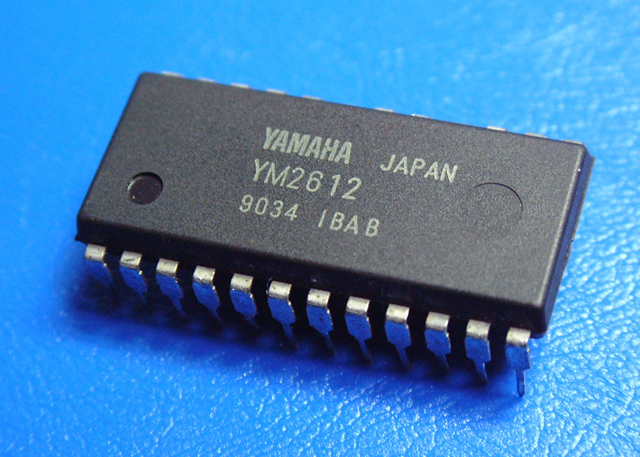 🇯🇵 JapanYM2612
Six-channel FM synthesis sound chip for Sega Mega DriveAnalog
 🇯🇵 JapanYamaha V9958
Video display processor for MSX2+ and turbo R computersGPU
 🇯🇵 JapanYamaha YM2203
Six-channel FM synthesis and SSG sound chip by YamahaAnalog