IOIO
Open source microcontroller board for Android hardware control
The IOIO is an open source development board based on a Microchip PIC24FJ256 microcontroller. Released in April 2011 by inventor Ytai Ben-Tsvi, it enables Android applications to control external electronics via USB or Bluetooth without modifying the phone.
- Uses Microchip PIC24FJ256 microcontroller
- Connects via USB, USB-OTG or Bluetooth
- Supports PWM, I2C, SPI and UART protocols
- First manufactured by SparkFun in 2011
- Enables Android apps to control external hardware
What it is
The IOIO is a series of open source circuit boards designed to bridge the gap between Android mobile devices and external electronic components. Invented by Ytai Ben-Tsvi and first manufactured by SparkFun Electronics in April 2011, the device uses a Microchip PIC24FJ256 microcontroller. Its name reflects its primary function: handling Input and Output operations. The board allows software running on an Android phone to read sensors, drive motors, and manage other hardware peripherals using standard communication protocols.
How it came about
Ytai Ben-Tsvi created the IOIO in 2011 to address a specific limitation in early Android smartphones. While these phones possessed significant computing power, internet connectivity, and built-in sensors, they lacked straightforward methods to interface with custom external circuits. The project launched as an open source initiative, with SparkFun Electronics handling initial manufacturing. The design aimed to preserve device warranties by avoiding any need for hardware modifications to the host phone, making physical computing accessible to non-experts and students.
Inside the chip
At the heart of the board lies a single PIC microcontroller that manages communication with the host device. It supports connections via USB, USB On-The-Go (OTG), or Bluetooth. The system provides a Java API for Android apps, allowing developers to send high-level commands for tasks like motor control. The firmware handles low-level waveform generation on-chip, supporting stepper, DC, and servo motors with cycle-accurate precision. Additional interfaces include GPIO, PWM, I2C, SPI, UART, input capture, and capacitive sensing.
How it was made
The hardware relies on the Microchip PIC24FJ256 chip. The first-generation IOIO V1 operates at 3.3 V logic levels and includes regulators for 5 V output, supporting loads up to 1.5 A from a 5–15 V input. The second-generation IOIO-OTG introduced USB master mode capability, allowing it to act as a host for older Android phones. This version also features 5 V tolerant pins and an upgraded regulator capable of handling up to 3 A. Firmware updates are performed via desktop software or Android apps depending on the model.
Where it went
Educators and hobbyists use the IOIO in learning kits to teach Android application development alongside hardware interaction. It has powered numerous DIY robotic projects, including the Qualcomm Snapdragon Micro Rover, a 3D printed robot controlled by an Android phone. Researchers have also employed it in creating emotionally sensitive robots. Reviewers have described it as a tool that turns a handset into a versatile controller, useful for tasks ranging from monitoring room temperature to automating home heating systems.
Versions and family
Two main generations exist. The IOIO V1 was the original model, limited to USB slave mode and requiring a USB master host such as a PC or newer Android phone. It communicated with PCs only via Bluetooth. The IOIO-OTG succeeded it, adding USB On-The-Go support to function as either a master or slave. This allowed compatibility with older Android devices that only supported slave mode. The OTG model also increased current capacity and added 5 V tolerance to some pins.
Why it matters
The IOIO facilitated the creation of hundreds of do-it-yourself robotic and electronic projects globally. By providing an easy way to access general-purpose input/output from an Android USB connection, it expanded the utility of smartphones beyond their internal sensors. The open source nature of both hardware and software encouraged community development and integration into educational curricula. It demonstrated how mobile devices could serve as powerful controllers for external physical systems without voiding warranties.
Problems and reception
Electronics publications praised the device for its ease of use and versatility. SlashGear noted its potential for home automation tasks like connecting thermostats or heat sensors. Scientific Computing recommended it as a gift for enthusiasts. SparkFun highlighted how it combined the processing power and connectivity of Android with external peripheral control. Inventor Ytai Ben-Tsvi emphasized that it filled the missing link between mobile software and external circuits, leveraging the existing Android SDK ecosystem.
Questions people ask about IOIO
What is the IOIO board used for?
It allows Android applications to interact with external electronics. Developers can use it to read sensors, drive motors, and control other hardware peripherals from their mobile apps without modifying the phone hardware.
Which microcontroller does the IOIO use?
The board is built around the Microchip PIC24FJ256 microcontroller. This chip handles the communication with the Android device and manages the various input and output signals connected to the board.
How does the IOIO connect to an Android phone?
It connects via USB, USB On-The-Go (OTG), or Bluetooth. The OTG model can act as a USB host for older phones, while newer models can use standard USB connections. Bluetooth is also available for wireless communication.
Is the IOIO hardware open source?
Yes, both the hardware designs and the software libraries are entirely open source. This openness has enabled a wide range of DIY projects and educational kits to be developed by the community around the world.
Good reading and sources
The facts on this page come from the Wikipedia article "IOIO", written by its contributors and used under the CC BY-SA 4.0 licence, and from its Wikidata record (CC0). EveryChip rewrote the text in its own words, with AI assistance, and compares every page with the article to make sure no passage is copied. It may be reused under the same CC BY-SA 4.0 licence with a link back.
It may contain mistakes, and figures change over time. Nothing here is investment or buying advice. If something is wrong, tell us. Last refreshed 2026-11-14.
Like IOIO
All microcontrollers 🇳🇱 NetherlandsNexperia
Brand for NXP media and mobile system-on-chipsSoC · Arm · 1999
 🇺🇸 United StatesTMS320
Texas Instruments' long-running family of digital signal processorsDSP · Other · 1983
🇯🇵 JapanRL78
16-bit embedded microcontroller family by Renesas ElectronicsMicrocontroller · Other · 2010
 🇯🇵 Japan78K
NEC and Renesas 8- and 16-bit microcontroller family for embedded control.Microcontroller · Other · 1986
More from SparkFun Electronics
All of them 🇮🇹 ItalyFlyport
Open hardware IoT system on module with embedded web serverSoC · MCU family · 2011
 🇺🇸 United StatesATtiny
Compact 8-bit AVR microcontroller family for simple embedded tasksMicrocontroller · Other · 1999
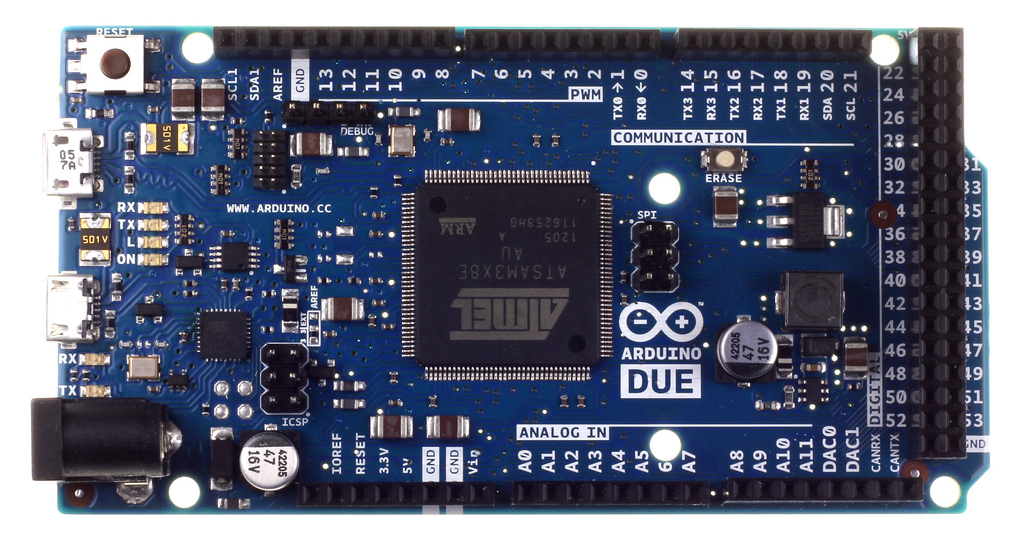 🇺🇸 United StatesAtmel ARM-based processors
32-bit ARM microcontrollers and microprocessors by MicrochipMicrocontroller · Arm · 1998
 🇳🇴 NorwayAVR
8-bit RISC microcontroller family with on-chip flash memoryMicrocontroller · RISC · 1997