
Maximite
A series of hobbyist microcomputers based on PIC32 and ARM processors running MMBasic.
The Maximite is a line of open-source microcomputers designed by Geoff Graham for the electronics community. First appearing in Silicon Chip magazine in 2011, it uses a MIPS-based PIC32 chip to run a BASIC interpreter. Later versions switched to ARM processors for higher performance and colour graphics.
- Designed by Geoff Graham and published in Silicon Chip magazine in 2011.
- Original models use PIC32 chips with MIPS architecture.
- Colour Maximite 2 features an ARM Cortex-M7 processor at 480 MHz.
- ICeemite fits into a PLCC-68 socket for embedded applications.
- MMBasic software supports user-defined subroutines and modern coding structures.
What it is
The Maximite is a microcomputer platform built around the PIC32 microcontroller. It was created as a hobby kit to provide a simple computing environment using MMBasic, a dialect of BASIC similar to GW-BASIC. The project started with a main circuit board and the interpreter software. Over time, the design evolved into several variants, including the Colour Maximite and the ICeemite. These boards allow users to write programs, control hardware, and display graphics. The system is known for its compatibility with various clones and expansion boards.
How it came about
Geoff Graham introduced the original Maximite in a three-part article in Silicon Chip magazine during autumn 2011. He designed it as an accessible hobby kit for electronics enthusiasts. Following its release, several companies produced compatible clones. Olimex released the DuinoMite with Arduino headers, while CircuitGizmos created smaller stick versions. Dimitech announced the ICeemite in May 2013, packaging the system in an integrated circuit format for embedded use. The project remained active with updates to both hardware and software.
Inside the chip
The original Maximite uses a PIC32 microcontroller, which operates on the MIPS 32-bit RISC architecture. This is distinct from standard PIC or ARM designs. It runs MMBasic, which supports user-defined subroutines and modern code structures. The Colour Maximite added VGA output with eight colours and stereo sound synthesis. It included a real-time clock and additional input-output lines. The later Colour Maximite 2 shifted to an ARM Cortex-M7 processor, offering faster speeds and support for higher resolution displays up to 1920 by 1080 pixels.
How it was made
The initial boards were assembled using commercially available prototyping components. Clones like the Mini-Maximite and CGMMSTICK1 used different form factors but maintained hardware compatibility. The ICeemite was designed to fit into a PLCC-68 socket, making it suitable for direct integration into other systems. The Colour Maximite Gen 2 was optimised for automated assembly with surface-mounted components. Software licensing changed for version 3.x of MMBasic, becoming proprietary but remaining free for personal use.
Where it went
Users employ the Maximite for datalogging, process control, and educational programming. The ICeemite variant targets embedded systems requiring multitasking and power management. The Colour Maximite supports animated games and complex controllers. Expansion boards like the PicoMiteVGA turn Raspberry Pi Pico units into desktop computers. Users connect keyboards, mice, SD cards, and sensors to these boards. The platform supports various file systems and communication protocols like I2C and SPI.
Versions and family
The series includes the original Maximite, the Colour Maximite, and the Colour Maximite 2. The ICeemite offers a compact integrated circuit form factor without colour graphics. Clones such as the DuinoMite and Mini-Maximite provide alternative hardware layouts. The PicoMiteVGA adapts the Raspberry Pi Pico for VGA output. Each variant runs specific versions of MMBasic, ensuring backward compatibility where possible. The Colour Maximite 2 Gen 2 added WiFi support and improved graphics capabilities over the Gen 1 model.
Why it matters
The Maximite project influenced the hobbyist computing scene by providing a robust BASIC environment. Several developers adapted the software for different hardware platforms. Dontronics and Ken Segler helped port the software to various clones. The project demonstrated how open-source designs could evolve through community contributions. Over 140 programs became available for the Colour Maximite 2 by April 2023. The design inspired further developments in small, programmable computer systems.
Problems and reception
The project received positive attention from electronics magazines and hobbyist communities. Silicon Chip magazine featured multiple articles about the Maximite and its successors. Users appreciated the compatibility with existing Arduino hardware and breadboards. The shift to proprietary licensing for MMBasic 3.x drew some attention, though source code remained available. The community actively supported the development of clones and expansion boards.
Questions people ask about Maximite
What processor does the original Maximite use?
The original Maximite uses a PIC32 microcontroller. This chip operates on the MIPS 32-bit RISC architecture, which is different from standard PIC or ARM designs.
Can the Maximite run Arduino hardware?
Yes, some versions include Arduino-compatible connectors. The DuinoMite clone adds Arduino headers directly. The Colour Maximite also provides an Arduino connector with extra input-output lines for compatibility.
What is the difference between Colour Maximite generations?
Gen 2 features higher resolution graphics up to 1920 by 1080 pixels. It also includes onboard WiFi via an ESP-01 module and an accurate real-time clock. Gen 1 supports lower resolutions and lacks built-in WiFi.
Is the Maximite still open source?
Version 2.7 remains an open-source project. However, MMBasic version 3.x and later use a proprietary license. Source code is still available free of charge for personal use under this new arrangement.
Good reading and sources
The facts on this page come from the Wikipedia article "Maximite", written by its contributors and used under the CC BY-SA 4.0 licence, and from its Wikidata record (CC0). EveryChip rewrote the text in its own words, with AI assistance, and compares every page with the article to make sure no passage is copied. It may be reused under the same CC BY-SA 4.0 licence with a link back.
It may contain mistakes, and figures change over time. Nothing here is investment or buying advice. If something is wrong, tell us. Last refreshed 2026-11-15.
Like Maximite
All microcontrollers EuropeSTM32
32-bit ARM microcontrollers and microprocessors from STMicroelectronicsMicrocontroller · Arm · 2007
🇺🇸 United StatesMSP432
Low-power 32-bit ARM microcontroller family from Texas InstrumentsMicrocontroller · Arm · 2015
 WorldESP32
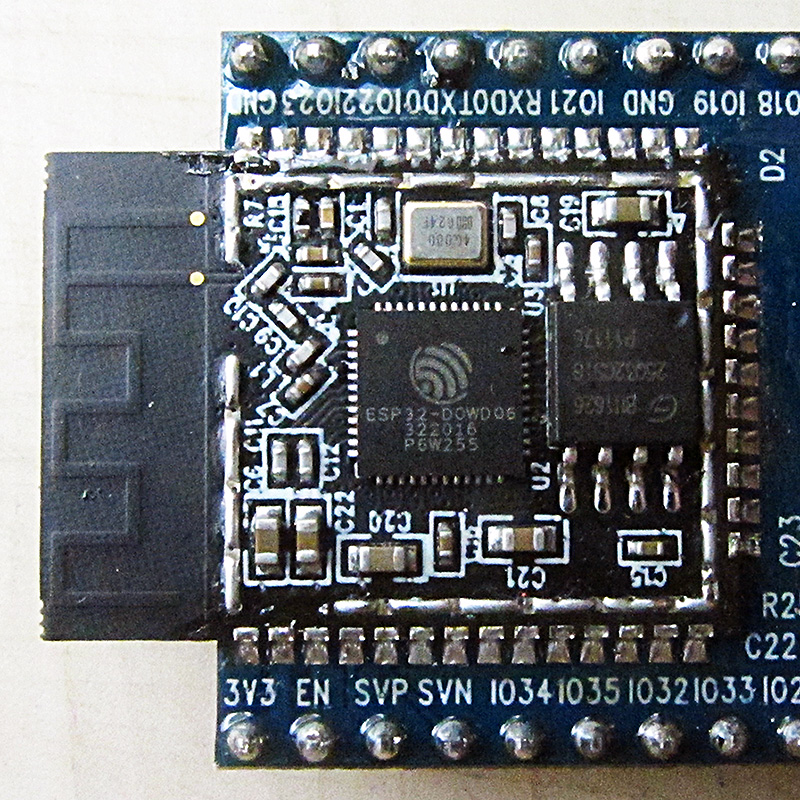
Low-cost microcontroller with Wi-Fi and Bluetooth made by Espressif Systems.Microcontroller · Arm · 2016
 🇬🇧 United KingdomARM Cortex-R
Real-time ARM processor cores for safety-critical systemsCPU · Arm · 2020