Games consoles
The processors and graphics chips inside home and handheld consoles. 195 chips on EveryChip so far.
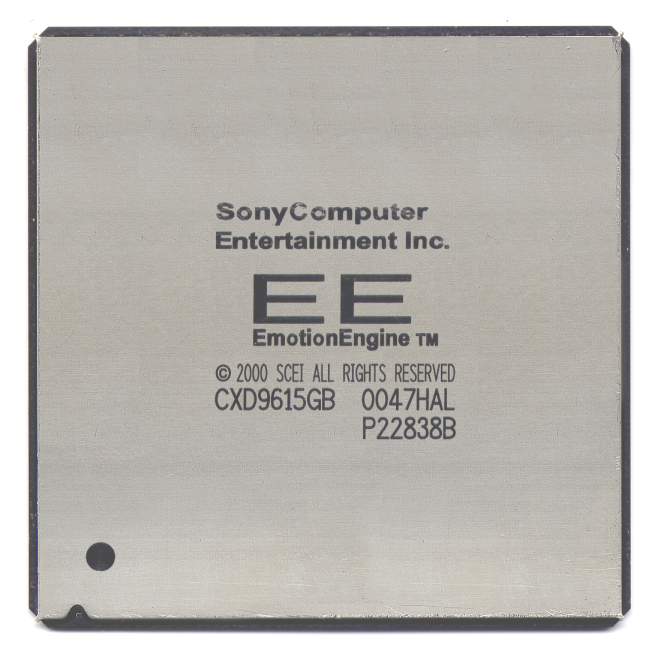
Games consoles have driven chip design since the 1970s. Each console uses a fixed set of chips for years, made in tens of millions, so its makers can afford custom designs. From the Atari 2600's TIA and the NES's Ricoh 2A03 to the PlayStation 2's Emotion Engine and the PlayStation 3's Cell, console chips were often unusual. Recent PlayStation and Xbox consoles use custom AMD SoCs.
Custom chips
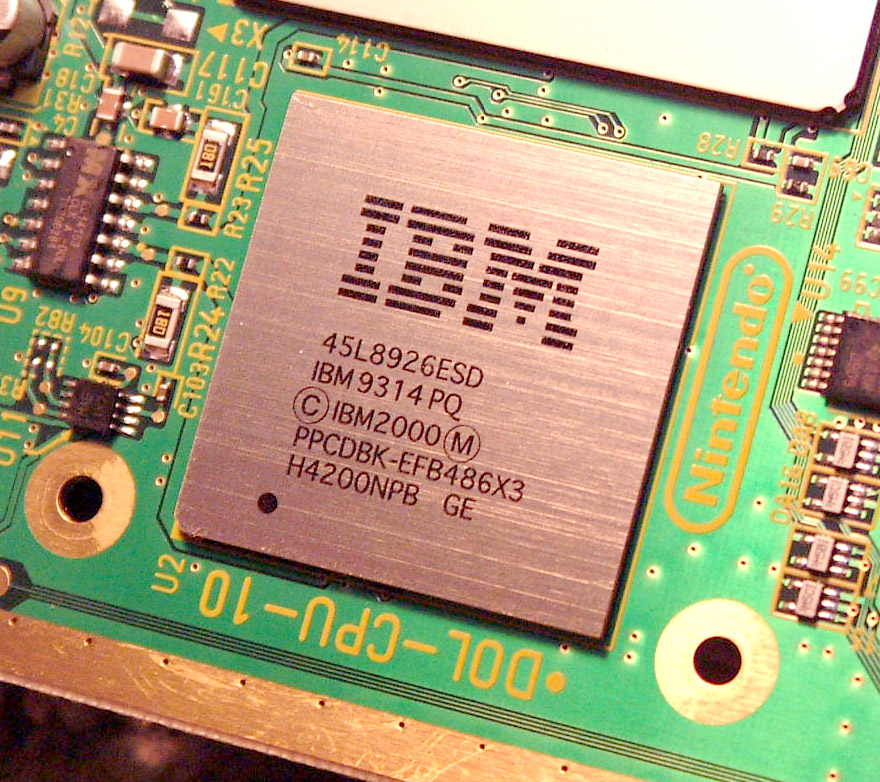
Early consoles needed chips that could draw sprites and scroll backgrounds on a TV with very little memory. Later, the PlayStation 2's vector units and the Cell's eight helper cores gave great power to developers who mastered them. IBM supplied the processors of the GameCube, Wii, Xbox 360 and PlayStation 3 in the same years.
PC-like consoles
The PlayStation 4 and Xbox One of 2013 both used AMD SoCs with x86 CPU cores and Radeon graphics, and their 2020 successors use AMD Zen 2 and RDNA 2. Nintendo chose Nvidia's Tegra X1 for the Switch of 2017 and a newer Nvidia chip for the Switch 2 of 2025. Handheld gaming PCs, such as Valve's Steam Deck, also use AMD chips.
Famous games consoles chips





Further reading
 WorldGDDR5 SDRAM
High-bandwidth graphics memory for cards and consolesMemory · 2008
 WorldGDDR7 SDRAM
High-bandwidth graphics memory standard for GPUs and computing.Memory · 2024
 WorldGDDR6 SDRAM
High-bandwidth graphics memory for GPUs and consolesMemory · 2017
 WorldGDDR SDRAM
High-bandwidth synchronous memory designed for graphics processors.Memory · 1998
 🇺🇸 United StatesRDRAM
High-bandwidth serial memory developed by Rambus for PCs and consoles.Memory · 1996
 🇺🇸 United States1T-SRAM
High-density pseudo-static memory technology for embedded systemsMemory · 1998
🇺🇸 United StatesNCR 53C9x
SCSI controller family for workstations and consolesAnalog
 🇺🇸 United StatesMOS Technology 6522
I/O controller chip for 6502 microprocessorsMicrocontroller · Other
 🇺🇸 United StatesMOS Technology VIC
Video and sound chip for the Commodore VIC-20 computerGPU · Other · 1979
 🇺🇸 United StatesVIC-II
Video and graphics chip for the Commodore 64 home computer.GPU · Other · 1982
WorldAmiga Hombre
Unreleased RISC-based graphics and system chipset for Amiga computers.GPU · RISC
 🇺🇸 United StatesTelevision Interface Adaptor
Custom video and audio chip for the Atari 2600 consoleConsole chip · Other · 1977
 🇺🇸 United StatesCTIA and GTIA
Video display controllers for Atari 8-bit computers and the 5200 console.SoC · Other · 1979
 🇺🇸 United StatesTMS9918
Texas Instruments video display controller from 1979Analog · 1979
 🇯🇵 JapanYamaha V9938
Video display processor for MSX2 home computersGPU · Other · 1985
 🇺🇸 United StatesAY-3-8910
Three-voice programmable sound generator chip from 1978Analog · 1978
 🇺🇸 United StatesSP0256
Voice synthesis chip by General Instrument from the early 1980sAnalog · Other · 1981
🇹🇼 TaiwanDimensity 9300
All-Big-Core 5G smartphone system on a chipSoC · Arm · 2023
🇺🇸 United StatesNvidia L40S
Data centre GPU for AI and graphics workloadsGPU · GPU architecture · 2023
🇹🇼 TaiwanDimensity 9500
Flagship 5G mobile system on a chip with AI and gaming focusSoC · Arm · 2025
 🇺🇸 United StatesMotorola 68000 series
32-bit CISC microprocessor family from MotorolaCPU · 68k · 1979
 🇯🇵 JapanHuC6280
8-bit microprocessor for the TurboGrafx-16 consoleCPU · 8-bit
 🇯🇵 JapanNEC µPD780C
Zilog Z80 compatible 8-bit microprocessor by NECCPU · Other
WorldNVENC
Dedicated video encoding hardware in Nvidia GPUsGPU · GPU architecture · 2012
 WorldNvidia GRID
GPU family for virtualization and cloud gamingGPU · GPU architecture · 2008
 🇺🇸 United States and 1 moreLatte
AMD Radeon-based graphics chip for the Nintendo Wii U consoleGPU · GPU architecture · 2012
 🇺🇸 United StatesIntel Core
Multi-core x86 CPU family for PCs and servers by IntelCPU · x86 · 2006
 🇺🇸 United StatesIntel Core
Multi-core x86 CPUs for PCs, workstations and servers.CPU · x86 · 2017
 WorldGDDR3 SDRAM
Memory standard for graphics cards and game consolesMemory · 2004
WorldGDDR4 SDRAM
Short-lived graphics memory standard based on DDR3 technologyMemory · 2006
 🇯🇵 JapanYamaha YM3812
FM synthesis sound chip for PC audioAnalog · 1985
 🇺🇸 United StatesZilog Z80
An 8-bit microprocessor that powered early personal computers and game consoles.CPU · Other · 1976
🇯🇵 JapanYM3526
First Yamaha FM synthesis sound chip for computers and gamesAnalog · 1984
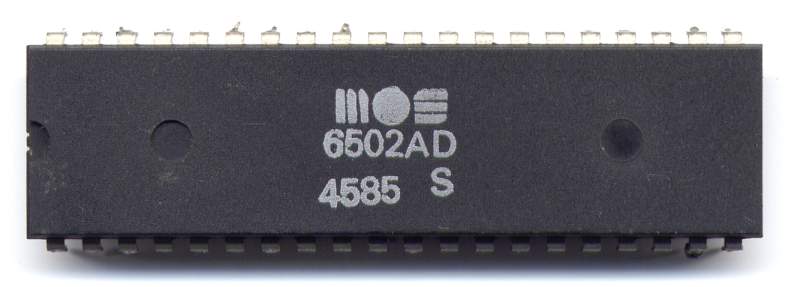 🇺🇸 United StatesMOS Technology 6502
Low-cost 8-bit microprocessor that powered the home computer revolutionCPU · Other · 1975
🇯🇵 JapanYMF262
FM synthesis sound chip for PC audioAnalog · 1990
 🇺🇸 United StatesZilog Z80
An 8-bit microprocessor that powered early personal computers and game consoles.CPU · Other · 1976
 🇯🇵 JapanMemory Management Controller
Special chips in NES cartridges that expand console memory limitsMicrocontroller · Other · 1985
🇯🇵 JapanYamaha YMZ280B
Eight-channel PCM sound chip for arcade gamesAnalog
WorldAnalogue Nt Mini
FPGA-based console for NES and Famicom gamesConsole chip · Other · 2017
 🇺🇸 United StatesRIVA TNT
Dual-pipeline PC graphics chip from NvidiaGPU · GPU architecture · 1998
🇺🇸 United StatesPhysX P1
Dedicated microprocessor for video game physics calculationsCPU · MIPS · 2006
 🇯🇵 JapanYamaha YMF292
Sound chip for Sega Saturn and arcade boardsAnalog
🇺🇸 United StatesPower Processing Element
64-bit PowerPC core for PlayStation 3 and Xbox 360CPU · Power · 2005
WorldXDR2 DRAM
Proposed high-speed dynamic random-access memory by RambusMemory · 2005
WorldMiSTer
Open-source FPGA platform for retro hardware emulationFPGA · Other · 2017
 🇺🇸 United StatesPentium
Intel's first superscalar x86 microprocessor, introducing dual pipelines and the Pentium brand in 1993.CPU · x86 · 1993
🇯🇵 JapanExmor
A family of CMOS image sensors developed by Sony for cameras and mobile devices.Sensor
 WorldESP32
Low-cost microcontroller with Wi-Fi and Bluetooth by Espressif SystemsMicrocontroller · x86 · 2016
Photo credits on this page
The small pictures above come from Wikimedia Commons under free licences. Some are cropped to fit.
- Cell Broadband Engine: Greenpro, CC BY-SA 3.0, source
- Microsoft XCPU (Xenon): Konstantin Lanzet, CC BY 3.0, source
- Emotion Engine: Unknown author, CC BY-SA 3.0, source
- MOS Technology 6502: Dirk Oppelt, CC BY-SA 3.0, source
- HuC6280: The original uploader was Baz1521 at Japanese Wikipedia ., CC BY-SA 3.0, source
- Nvidia GRID: Phiarc, CC BY-SA 4.0, source
- Yamaha YMF292: Unknown author, CC BY-SA 3.0, source
- Motorola 68000: en:User:ArnoldReinhold, CC BY-SA 3.0, source
- Pentium: Pdesousa359, CC BY-SA 3.0, source
- Zilog Z80: Zilog Inc., Public domain, source
- Nehalem: smial ( talk ), FAL, source
- GeForce RTX 30 series: PantheraLeo1359531, CC BY 4.0, source
- GDDR5 SDRAM: Raimond Spekking, CC BY-SA 4.0, source
- GDDR7 SDRAM: 极客湾Geekerwan, CC BY 3.0, source
- GDDR SDRAM: Raimond Spekking, CC BY-SA 4.0, source
- RDRAM: User Kotepho on en.wikipedia, Public domain, source
- 1T-SRAM: Unknown author, CC BY-SA 3.0, source
- MOS Technology 6522: Raimond Spekking, CC BY-SA 4.0, source
- MOS Technology VIC: user:idrougge / sv:Användare:Jonas_H, Public domain, source
- VIC-II: Christian Taube, CC BY-SA 2.5, source
- Television Interface Adaptor: Evan-Amos, Public domain, source
- CTIA and GTIA: Rodrigo Castro, CC BY-SA 3.0, source
- TMS9918: Baz1521 at Japanese Wikipedia, CC BY-SA 3.0, source
- Yamaha V9938: Yaca2671, CC BY-SA 3.0, source
- AY-3-8910: Seanriddle, CC BY-SA 4.0, source
- SP0256: Myself User:ZyMOS, CC BY-SA 4.0, source
- Yamaha OPL: Original uploader was Shiru at ru.wikipedia, CC BY-SA 3.0, source
- Gekko: Baz1521, CC BY-SA 3.0, source
- Broadway: ZyMOS, CC BY-SA 4.0, source
- Ricoh 2A03: PantheraLeo1359531, CC BY 4.0, source
- NEC µPD780C: Konstantin Lanzet, CC BY-SA 4.0, source
- Intel Core: PantheraLeo1359531, CC BY 4.0, source
- GDDR3 SDRAM: Raimond Spekking, CC BY-SA 4.0, source
- RIVA TNT: Raimond Spekking, CC BY-SA 4.0, source
- ESP32: Popolon, CC BY-SA 4.0, source
- Latte: Takimata (edited by: Tokyoship ), CC BY-SA 3.0, source
- Memory Management Controller: Evan-Amos, Public domain, source
- Tegra: Raimond Spekking, CC BY-SA 4.0, source
- Zilog Z80: User Baz1521 on ja.wikipedia, CC BY-SA 3.0, source