
Latte
AMD Radeon-based graphics chip for the Nintendo Wii U console
Latte is a custom graphics processing unit developed by AMD and Nintendo for the Wii U home console. Released in late 2012, it provided high-definition rendering capabilities and operated at 550 MHz, marking Nintendo's first entry into HD gaming.
- Custom AMD Radeon-based graphics chip
- Operates at a clock speed of 550 MHz
- Enabled first HD gaming for Nintendo consoles
- Used exclusively in the Wii U system
What it is
Latte is the graphics processing unit found inside the Nintendo Wii U video game console. It was created through a collaboration between AMD and Nintendo to bring high-definition visuals to Nintendo hardware for the first time. The chip runs at a frequency of 550 MHz and is based on AMD Radeon technology. It serves as the primary visual engine for the system, handling all 3D rendering and display output to televisions via HDMI or component cables. This component was central to the eighth-generation console war, allowing the Wii U to compete with higher-powered rivals from Sony and Microsoft.
How it came about
Development of the Wii U began around 2008 as Nintendo sought to address limitations in the original Wii, particularly the lack of HD support. The project, initially known as Project Café, aimed to recapture core gamers who had moved to competitors. AMD partnered with Nintendo to provide the graphical backbone for this new system. The console was officially unveiled in 2011 and launched in late 2012. The Latte chip was integral to this launch, enabling the system to render games in 720p and 1080p resolutions, a significant leap from the previous generation's standard definition output.
Inside the chip
The Latte chip utilizes a Radeon-based architecture designed specifically for the Wii U's needs. It operates at a clock speed of 550 MHz. While specific core counts are not detailed in the available data, the architecture supports high-definition output formats including 1080p via HDMI. The design prioritizes efficiency and integration with the unique dual-screen setup of the Wii U GamePad. It works in tandem with the tri-core IBM Espresso processor to deliver a unified gaming experience. The graphics pipeline handles complex shading and texture mapping required for modern titles of that era.
How it was made
The chip was developed jointly by AMD and Nintendo, leveraging AMD's expertise in graphics silicon. It is integrated into the main system board of the Wii U console.
Where it went
The Latte graphics processor is used exclusively in the Nintendo Wii U home console. It powers all visual aspects of games played on the system, from first-party titles like Super Mario Bros. U to third-party releases. The chip enables the console to output video to high-definition televisions, supporting resolutions up to 1080p. It also drives the display on the Wii U GamePad controller, allowing for asymmetric gameplay where different visuals appear on the handheld screen and the television. The system was discontinued in 2017 after selling approximately 13.56 million units.
Versions and family
The Latte chip appears to be a single custom design for the Wii U platform. There are no mentioned variants or revisions of the graphics processor itself in the provided text. The console it powers had two main bundles, Basic and Deluxe, which differed in storage capacity and included accessories but used the same internal hardware configuration. The successor to the Wii U, the Nintendo Switch, uses a different system-on-chip design and does not utilize the Latte graphics processor.
Why it matters
Latte marked Nintendo's first step into high-definition gaming, bridging the gap between its casual-focused past and the HD standards set by competitors. Despite the technical advancement, the Wii U struggled commercially, becoming Nintendo's lowest-selling home console. The graphics performance was sometimes criticized as underpowered compared to the PlayStation 4 and Xbox One. However, the chip enabled unique gameplay mechanics via the GamePad screen, influencing future hybrid console designs like the Switch. It remains a notable example of custom silicon collaboration between a console maker and a GPU specialist.
Problems and reception
The hardware performance of the Wii U, driven by the Latte chip and Espresso CPU, received criticism for being less powerful than rival consoles. Reviewers noted that while the HD capability was welcome, the overall graphical fidelity often lagged behind contemporaries. The short battery life of the GamePad, which relies on the system's wireless streaming powered by this hardware, was also a point of contention. Despite these issues, the unique dual-screen functionality enabled by the graphics architecture was praised for innovation in specific first-party titles.


Questions people ask about Latte
What is the Latte chip?
Latte is the custom graphics processing unit used in the Nintendo Wii U console. It was developed by AMD and Nintendo to provide high-definition graphics for the system.
How fast does the Latte GPU run?
The Latte graphics processor operates at a clock speed of 550 MHz. This frequency allows it to handle high-definition rendering for games on the Wii U platform.
Which company made the Latte chip?
The Latte chip was developed through a partnership between AMD and Nintendo. AMD provided the Radeon-based graphics technology, while Nintendo integrated it into their console design.
Good reading and sources
- Nintendo's Wii U sales disappointBBC, Article
- Checking your browserAnandTech, Article
- Wii U Pro Controller Not Compatible With Wii GamesTom's Hardware, Article
- Wii U’s online gaming and ‘Miiverse’ outlined, including video chat and web clientThe Verge, Article
The facts on this page come from the Wikipedia article "Wii U", written by its contributors and used under the CC BY-SA 4.0 licence, and from its Wikidata record (CC0). EveryChip rewrote the text in its own words, with AI assistance, and compares every page with the article to make sure no passage is copied. It may be reused under the same CC BY-SA 4.0 licence with a link back.
It may contain mistakes, and figures change over time. Nothing here is investment or buying advice. If something is wrong, tell us. Last refreshed 2026-11-14.
Like Latte
All graphics processors 🇺🇸 United StatesRSX Reality Synthesizer
Graphics processor for the PlayStation 3 consoleGPU · GPU architecture · 2006
 WorldGeForce 3 series
Third-generation Nvidia GPU with programmable shadersGPU · GPU architecture · 2001
 🇨🇦 CanadaXenos
Custom GPU for the Xbox 360 console by ATIGPU · GPU architecture
 WorldGeForce 600 series
Nvidia graphics cards introducing Kepler architecture for better efficiencyGPU · GPU architecture · 2012
More from AMD
All of them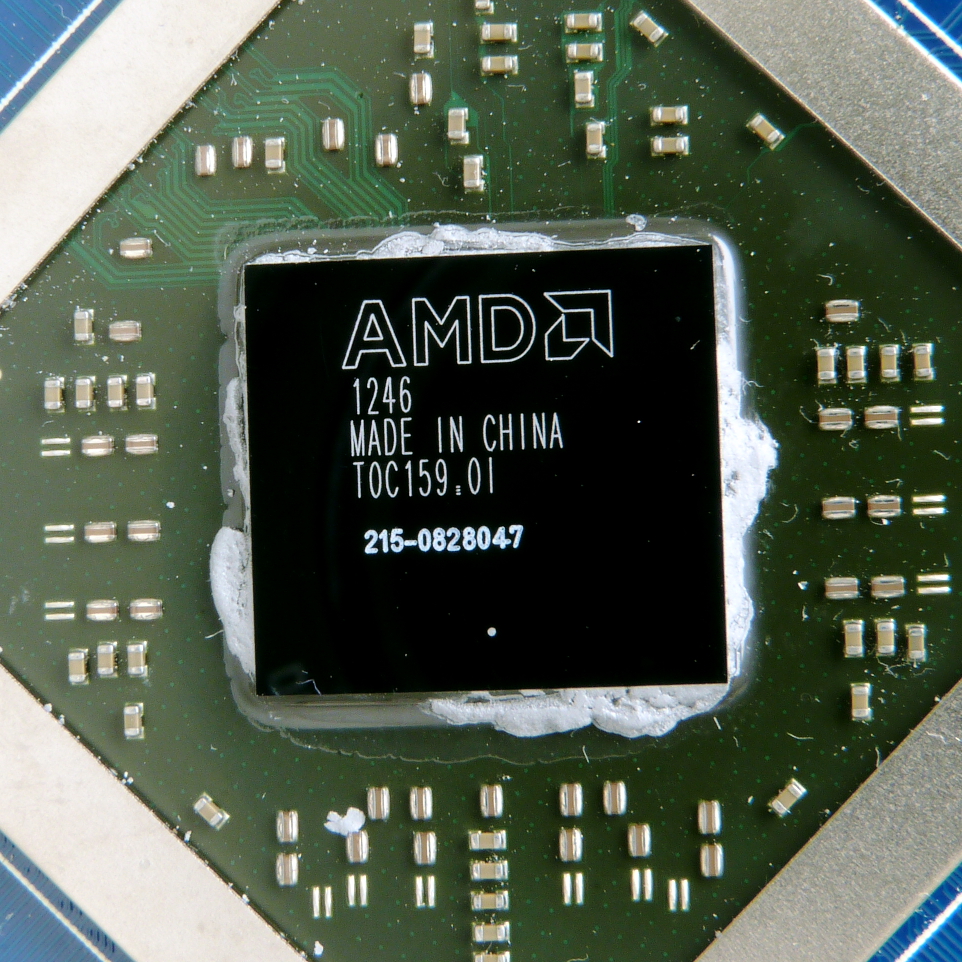 🇺🇸 United StatesRadeon HD 7000 series
AMD graphics processor family using 28 nm process and GCN architectureGPU · GPU architecture · 2012
 🇺🇸 United StatesPiledriver
Second-generation AMD x86 microarchitecture for desktops and serversCPU · x86 · 2012
 WorldGraphics Core Next
AMD graphics processor architecture introduced in 2012GPU · GPU architecture · 2012
 🇺🇸 United States and 1 moreEspresso
32-bit PowerPC CPU for the Nintendo Wii U consoleCPU · Power · 2012