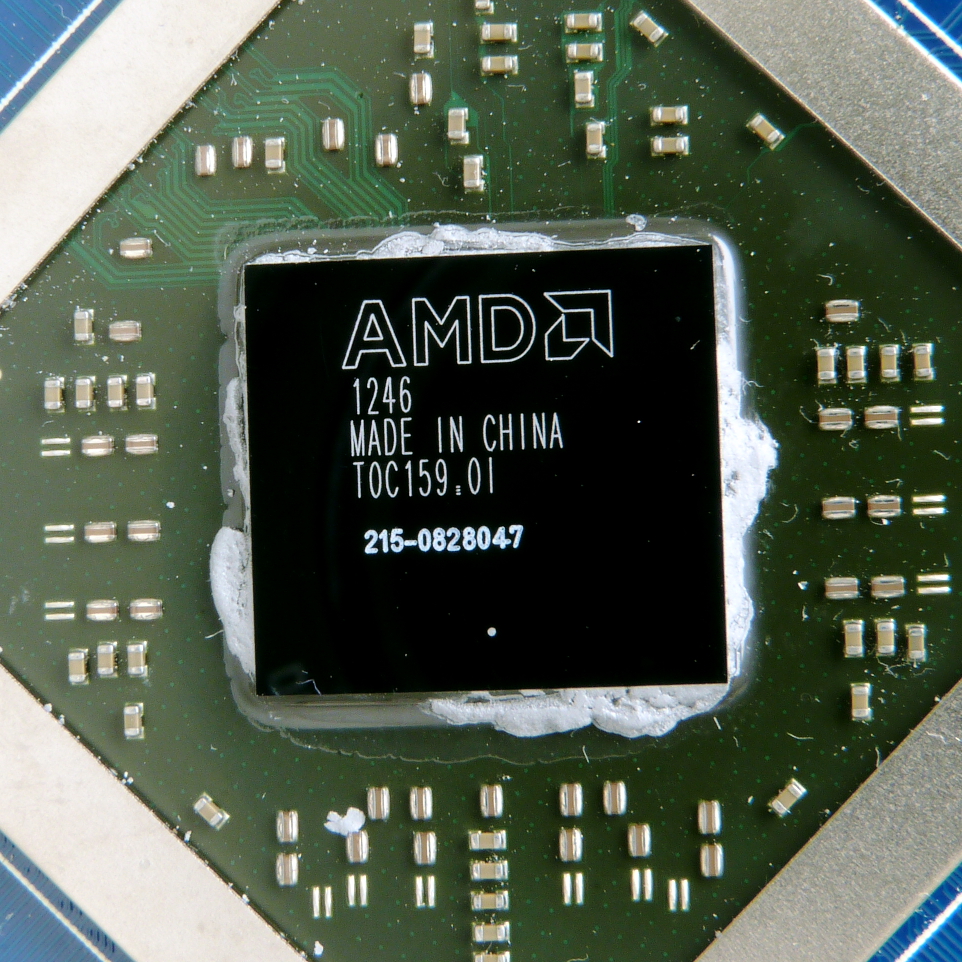
Radeon HD 7000 series
AMD graphics processor family using 28 nm process and GCN architecture
Advanced Micro Devices released the Radeon HD 7000 series in early 2012. Built on a 28 nanometre process by TSMC, this GPU family introduced the Graphics Core Next architecture for high-end models while retaining older designs for entry-level chips.
- Introduced Graphics Core Next architecture
- Manufactured on TSMC 28 nm process
- Tahiti die has 4.313 billion transistors
- Supports Vulkan 1.3 on Linux
- First AMD GPUs with 28 nm node
What it is
The Radeon HD 7000 series is a line of graphics processing units from AMD. Launched in January 2012, these chips power desktop and mobile computers. The series marked a shift in design philosophy by introducing the Graphics Core Next architecture for mid-range and high-end cards. Lower-end models continued to use the older TeraScale design. Manufactured by TSMC on a 28 nanometre process, these GPUs handled gaming, video decoding, and general compute tasks.
How it came about
AMD announced the high-end Tahiti chips in late 2011, with broader availability in early 2012. The launch coincided with Nvidia’s GeForce 600 series. Both companies faced challenges due to the newness of the 28 nm manufacturing process at TSMC. This immaturity affected supply and timing for both competitors during the first quarter of 2012. The series followed the Radeon HD 6000 line and preceded the R9 200 series.
Inside the chip
The series uses two distinct architectures. High-performance models like the HD 7900 and HD 7800 use Graphics Core Next (GCN). This design improves compute efficiency and supports modern APIs. Entry-level chips and integrated graphics use TeraScale 2 or 3. GCN cards support double-precision calculations better than smaller dies. The Tahiti die offers one-quarter double-precision throughput relative to single-precision. Smaller Cape Verde and Pitcairn dies offer only one-sixteenth. All chips include Unified Video Decoder and Video Coding Engine for media tasks.
How it was made
TSMC manufactured all discrete GPUs in this family using its 28 nm process node. The largest die, Tahiti, contains approximately 4.313 billion transistors. Smaller dies like Cape Verde have around 1.5 billion transistors. The manufacturing difficulties with this new node delayed some releases. The chips are packaged with GDDR5 memory interfaces ranging from 128-bit to 384-bit widths depending on the model tier.
Where it went
These GPUs serve in desktop PCs and laptops for gaming and multimedia. They support multi-monitor setups via AMD Eyefinity technology. Developers use them for scientific computing through OpenCL acceleration. The cards handle video playback and encoding using dedicated hardware blocks. They also support modern graphics APIs like Vulkan and Direct3D 12 on compatible operating systems.
Versions and family
The lineup includes the high-end HD 7900 series based on Tahiti. The mid-range HD 7800 series uses the Pitcairn die. Entry-level HD 7700 cards rely on Cape Verde. A later addition, the HD 7790, uses the Bonaire die with second-generation GCN. Integrated graphics processors in APUs use TeraScale 3. The HD 7990 enthusiast card combines two Tahiti GPUs. Mobile and embedded variants also exist under the same branding.
Why it matters
This series introduced the Graphics Core Next architecture, which became the foundation for future AMD GPUs. It improved compute performance for non-graphics tasks. The shift to 28 nm allowed for higher transistor counts and better energy efficiency compared to previous generations. Support for Vulkan and newer OpenGL versions extended the lifespan of these cards on Linux and Windows platforms.
Problems and reception
The launch faced delays attributed to yield issues at TSMC. Competitors released similar products around the same time. Despite initial supply constraints, the cards were noted for strong compute capabilities. Driver support evolved over time, with open-source Linux drivers gaining feature parity for many functions. The HD 7790 was notable for supporting True Audio technology.


Questions people ask about Radeon HD 7000 series
What architecture does the Radeon HD 7000 series use?
The series uses two architectures. High-end and mid-range cards use Graphics Core Next (GCN). Entry-level and integrated models use the older TeraScale 2 or 3 designs. GCN offers better compute performance and API support.
Who manufactured these graphics cards?
Advanced Micro Devices designed the GPUs. TSMC manufactured them using its 28 nanometre process node. This was a new process for both companies at the time of launch in 2012.
Does this series support Vulkan?
Yes, but support depends on the specific chip and driver. GCN-based cards support Vulkan 1.0 and higher. Second-generation GCN cards like the HD 7790 support Vulkan 1.1 on Windows. Linux users can access Vulkan 1.3 via the RADV driver.
How much memory do these cards have?
Memory varies by model. High-end HD 7970 cards have 3 GB of GDDR5. Mid-range HD 7800 models typically have 2 GB. Entry-level HD 7700 cards often come with 1 GB. Some later variants offer different configurations.
Good reading and sources
- Official websiteOfficial site
- Checking your browserAnandTech, Article
- AMD Radeon HD 7730 Review: A Harbinger Of The Kaveri APU?Tom's Hardware, Article
- Radeon HD 7000 series on WikipediaEncyclopedia
- More photos on Wikimedia CommonsPhotos
- Wikidata recordOpen data
The facts on this page come from the Wikipedia article "Radeon HD 7000 series", written by its contributors and used under the CC BY-SA 4.0 licence, and from its Wikidata record (CC0). EveryChip rewrote the text in its own words, with AI assistance, and compares every page with the article to make sure no passage is copied. It may be reused under the same CC BY-SA 4.0 licence with a link back.
It may contain mistakes, and figures change over time. Nothing here is investment or buying advice. If something is wrong, tell us. Last refreshed 2026-11-14.
Like Radeon HD 7000 series
All graphics processors WorldGeForce 600 series
Nvidia graphics cards introducing Kepler architecture for better efficiencyGPU · GPU architecture · 2012
 🇺🇸 United StatesKepler
Nvidia GPU microarchitecture focused on energy efficiency and programmability.GPU · GPU architecture · 2012
 WorldGeForce 700 series
Nvidia graphics card series from 2013 using Kepler and Maxwell chipsGPU · GPU architecture · 2013
 🇺🇸 United StatesRadeon 200 series
AMD graphics processors using GCN and TeraScale architectures.GPU · GPU architecture · 2013
More from AMD
All of them WorldGraphics Core Next
AMD graphics processor architecture introduced in 2012GPU · GPU architecture · 2012
 🇺🇸 United StatesPiledriver
Second-generation AMD x86 microarchitecture for desktops and serversCPU · x86 · 2012
 🇺🇸 United States and 1 moreLatte
AMD Radeon-based graphics chip for the Nintendo Wii U consoleGPU · GPU architecture · 2012
WorldAMD FX-6300
Six-core desktop processor from AMD's Bulldozer family released in late 2012.CPU · x86 · 2012