
RSX Reality Synthesizer
Graphics processor for the PlayStation 3 console
The RSX Reality Synthesizer is a graphics processing unit developed by Nvidia and Sony for the PlayStation 3. It is based on the GeForce 7 series architecture and features dedicated video memory with access to system RAM.
- Based on Nvidia GeForce 7 series architecture
- Features 256 MB of dedicated GDDR3 memory
- Core clock speed of 500 MHz
- Early models had thermal solder joint issues
- Manufacturing process shrank from 90 nm to 28 nm
What it is
The RSX Reality Synthesizer is a proprietary graphics processing unit created for the PlayStation 3 video game console. Nvidia and Sony developed the chip together, basing its design on the GeForce 7 series architecture. It handles most graphical rendering tasks while working alongside the Cell Broadband Engine central processor. The unit supports high dynamic range lighting and various anti-aliasing techniques to improve visual quality in games.
How it came about
Sony and Nvidia collaborated to build this graphics engine, revealing details at the E3 2005 conference. The design draws heavily from the Nvidia G70 architecture used in the GeForce 7800 GTX. Early production models faced reliability challenges due to thermal stress on solder joints. Later revisions moved to smaller manufacturing processes to reduce heat and improve stability over time.
Inside the chip
The chip uses separate pipelines for vertex and pixel processing. It includes twenty-four texture filtering units and eight render output units. The core runs at 500 MHz and delivers a theoretical floating-point performance of 192 GFLOPS. A key feature is its ability to access both local video memory and the main system RAM through the Cell processor interface, allowing for flexible data handling during complex scenes.
How it was made
Initial units were manufactured using a 90 nanometre process node and contained over 300 million transistors. The packaging used a flip-chip ball grid array method. Subsequent versions shifted to 65 nm in 2008, 40 nm in 2010, and 28 nm in 2013. These smaller nodes helped lower power consumption and mitigate the thermal issues found in the earliest batches.
Where it went
This processor serves as the primary graphics engine for the PlayStation 3 home console. Developers access its capabilities through libraries like PSGL or the lower-level LibGCM. The chip manages 3D rendering, texture compression, and output to display interfaces. It works in tandem with the Cell CPU to handle demanding computational loads required by modern video games of that era.
Versions and family
The hardware evolved through several manufacturing shrinks. The original 90 nm version was followed by a 65 nm revision in 2008. A 40 nm variant arrived in 2010, and a 28 nm model appeared in 2013. Each iteration reduced heat generation. The memory configuration remained consistent with 256 MB of dedicated GDDR3, though access to system XDR memory varied in implementation.
Why it matters
The RSX brought PC-class graphics architecture to a home console environment. Its hybrid memory approach allowed developers to overcome limited local video RAM by utilizing system memory. This design choice influenced how programmers optimized textures and assets for the PlayStation 3 platform. The collaboration between Sony and Nvidia set a precedent for future custom silicon partnerships in the gaming industry.
Problems and reception
Early models suffered from a defect known as Bumpgate. High operating temperatures caused solder joints in the ball grid array to weaken and fail. Mismatched thermal expansion rates and low-quality underfill material contributed to these hardware failures. The issue primarily affected launch units, leading to degraded performance or total system failure until later process nodes resolved the thermal stresses.

Questions people ask about RSX Reality Synthesizer
Who designed the RSX Reality Synthesizer?
Nvidia and Sony Group jointly developed the RSX. It is based on Nvidia's GeForce 7 series architecture, specifically incorporating elements from the G70 and G71 designs used in PC graphics cards.
How much memory does the RSX have?
The chip includes 256 MB of dedicated GDDR3 SDRAM. It can also access up to 224 MB of the console's main XDR DRAM through the Cell processor, providing a combined maximum of 480 MB for graphics tasks.
What was Bumpgate?
Bumpgate refers to reliability issues in early 90 nm RSX units. High heat weakened the solder joints connecting the die to the package, causing hardware failures. Later revisions with smaller process nodes fixed this thermal problem.
What is the clock speed of the RSX?
The core of the RSX Reality Synthesizer operates at a frequency of 500 MHz. The associated GDDR3 memory runs at 650 MHz, providing an effective transmission rate of 1300 MT/s for data transfer.
Good reading and sources
- RSX Reality Synthesizer on WikipediaEncyclopedia
- More photos on Wikimedia CommonsPhotos
- Wikidata recordOpen data
The facts on this page come from the Wikipedia article "RSX Reality Synthesizer", written by its contributors and used under the CC BY-SA 4.0 licence, and from its Wikidata record (CC0). EveryChip rewrote the text in its own words, with AI assistance, and compares every page with the article to make sure no passage is copied. It may be reused under the same CC BY-SA 4.0 licence with a link back.
It may contain mistakes, and figures change over time. Nothing here is investment or buying advice. If something is wrong, tell us. Last refreshed 2026-11-14.
Like RSX Reality Synthesizer
All graphics processors 🇺🇸 United StatesGeForce 8 series
Nvidia's first unified shader GPU generationGPU · GPU architecture · 2006
 🇨🇦 CanadaR420
ATI GPU core for Radeon X800 graphics cardsGPU · GPU architecture · 2004
 🇺🇸 United StatesGeForce 9 series
Nvidia's ninth generation of desktop and mobile graphics processors.GPU · GPU architecture · 2008
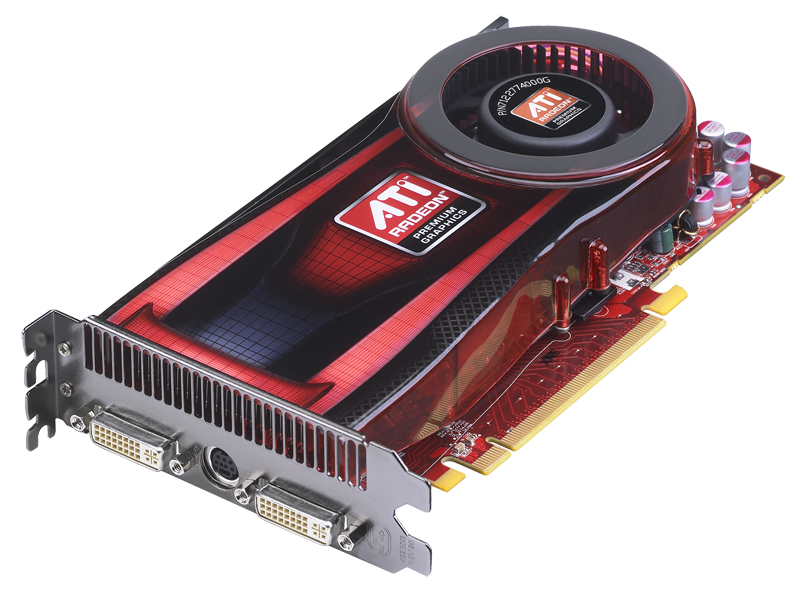 🇺🇸 United StatesRadeon HD 4000 series
AMD graphics processor series with GDDR5 supportGPU · GPU architecture · 2008
More from Nvidia
All of them 🇺🇸 United StatesTesla
Nvidia GPU microarchitecture with unified shadersGPU · GPU architecture · 2006
🇺🇸 United StatesNForce 500
Motherboard chipset series for AMD and Intel PCsAnalog · 2006
WorldNForce 600
Nvidia chipset series for Intel and AMD PCsAnalog · 2006
 🇺🇸 United StatesNvidia Tesla
Former brand for Nvidia general-purpose GPU computing cardsGPU · GPU architecture · 2007