
GeForce 9 series
Nvidia's ninth generation of desktop and mobile graphics processors.
Released in February 2008, the GeForce 9 series is Nvidia's ninth generation of graphics processing units. Built on an updated Tesla microarchitecture, it introduced PCI Express 2.0 support and improved compression techniques. The lineup spans entry-level to enthusiast dual-GPU cards, manufactured on 65 nm and later 55 nm processes.
- First Nvidia series to support PCI Express 2.0
- Built on 65 nm and later 55 nm manufacturing processes
- Includes dual-GPU model 9800 GX2 with 256 stream processors
- Supports DirectX 10 and Shader Model 4.0
- Driver support ended in April 2016
What it is
The GeForce 9 series represents the ninth generation of Nvidia graphics cards. Launched in early 2008, these chips use an refined version of the Tesla microarchitecture. They serve as a bridge between the older GeForce 8 line and the subsequent 200 series. Key improvements include support for the faster PCI Express 2.0 interface and better memory compression. The family covers a wide range of performance levels, from basic office display adapters to high-end gaming hardware with multiple graphics processors on one card.
How it came about
Nvidia introduced the first model, the GeForce 9600 GT, on February 21, 2008. This launch marked a shift toward more efficient manufacturing processes. While the previous generation used 90 nm or 80 nm nodes, the new chips started at 65 nm. Later in the year, the company moved to a 55 nm process for certain models to lower power usage and shrink the physical die size. The series also saw the release of the dual-GPU 9800 GX2 in March 2008, showcasing Nvidia's multi-card technology.
Inside the chip
These GPUs rely on the Tesla microarchitecture, which features unified shaders capable of handling various graphics tasks. The chips support DirectX 10 and Shader Model 4.0, enabling advanced visual effects in games. Memory interfaces vary from 64-bit for entry-level parts to 256-bit for high-end models. Higher-end cards include second-generation PureVideo HD technology for video decoding. The architecture also introduces Compute Capability 1.1, allowing for atomic functions in parallel programming. Some models support HybridPower, which switches off the discrete GPU to save energy when not needed.
How it was made
Manufacturing began using a 65 nanometer process node. Transistor counts range from 210 million for the smallest G98 chip to 754 million for the larger G92 and G94 variants. In mid-2008, Nvidia transitioned specific models like the 9800 GTX+ to a 55 nm process. This shrink helped reduce heat output and power consumption without changing the core design significantly. The largest card, the 9800 GX2, combines two printed circuit boards into a single unit, housing two separate graphics processors.
Where it went
Desktop computers and laptops utilize these chips for gaming and multimedia. The series supports OpenGL 3.3 and OpenCL 1.1, making them suitable for some professional applications beyond gaming. Enthusiast models like the 9800 GTX and 9800 GX2 target high-resolution gaming with anti-aliasing enabled. Entry-level parts such as the 9300 GS handle basic display duties and high-definition video playback. Mobile versions, designated with an M suffix, provide graphics capabilities for notebooks while managing battery life constraints.
Versions and family
The lineup includes GE, GS, GSO, GT, GTX, and GX2 sub-brands. The 9800 GSO was essentially a rebadged older 8800 GS to clear inventory. A revised 9600 GSO 512 later replaced it with fewer processors but higher clock speeds. The 9800 GTX received a refresh called the 9800 GTX+, built on the smaller 55 nm process. Mobile variants range from the low-power 9100M G to the powerful 9800M GTX. The series was eventually succeeded by the GeForce 200 series and the rebranded GeForce 100 series.
Why it matters
This generation solidified PCI Express 2.0 as the standard for graphics connectivity. It offered a significant performance jump over the mid-range GeForce 8600 series, particularly with the 9600 GT. The introduction of dual-GPU consumer cards like the 9800 GX2 pushed the boundaries of single-slot performance. However, the practice of rebadging older chips caused some confusion among buyers regarding actual performance gains. Driver support ended in 2016 for most modern operating systems.
Problems and reception
Reviewers noted that the 9600 GT offered nearly double the performance of its predecessor. The 9800 GX2 was praised for its raw power but criticized for its high price and power requirements. Some critics considered the revised 9600 GSO 512 inferior to the original version it replaced. The series faced mixed reactions due to Nvidia's strategy of renaming older hardware, which sometimes misled consumers about the novelty of the silicon.


Questions people ask about GeForce 9 series
What microarchitecture does the GeForce 9 series use?
The series is based on an updated version of the Tesla microarchitecture. This design introduced unified shaders and improved efficiency over previous generations.
Does the GeForce 9 series support DirectX 10?
Yes, all models in the GeForce 9 series support DirectX 10 and Shader Model 4.0. This allows them to run games and applications requiring these specific graphics standards.
What is the difference between the 9800 GTX and 9800 GTX+?
The 9800 GTX+ is a refreshed version of the 9800 GTX. It uses a 55 nm manufacturing process instead of 65 nm, resulting in higher core and shader clock speeds while reducing power consumption.
Good reading and sources
- GeForce 9 series on WikipediaEncyclopedia
- More photos on Wikimedia CommonsPhotos
- Wikidata recordOpen data
The facts on this page come from the Wikipedia article "GeForce 9 series", written by its contributors and used under the CC BY-SA 4.0 licence, and from its Wikidata record (CC0). EveryChip rewrote the text in its own words, with AI assistance, and compares every page with the article to make sure no passage is copied. It may be reused under the same CC BY-SA 4.0 licence with a link back.
It may contain mistakes, and figures change over time. Nothing here is investment or buying advice. If something is wrong, tell us. Last refreshed 2026-11-14.
Like GeForce 9 series
All graphics processors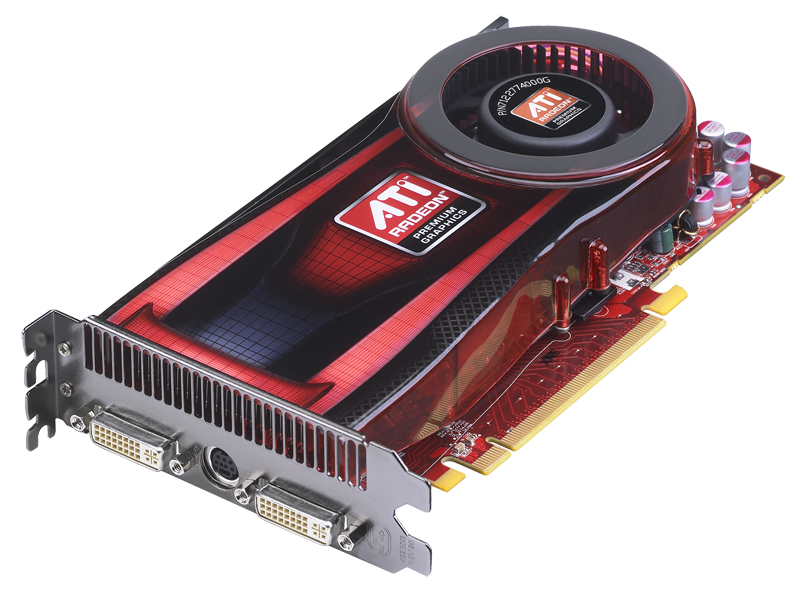 🇺🇸 United StatesRadeon HD 4000 series
AMD graphics processor series with GDDR5 supportGPU · GPU architecture · 2008
 🇺🇸 United StatesGeForce 8 series
Nvidia's first unified shader GPU generationGPU · GPU architecture · 2006
 🇨🇦 CanadaR420
ATI GPU core for Radeon X800 graphics cardsGPU · GPU architecture · 2004
 🇺🇸 United StatesRankine
Nvidia GPU microarchitecture from 2003 for DirectX 9GPU · GPU architecture · 2003
More from Nvidia
All of them 🇺🇸 United StatesTegra
Nvidia system on a chip series for mobile, automotive and AI devicesSoC · Arm · 2008
 🇺🇸 United StatesGeForce 200 series
Nvidia Tesla-based graphics processors from 2008GPU · GPU architecture · 2008
 WorldNvidia GRID
GPU family for virtualization and cloud gamingGPU · GPU architecture · 2008
 🇺🇸 United StatesNvidia Tesla
Former brand for Nvidia general-purpose GPU computing cardsGPU · GPU architecture · 2007