
RDRAM
High-bandwidth serial memory developed by Rambus for PCs and consoles.
Rambus developed this synchronous dynamic random-access memory in the 1990s to replace standard SDRAM. It offered high bandwidth via a narrow serial bus but lost market share to cheaper DDR alternatives due to high costs and licensing fees.
- Uses a narrow 16-bit serial bus for high-speed data transfer.
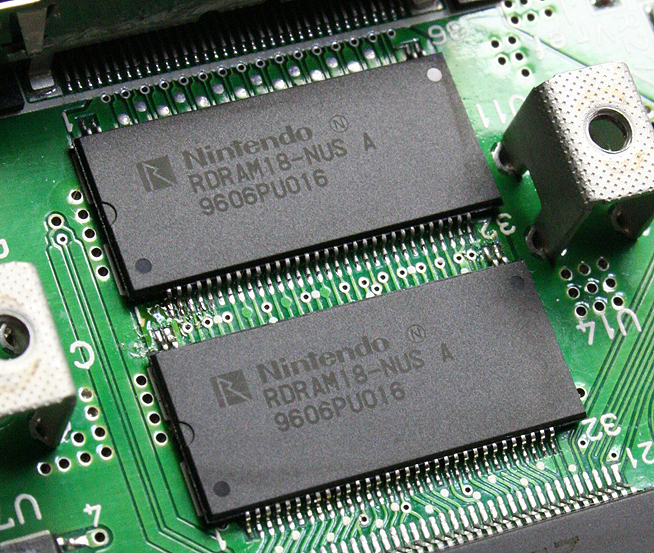
- Featured in Nintendo 64 and Sony PlayStation 2 consoles.
- Required continuity modules in unused memory slots.
- Lost market share to cheaper DDR SDRAM by 2003.
What it is
Rambus DRAM, often called RDRAM, is a type of synchronous dynamic random-access memory. Rambus created it during the 1990s to serve high-bandwidth needs in computers and electronics. Unlike the wide parallel buses of standard memory, RDRAM uses a narrow serial interface. This design aimed to replace existing SDRAM technologies. The third generation, known as Direct Rambus DRAM, eventually gave way to XDR DRAM. While it promised speed, its proprietary nature and cost hindered widespread adoption in personal computers.
How it came about
Rambus signed a development deal with Intel in November 1996. Intel planned to make this memory the standard for its future chipsets and processors. The first motherboards supporting it arrived in late 1999 after delays. Intel initially tried to bridge the gap with a translation hub for older memory, but recalled those boards due to stability issues. By subsidising bundles with Pentium 4 processors, Intel pushed the technology into the market. However, competition from DDR SDRAM grew strong. By 2003, Intel shifted its roadmap to support dual-channel DDR instead, ending mainstream support for RDRAM.
Inside the chip
The memory operates on a 16-bit bus, much narrower than the 64-bit path of contemporary SDRAM. To compensate, it runs at high clock speeds, such as 400 MHz for PC-800 modules. Data transfers occur on both rising and falling clock edges, a method called double data rate. Marketing names doubled the clock speed, so 400 MHz became PC-800. Modules come in 184-pin or 232-pin RIMM forms. Systems often require continuity modules in empty slots to prevent signal reflection. The complex interface circuitry increases die size and heat output, requiring heat spreaders on every module.
How it was made
Manufacturing RDRAM involves more complexity than standard SDRAM due to additional on-chip circuitry like packet demultiplexers. This results in larger die sizes and higher production costs. At lower densities, the price premium reached twenty percent. Licensing fees added to the expense, making it up to four times costlier than PC-133 SDRAM. The need for heat spreaders and specific packaging further increased the bill of materials for system builders. These factors made it difficult to compete with cheaper alternatives on price alone.
Where it went
Intel used RDRAM in chipsets for Pentium III and Pentium 4 processors, including the 840, 850, and 860 series. Dual-channel configurations doubled bandwidth to 3200 MB/s. Beyond PCs, Nintendo selected it for the Nintendo 64 console in 1996, valuing its bandwidth and simple board layout. Sony also used it in the PlayStation 2, employing a dual-channel setup for 3200 MB/s throughput. Texas Instruments incorporated it into Digital Light Processing systems. Graphics card makers like Cirrus Logic used it for high-end 2D and 3D accelerators.
Versions and family
The family includes Concurrent Rambus DRAM and Direct Rambus DRAM. PC-800 modules run at 400 MHz, while later PC-1066 versions increased speed. Intel chipsets evolved from single-channel to dual-channel support, boosting performance. The 32-bit modules introduced a 232-pin form factor, differing from the original 184-pin design. XDR DRAM succeeded this line. Competitors included DDR SDRAM, which matched bandwidth with lower latency and cost, ultimately winning the standards war.
Why it matters
RDRAM sparked a significant standards war in the memory industry. Its failure to become the universal PC standard highlighted the importance of open licensing and cost efficiency. While it lost in the desktop market, it proved viable in specialised applications like game consoles where bandwidth mattered more than latency. The controversy over Intel's handling of the transition and licensing fees remains a notable chapter in hardware history. It demonstrated that raw bandwidth does not guarantee market success if total system cost is too high.
Problems and reception
Critics pointed to high latency, heat, and cost as major drawbacks. Benchmarks in 1999 showed minimal performance gains for everyday applications compared to cheaper SDRAM. The recall of Intel 820 motherboards due to switching noise damaged confidence. Users disliked the requirement for continuity modules in empty slots. While workstations benefited from the bandwidth, most consumers found the price unjustified. The technology was viewed as expensive and proprietary, leading to its rapid decline once viable DDR alternatives emerged.



Questions people ask about RDRAM
Why did RDRAM need continuity modules?
The memory controller design required signals to propagate to termination resistors. Empty slots would cause signal reflection, so users had to install dummy continuity modules to complete the circuit.
How does RDRAM compare to SDRAM?
RDRAM offers higher bandwidth through a fast serial bus but suffers from higher latency, heat, and cost. SDRAM uses a wider parallel bus and was significantly cheaper to produce and buy.
Which game consoles used RDRAM?
The Nintendo 64 used 4 MB of RDRAM for its main memory. The Sony PlayStation 2 also used RDRAM in a dual-channel configuration to achieve high memory bandwidth.
Good reading and sources
The facts on this page come from the Wikipedia article "RDRAM", written by its contributors and used under the CC BY-SA 4.0 licence, and from its Wikidata record (CC0). EveryChip rewrote the text in its own words, with AI assistance, and compares every page with the article to make sure no passage is copied. It may be reused under the same CC BY-SA 4.0 licence with a link back.
It may contain mistakes, and figures change over time. Nothing here is investment or buying advice. If something is wrong, tell us. Last refreshed 2026-11-14.
Like RDRAM
All memory chips 🇺🇸 United States1T-SRAM
High-density pseudo-static memory technology for embedded systemsMemory · 1998
 WorldGDDR SDRAM
High-bandwidth synchronous memory designed for graphics processors.Memory · 1998
 🇰🇷 South KoreaDDR2 SDRAM
Second-generation double data rate memory standard for computers.Memory · 2003
🇺🇸 United StatesMillipede memory
IBM experimental non-volatile memory using atomic force probesMemory · 2003
More from Rambus
All of them WorldIntel 440FX
Chipset for Pentium Pro and early Pentium II processorsAnalog · 1996
 🇺🇸 United StatesIntel 430HX
Socket 7 chipset for Pentium and MMX processorsAnalog · 1996
 🇺🇸 United StatesPentium II
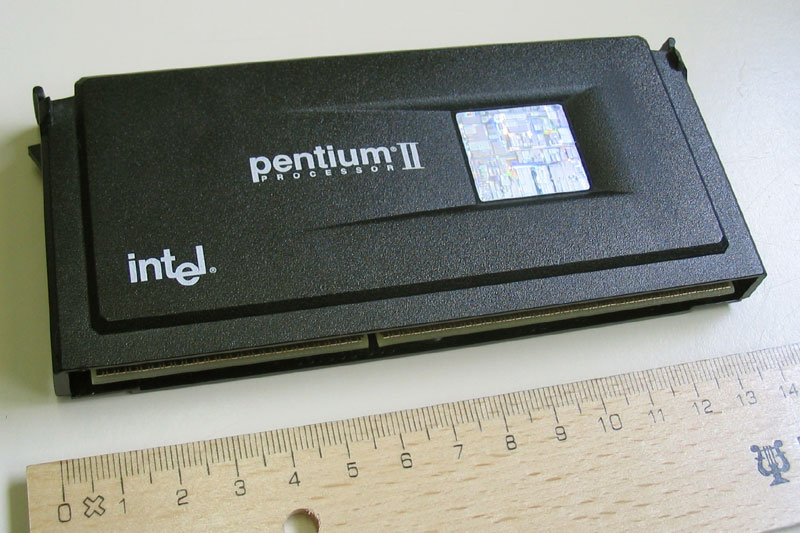
Intel's 1997 P6 desktop CPU line with MMX, sold in a slot cartridgeCPU · x86 · 1997