
Intel 440FX
Chipset for Pentium Pro and early Pentium II processors
Released in May 1996 by Intel, the 440FX chipset enabled support for Pentium Pro and Pentium II CPUs. It served as a bridge between these processors and system memory, using a northbridge and southbridge design without AGP or SDRAM support.
- First Intel chipset to support Pentium II processors
- Released in May 1996 with codename Natoma
- Does not support AGP, SDRAM, or UltraDMA
- Used as the default simulated chipset in QEMU emulator
What it is
The Intel 440FX, codenamed Natoma, is a chipset designed to support the Pentium Pro and Pentium II central processing units. Launched in May 1996, it holds the distinction of being the first Intel chipset compatible with the Pentium II processor. The solution comprises two main components: the 82441FX northbridge, which handles PCI and memory control, and the 82442FX data bus accelerator. It connects to the PIIX3 southbridge to manage input and output functions. This hardware laid the groundwork for mid-1990s personal computers based on Intel architecture.
How it came about
Intel introduced the 440FX in May 1996 to address the needs of emerging Pentium II systems. It followed the Intel 450KX chipset, offering improved compatibility for the new Slot 1 and Socket 370 interfaces alongside the older Socket 8. As the first platform to officially support the Pentium II, it marked a transition period in PC hardware. The design was eventually succeeded by the Intel 440LX, which added support for newer technologies like AGP and SDRAM that the 440FX lacked.
Inside the chip
The architecture splits duties between a northbridge and a southbridge. The 82441FX chip acts as the PCI and Memory Controller, managing data flow between the CPU and system memory. The 82442FX serves as a data bus accelerator. Notably, this chipset does not support Accelerated Graphics Port (AGP), UltraDMA, or Synchronous Dynamic Random Access Memory (SDRAM). Instead, it relies on older memory standards and peripheral connections. The PIIX3 southbridge handles legacy ISA and IDE functions, completing the system logic required for booting and operating the computer.
How it was made
Intel manufactured the 440FX chipset components, specifically the 82441FX and 82442FX chips. While specific fabrication process nodes are not detailed in the available records, the chipset was produced during the mid-1990s era of semiconductor manufacturing. The physical implementation involves separate chips for the northbridge and data bus acceleration, rather than a single integrated system-on-chip. This modular approach was standard for desktop platforms of that time, allowing for flexible board designs by motherboard manufacturers.
Where it went
This chipset powered personal computers equipped with Pentium Pro and early Pentium II processors. It supported various CPU sockets, including Socket 8, Slot 1, and Socket 370, making it versatile for different form factors. Due to its widespread adoption and stable design, it became a reference model for software emulation. The developers of QEMU, a popular machine emulator, originally selected the 440FX and its PIIX3 southbridge as the default simulated hardware environment for x86 virtualization.
Versions and family
The primary variants are identified by their part numbers: 82441FX for the PCI and Memory Controller and 82442FX for the Data Bus Accelerator. It replaced the Intel 450KX and was itself succeeded by the Intel 440LX. The 440LX introduced support for AGP and SDRAM, addressing the limitations of the 440FX. No other major siblings or distinct commercial variants of the 440FX family are noted beyond these core component identifiers and its direct predecessor and successor models.
Why it matters
The 440FX played a critical role in the adoption of the Pentium II processor by providing the necessary system logic support. Its design choices influenced the baseline for PC compatibility in the late 1990s. Beyond physical hardware, its legacy persists in the software world. The QEMU emulator team chose this specific chipset and its PIIX3 southbridge as the foundational model for x86 emulation, meaning millions of virtual machines today replicate the behavior of this 1996 hardware design for testing and development purposes.

Questions people ask about Intel 440FX
Which processors does the Intel 440FX support?
The chipset supports the Pentium Pro, Pentium II, and Celeron processors. It was the first Intel chipset to offer compatibility with the Pentium II, working across Socket 8, Slot 1, and Socket 370 interfaces.
Does the 440FX support modern memory types like SDRAM?
No, the Intel 440FX does not support SDRAM. It also lacks support for UltraDMA and the Accelerated Graphics Port (AGP). These features were introduced in its successor, the Intel 440LX chipset.
Why is the 440FX significant for software emulation?
The designers of the QEMU emulator originally chose to simulate the 440FX chipset and its PIIX3 southbridge. This decision made it a standard reference for x86 virtualization, allowing software to run on emulated hardware that mimics this specific configuration.
Good reading and sources
The facts on this page come from the Wikipedia article "Intel 440FX", written by its contributors and used under the CC BY-SA 4.0 licence, and from its Wikidata record (CC0). EveryChip rewrote the text in its own words, with AI assistance, and compares every page with the article to make sure no passage is copied. It may be reused under the same CC BY-SA 4.0 licence with a link back.
It may contain mistakes, and figures change over time. Nothing here is investment or buying advice. If something is wrong, tell us. Last refreshed 2026-11-14.
Like Intel 440FX
All analog, power and mixed-signal 🇺🇸 United StatesIntel 430HX
Socket 7 chipset for Pentium and MMX processorsAnalog · 1996
 🇺🇸 United StatesPIIX
Intel southbridge family for x86 PCs from the mid-1990sAnalog · x86 · 1995
 🇺🇸 United StatesI/O Controller Hub
Intel southbridge chips managing motherboard data flowAnalog · 1999
🇺🇸 United StatesIntel X58
I/O hub for Nehalem processors with QuickPath InterconnectAnalog · 2008
More from Intel
All of them 🇺🇸 United StatesRDRAM
High-bandwidth serial memory developed by Rambus for PCs and consoles.Memory · 1996
🇺🇸 United StatesStrongARM
High-performance ARM microprocessor family for portable devicesCPU · Arm · 1996
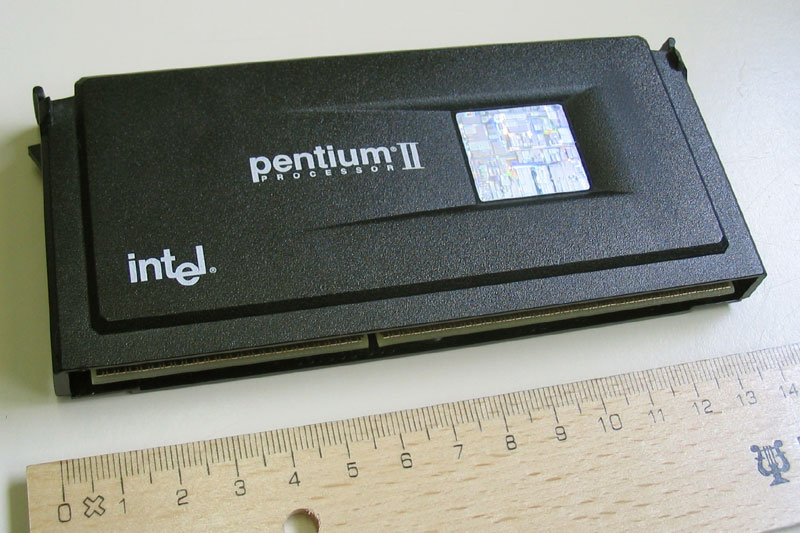 🇺🇸 United StatesPentium II
Intel's 1997 P6 desktop CPU line with MMX, sold in a slot cartridgeCPU · x86 · 1997
 🇺🇸 United StatesPentium Pro
Intel's first sixth-generation x86 CPU, built for servers and workstationsCPU · x86 · 1995