Consumer electronics
Calculators, TVs, cameras, set-top boxes and wearables. 352 chips on EveryChip so far.
Consumer electronics were the first mass market for chips. Pocket calculators drove early chip design: the Intel 4004 was built for a Busicom calculator, and Texas Instruments' TMS1000 went into calculators, toys and microwave ovens. Since then chips have filled TVs, cameras, music players, set-top boxes, projectors, smart speakers and watches, usually as SoCs designed for one kind of product.
Calculators to cameras
In 1969 the Japanese company Busicom asked Intel for a set of chips for a printing calculator; Intel's answer was the 4004, released in 1971. Calculator prices fell sharply in the 1970s as single-chip designs arrived. Digital cameras were made possible by image sensors and image processors, and Texas Instruments' DLP chips, with millions of tiny mirrors, went into projectors and cinema screens.
Smart devices
Today's TVs, streaming sticks and smart speakers run SoCs from MediaTek, Realtek, Amlogic, Broadcom and others, combining Arm cores with video decoders for formats such as HEVC and AV1. Wearables such as Apple's watch use tiny SoCs in system-in-package modules, in which many chips are sealed together into one small block.
Famous consumer electronics chips
 Intel 4004Built for the Busicom 141-PF calculator, 1971
 TMS1000Microcontroller of calculators and toys
 Texas Instruments LPC Speech ChipsSpeech chips of TI's Speak and Spell toy
 Digital micromirror deviceTI's DLP mirror chip for projectors
 Apple S1The first Apple Watch's system in package, 2015
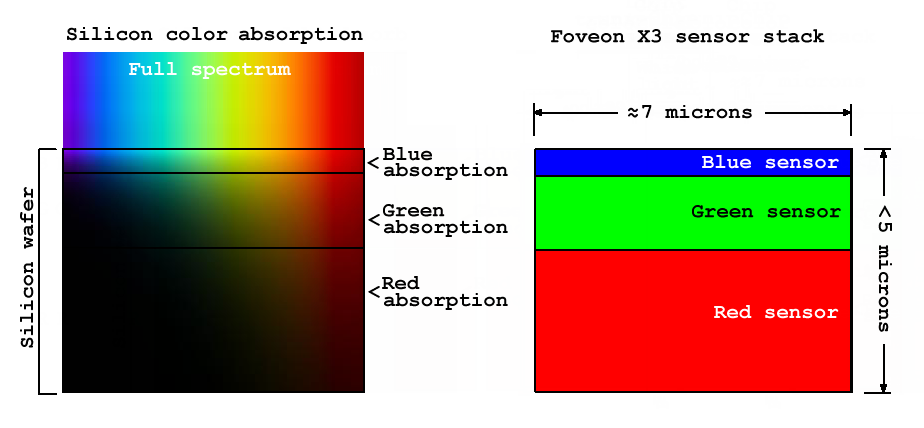 Foveon X3 sensorImage sensor of Sigma cameras
Further reading
 🇨🇦 CanadaATI Rage
Graphics chipset series by ATI with 2D, video and 3D accelerationGPU · GPU architecture · 1996
🇺🇸 United StatesAtari AMY
64-oscillator additive synthesis sound chip by AtariAnalog · 1984
🇺🇸 United StatesRDNA 2
AMD GPU microarchitecture for gaming and consolesGPU · GPU architecture · 2020
🇯🇵 JapanPICA200
Low-power GPU core for embedded devices and handheld consolesGPU · GPU architecture · 2005
🇯🇵 JapanYamaha YM2610
FM synthesis sound chip for arcade and home consolesAnalog · 1987
WorldARM Cortex-A5
Low-power 32-bit processor core for entry-level devicesCPU · Arm · 2009
 🇺🇸 United States68HC12
16-bit microcontroller family from Motorola and FreescaleMicrocontroller · 68k · 1995
 🇯🇵 JapanSpursEngine
Toshiba media coprocessor for video and 3D tasksCPU · Other · 2007
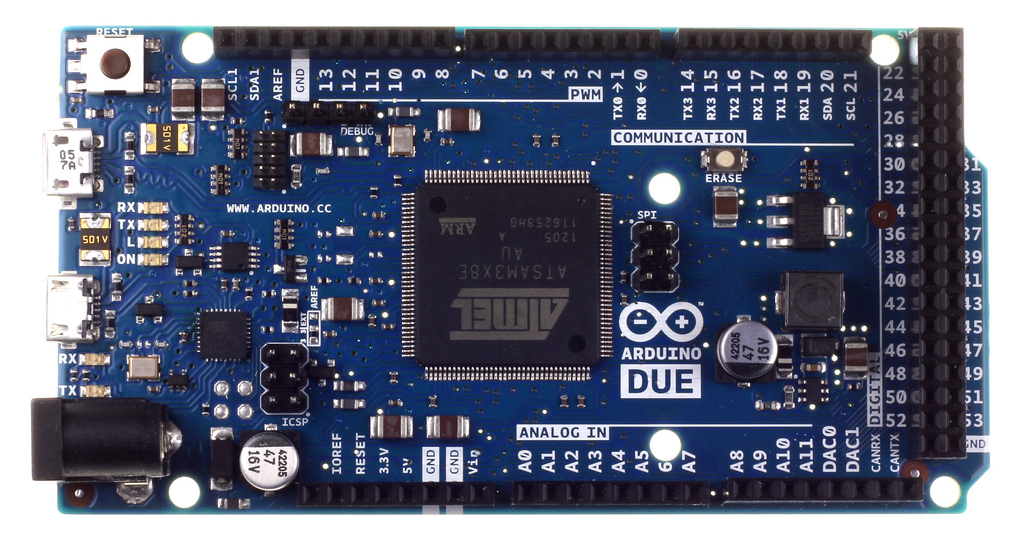 🇺🇸 United StatesAtmel ARM-based processors
32-bit ARM microcontrollers and microprocessors by MicrochipMicrocontroller · Arm · 1998
🇯🇵 JapanRL78
16-bit embedded microcontroller family by Renesas ElectronicsMicrocontroller · Other · 2010
🇺🇸 United StatesMSP432
Low-power 32-bit ARM microcontroller family from Texas InstrumentsMicrocontroller · Arm · 2015
WorldXDR DRAM
High-bandwidth memory interface for consoles and GPUsMemory
 WorldDataFlash
Serial interface flash memory with SPI compatibilityMemory
WorldMaverickCrunch
Floating point coprocessor core for digital audio in Cirrus Logic SoCsSoC · Arm · 2000
 🇺🇸 United StatesLM386
Low-voltage audio power amplifier integrated circuitAnalog
🇺🇸 United StatesFoveon X3 sensor
Image sensor using stacked photodiodes for colour captureSensor · 2002
🇺🇸 United StatesMOS Technology 6532
Integrated circuit combining RAM, I/O ports and a timer for 1970s systems.Microcontroller · Other
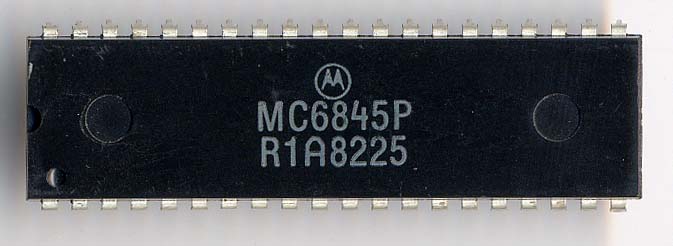 🇺🇸 United StatesMotorola 6845
Display controller for 1980s home computers and early PC graphics cardsGPU
 WorldAmiga Enhanced Chip Set
Second-generation graphics and audio chipset for Amiga computersGPU · 1990
 🇺🇸 United StatesANTIC
Video display controller for Atari 8-bit computers and the 5200 consoleSoC · Other · 1978
🇺🇸 United StatesSN76489
Programmable sound generator chip for 1980s computers and consolesAnalog · 1979
 🇯🇵 JapanYM2413
Cost-reduced FM synthesis sound chip by YamahaAnalog · Other · 1986
 🇯🇵 JapanYamaha OPN
Family of FM synthesis sound chips for computers and gamesAnalog · 1984
🇺🇸 United StatesMIPS-X
A 32-bit RISC microprocessor architecture from Stanford UniversityCPU · RISC · 1987
🇯🇵 JapanR800
Z80-compatible pipelined CPU for MSX Turbo-R computersCPU · Other
 🇺🇸 United StatesIntel 8251
Universal synchronous and asynchronous receiver transmitter chip by IntelNetwork chip · Other · 1975
🇺🇸 United StatesLM3875
56-watt audio amplifier integrated circuitAnalog
🇯🇵 JapanExmor
Sony's CMOS image sensor series with on-chip conversion and noise reductionSensor · Other · 2008
 🇺🇸 United StatesLM13700
Dual operational transconductance amplifier for analog audio circuitsAnalog
 🇺🇸 United StatesApple A14 Bionic
Apple's 5 nm phone and tablet chip with six CPU cores and a 16-core Neural EngineSoC · Arm · 2020
🇺🇸 United StatesApple A19
64-bit ARM-based system on a chip for iPhone and Apple TV devices.SoC · Arm · 2025
 🇺🇸 United StatesApple A4
Apple's first in-house SoC: one Cortex-A8 core plus PowerVR graphics, built at 45 nm.SoC · Arm · 2010
 🇺🇸 United StatesAMD Am29000
32-bit RISC microprocessor family for embedded systems and printersCPU · RISC · 1988
 🇺🇸 United StatesI.MX
ARM-based system-on-chip family for multimedia and embedded systems by NXP Semiconductors.SoC · Arm
 🇺🇸 United States and 1 moreAMD Am2900
AMD's 1975 bipolar bit-slice IC family for building custom control unitsCPU · Other · 1975
 🇺🇸 United StatesPIC microcontroller
Microchip's long-running family of 8-bit to 32-bit microcontrollersMicrocontroller · MIPS · 1976
 🇺🇸 United StatesMSP430
A 16-bit mixed-signal microcontroller family designed for very low power use.Microcontroller · Other · 1992
 🇺🇸 United StatesHewlett-Packard Nanoprocessor
An 8-bit control microcontroller with no arithmetic unit, released by HP in 1974Microcontroller · Other · 1974
 🇺🇸 United StatesApple M2
Apple's second-generation ARM SoC family for Macs, iPads and Vision ProSoC · Arm · 2022
WorldSHARC
A 32-bit floating-point DSP family from Analog Devices with VLIW instructionsDSP · VLIW · 1999
 🇯🇵 JapanHD64180
A Z80-based embedded microprocessor with on-chip MMU and peripheralsCPU · 8-bit · 1985
🇺🇸 United StatesAT&T Hobbit
A C-optimised microprocessor from AT&T with a stack cache instead of registersCPU · Other · 1992
 🇺🇸 United StatesElectronic Arrays 9002
An 8-bit CPU with on-chip RAM, sold briefly in the mid-1970s.CPU · Other · 1976
 🇺🇸 United StatesNational Semiconductor PACE
First commercial single-chip 16-bit microprocessor, from National Semiconductor in 1974CPU · Other · 1974
 🇺🇸 United States and 1 moreSignetics 8X300
A 1976 bipolar microcontroller and signal processor from SigneticsCPU · Other · 1976
 🇺🇸 United StatesPentium
Intel's long-running x86 processor brand, from the 1993 P5 to 2023 budget partsCPU · x86 · 1993
 🇺🇸 United StatesIntel 80386
Intel's 32-bit x86 CPU from 1985, the base of the IA-32 instruction setCPU · x86 · 1985
Photo credits on this page
The small pictures above come from Wikimedia Commons under free licences. Some are cropped to fit.
- Intel 4004: the Science Museum, CC BY 4.0, source
- ATI Rage: Trio3D, CC BY-SA 3.0, source
- 68HC12: Sumanch, CC BY-SA 3.0, source
- SpursEngine: Henriok, CC0, source
- Atmel ARM-based processors: Arduino SA, CC BY-SA 3.0, source
- DataFlash: Raimond Spekking, CC BY-SA 4.0, source
- LM386: Raimond Spekking, CC BY-SA 4.0, source
- Foveon X3 sensor: Anoneditor at English Wikipedia, CC BY-SA 3.0, source
- Motorola 6845: Unknown author, Public domain, source
- Amiga Enhanced Chip Set: Augiasz, CC BY 2.5, source
- ANTIC: Rod Castler, CC BY-SA 3.0, source
- YM2413: Baz1521, CC BY-SA 3.0, source
- Yamaha OPN: TYalaA, CC BY-SA 4.0, source
- Intel 8251: Myself User:ZyMOS, CC BY-SA 4.0, source
- LM13700: Retired electrician, CC0, source
- Apple A14 Bionic: Henriok, CC0, source
- Apple A4: Raimond Spekking, CC BY-SA 4.0, source
- AMD Am29000: Unknown author, CC BY-SA 3.0, source
- I.MX: Raimond Spekking, CC BY-SA 4.0, source
- AMD Am2900: Konstantin Lanzet (with permission), CC BY-SA 3.0, source
- PIC microcontroller: Raimond Spekking, CC BY-SA 4.0, source
- MSP430: Travis Goodspeed, CC BY 2.0, source
- Hewlett-Packard Nanoprocessor: Pauli Rautakorpi, CC BY 3.0, source
- Apple M2: Henriok, CC0, source
- HD64180: User:Fuwuyuan, Public domain, source
- Electronic Arrays 9002: Electronics Arrays, Inc., Public domain, source
- National Semiconductor PACE: Pauli Rautakorpi, CC BY 3.0, source
- Signetics 8X300: Konstantin Lanzet, GFDL, source
- Pentium: Konstantin Lanzet, GFDL, source
- Intel 80386: Mister rf, CC BY-SA 4.0, source
- Apple S1: Henriok, CC0, source
- Texas Instruments LPC Speech Chips: Orginal photo © Bill Bertram 2006, editing by user:Tomhannen, CC BY-SA 2.5, source
- Digital micromirror device: mitopencourseware, CC BY-SA 4.0, source
- TMS1000: Pauli Rautakorpi, CC BY 3.0, source