Consumer electronics
Calculators, TVs, cameras, set-top boxes and wearables. 352 chips on EveryChip so far.
Consumer electronics were the first mass market for chips. Pocket calculators drove early chip design: the Intel 4004 was built for a Busicom calculator, and Texas Instruments' TMS1000 went into calculators, toys and microwave ovens. Since then chips have filled TVs, cameras, music players, set-top boxes, projectors, smart speakers and watches, usually as SoCs designed for one kind of product.
Calculators to cameras
In 1969 the Japanese company Busicom asked Intel for a set of chips for a printing calculator; Intel's answer was the 4004, released in 1971. Calculator prices fell sharply in the 1970s as single-chip designs arrived. Digital cameras were made possible by image sensors and image processors, and Texas Instruments' DLP chips, with millions of tiny mirrors, went into projectors and cinema screens.
Smart devices
Today's TVs, streaming sticks and smart speakers run SoCs from MediaTek, Realtek, Amlogic, Broadcom and others, combining Arm cores with video decoders for formats such as HEVC and AV1. Wearables such as Apple's watch use tiny SoCs in system-in-package modules, in which many chips are sealed together into one small block.
Famous consumer electronics chips
 Intel 4004Built for the Busicom 141-PF calculator, 1971
 TMS1000Microcontroller of calculators and toys
 Texas Instruments LPC Speech ChipsSpeech chips of TI's Speak and Spell toy
 Digital micromirror deviceTI's DLP mirror chip for projectors
 Apple S1The first Apple Watch's system in package, 2015
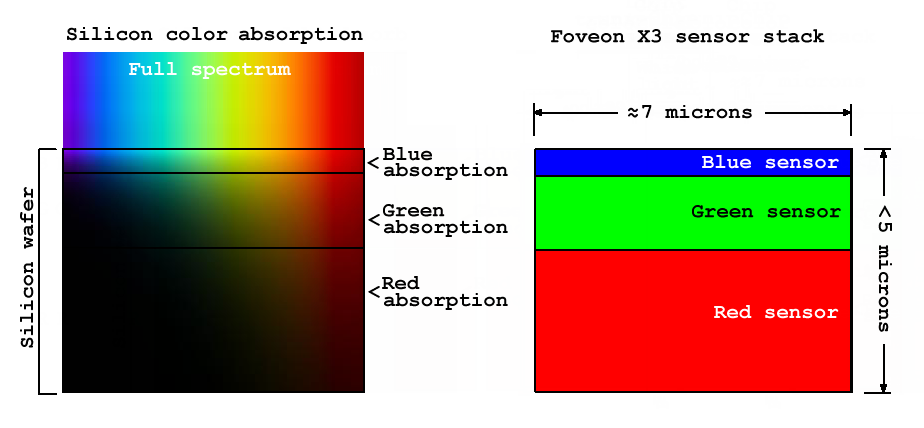 Foveon X3 sensorImage sensor of Sigma cameras
Further reading
 🇬🇧 United KingdomARM Cortex-A7
Power-efficient 32-bit ARM processor core for mobile and embedded systemsCPU · Arm · 2011
 🇯🇵 JapanFujifilm X-Trans sensor
Image sensor with a unique colour filter patternSensor
 🇺🇸 United StatesIntel 8251
Universal synchronous and asynchronous receiver transmitter chip by IntelNetwork chip · Other · 1975
🇺🇸 United StatesLM3875
56-watt audio amplifier integrated circuitAnalog
🇯🇵 JapanExmor
Sony's CMOS image sensor series with on-chip conversion and noise reductionSensor · Other · 2008
 🇺🇸 United StatesLM13700
Dual operational transconductance amplifier for analog audio circuitsAnalog
 🇺🇸 United StatesApple A14 Bionic
Apple's 5 nm phone and tablet chip with six CPU cores and a 16-core Neural EngineSoC · Arm · 2020
🇺🇸 United StatesApple A19
64-bit ARM-based system on a chip for iPhone and Apple TV devices.SoC · Arm · 2025
 🇺🇸 United StatesApple A4
Apple's first in-house SoC: one Cortex-A8 core plus PowerVR graphics, built at 45 nm.SoC · Arm · 2010
 🇺🇸 United StatesAMD Am29000
32-bit RISC microprocessor family for embedded systems and printersCPU · RISC · 1988
 🇺🇸 United StatesI.MX
ARM-based system-on-chip family for multimedia and embedded systems by NXP Semiconductors.SoC · Arm
 🇺🇸 United States and 1 moreAMD Am2900
AMD's 1975 bipolar bit-slice IC family for building custom control unitsCPU · Other · 1975
 🇺🇸 United StatesPIC microcontroller
Microchip's long-running family of 8-bit to 32-bit microcontrollersMicrocontroller · MIPS · 1976
 🇺🇸 United StatesMSP430
A 16-bit mixed-signal microcontroller family designed for very low power use.Microcontroller · Other · 1992
 🇺🇸 United StatesHewlett-Packard Nanoprocessor
An 8-bit control microcontroller with no arithmetic unit, released by HP in 1974Microcontroller · Other · 1974
 🇺🇸 United StatesApple M2
Apple's second-generation ARM SoC family for Macs, iPads and Vision ProSoC · Arm · 2022
WorldSHARC
A 32-bit floating-point DSP family from Analog Devices with VLIW instructionsDSP · VLIW · 1999
 🇯🇵 JapanHD64180
A Z80-based embedded microprocessor with on-chip MMU and peripheralsCPU · 8-bit · 1985
🇺🇸 United StatesAT&T Hobbit
A C-optimised microprocessor from AT&T with a stack cache instead of registersCPU · Other · 1992
 🇺🇸 United StatesElectronic Arrays 9002
An 8-bit CPU with on-chip RAM, sold briefly in the mid-1970s.CPU · Other · 1976
 🇺🇸 United StatesNational Semiconductor PACE
First commercial single-chip 16-bit microprocessor, from National Semiconductor in 1974CPU · Other · 1974
 🇺🇸 United States and 1 moreSignetics 8X300
A 1976 bipolar microcontroller and signal processor from SigneticsCPU · Other · 1976
 🇺🇸 United StatesPentium
Intel's long-running x86 processor brand, from the 1993 P5 to 2023 budget partsCPU · x86 · 1993
 🇺🇸 United StatesIntel 80386
Intel's 32-bit x86 CPU from 1985, the base of the IA-32 instruction setCPU · x86 · 1985
 🇺🇸 United StatesCeleron
Intel's budget x86 desktop and mobile CPU line, sold from 1998 to 2023CPU · x86 · 1998
 🇺🇸 United StatesIntel 8008
Early 8-bit microprocessor from Intel, launched April 1972CPU · 8-bit · 1972
🇺🇸 United StatesNE612
Radio frequency mixer and oscillator integrated circuitAnalog
 🇺🇸 United StatesSignetics 2650
8-bit microprocessor from 1975 modelled on the IBM 1130 minicomputerCPU · 8-bit · 1975
 WorldARM Cortex-A53
A widely used 64-bit in-order CPU core designed by Arm for mobile and embedded devices.CPU · Arm · 2012
🇺🇸 United StatesMSP432
Low-power 32-bit ARM microcontroller family from Texas InstrumentsMicrocontroller · Arm · 2015
 🇺🇸 United StatesULN2003A
Seven-channel high-voltage Darlington transistor array driverAnalog
 🇺🇸 United StatesΜA741
Early monolithic operational amplifier with internal frequency compensationAnalog · 1968
WorldMK484
Single-chip AM radio detector for hobbyistsAnalog
 🇺🇸 United StatesAthlon
AMD's x86 desktop processor brand, from the first 1 GHz chip to entry-level Zen APUsCPU · x86 · 1999
🇺🇸 United StatesS2000
4-bit microcontroller for displays and controlMicrocontroller · Other · 1977
🇺🇸 United StatesApple M4
ARM-based system on a chip for Apple devicesSoC · Arm · 2024
 WorldAMD Élan
x86 system on a chip for embedded devicesSoC · x86 · 1993
 🇺🇸 United StatesEfficeon
Low-power x86 processor using software translationCPU · x86 · 2004
 🇬🇧 United KingdomARM11
32-bit RISC processor core family by ARM HoldingsCPU · Arm · 2002
🇬🇧 United KingdomARM C-series
Mobile processor cores with on-device AI accelerationCPU · Arm · 2025
 🇬🇧 United KingdomARM Cortex-A9
32-bit multi-core processor core for mobile and embedded systemsCPU · Arm · 2007
 WorldARM Cortex-A8
32-bit ARMv7-A processor core for mobile devicesCPU · Arm · 2005
🇺🇸 United StatesStrongARM
High-performance ARM microprocessor family for portable devicesCPU · Arm · 1996
 🇺🇸 United StatesApple silicon
Arm-based chips designed by Apple for its devicesSoC · Arm · 2010
 🇺🇸 United StatesApple A5
32-bit dual-core system on a chip for early Apple mobile devicesSoC · Arm · 2011
 🇺🇸 United StatesApple A9X
64-bit ARM SoC for the first iPad Pro tabletsSoC · Arm · 2015
 🇺🇸 United StatesApple A10X Fusion
64-bit ARM system on a chip for iPad Pro and Apple TVSoC · Arm · 2017
 🇺🇸 United StatesApple A10 Fusion
Quad-core mobile SoC with heterogeneous computingSoC · Arm · 2016
Photo credits on this page
The small pictures above come from Wikimedia Commons under free licences. Some are cropped to fit.
- Fujifilm X-Trans sensor: Tomás Freres, CC BY 4.0, source
- Intel 4004: the Science Museum, CC BY 4.0, source
- ARM Cortex-A7: Raimond Spekking, CC BY-SA 4.0, source
- Foveon X3 sensor: Anoneditor at English Wikipedia, CC BY-SA 3.0, source
- Apple U1: Henriok, CC0, source
- Intel 8251: Myself User:ZyMOS, CC BY-SA 4.0, source
- LM13700: Retired electrician, CC0, source
- Apple A14 Bionic: Henriok, CC0, source
- Apple A4: Raimond Spekking, CC BY-SA 4.0, source
- AMD Am29000: Unknown author, CC BY-SA 3.0, source
- I.MX: Raimond Spekking, CC BY-SA 4.0, source
- AMD Am2900: Konstantin Lanzet (with permission), CC BY-SA 3.0, source
- PIC microcontroller: Raimond Spekking, CC BY-SA 4.0, source
- MSP430: Travis Goodspeed, CC BY 2.0, source
- Hewlett-Packard Nanoprocessor: Pauli Rautakorpi, CC BY 3.0, source
- Apple M2: Henriok, CC0, source
- HD64180: User:Fuwuyuan, Public domain, source
- Electronic Arrays 9002: Electronics Arrays, Inc., Public domain, source
- National Semiconductor PACE: Pauli Rautakorpi, CC BY 3.0, source
- Signetics 8X300: Konstantin Lanzet, GFDL, source
- Pentium: Konstantin Lanzet, GFDL, source
- Intel 80386: Mister rf, CC BY-SA 4.0, source
- Celeron: Qurren, CC BY-SA 3.0, source
- Intel 8008: Konstantin Lanzet, CC BY-SA 4.0, source
- Signetics 2650: Konstantin Lanzet, GFDL, source
- ARM Cortex-A53: Raimond Spekking, CC BY-SA 4.0, source
- ULN2003A: Raimond Spekking, CC BY-SA 4.0, source
- ΜA741: Teravolt ( talk ), CC BY 3.0, source
- Athlon: Unknown author, CC BY-SA 2.5, source
- AMD Élan: Phiarc, CC BY-SA 4.0, source
- Efficeon: Photographed by Qurren ( talk ), with IXY Digital 10 compact digital c, CC BY-SA 3.0, source
- ARM11: Raimond Spekking, CC BY-SA 4.0, source
- ARM Cortex-A9: Raimond Spekking, CC BY-SA 4.0, source
- ARM Cortex-A8: Raimond Spekking, CC BY-SA 4.0, source
- Apple A5: Henriok at English Wikipedia ., Public domain, source
- Apple A9X: Henriok, CC0, source
- Apple A10X Fusion: Henriok, CC0, source
- Apple A10 Fusion: Henriok, CC0, source
- Apple S1: Henriok, CC0, source
- Texas Instruments LPC Speech Chips: Orginal photo © Bill Bertram 2006, editing by user:Tomhannen, CC BY-SA 2.5, source
- Digital micromirror device: mitopencourseware, CC BY-SA 4.0, source
- TMS1000: Pauli Rautakorpi, CC BY 3.0, source