
ΜA741
Early monolithic operational amplifier with internal frequency compensation
The μA741 is an operational amplifier integrated circuit designed by Dave Fullagar at Fairchild Semiconductor and released in 1968. It introduced on-chip frequency compensation, simplifying circuit design, and remains a standard educational example for analog electronics despite being superseded by modern devices.
- Released by Fairchild Semiconductor in 1968
- Designed by Dave Fullagar to improve on μA702
- Features internal 30 pF frequency compensation capacitor
- Remains a common educational example for op amps
- Compatible variants include LM741 and UA741
What it is
The μA741 is an early operational amplifier integrated circuit. Dave Fullagar designed it at Fairchild Semiconductor, and the company released it in 1968. This chip became a standard component in analog electronics due to its robust design and ease of use. It features internal frequency compensation, which removed the need for external stabilising components. Although modern amplifiers offer better performance, the 741 remains widely used in education to teach circuit theory and imperfections.
How it came about
Fairchild Semiconductor sought to improve upon its earlier μA702 model after losing designer Bob Widlar to National Semiconductor. The goal was to create a higher-performance device to compete with the LMx01 series. Dave Fullagar led the design effort, focusing on reducing output dead zones and improving input stage impedance. His work resulted in the 1968 launch of the μA741, which set a new standard for monolithic operational amplifiers in the industry.
Inside the chip
The internal structure contains three main gain stages. A differential amplifier provides high input impedance and rejects common-mode signals. A voltage amplifier stage uses a Darlington pair to achieve high voltage gain. Finally, a Class AB output stage delivers current gain and includes short-circuit protection. The design incorporates a 30 pF on-chip capacitor for Miller compensation. This feature ensures stability in negative feedback configurations without requiring external parts.
How it was made
Specific manufacturing details such as the process node or transistor count are not provided in the available records. The chip was produced by Fairchild Semiconductor. Its key innovation was the integration of a compensation capacitor directly onto the silicon die. This monolithic approach simplified application for engineers and reduced the component count in final electronic assemblies.
Where it went
Engineers historically used this amplifier in audio equipment and sensitive measurement tools. Today, its applications are largely restricted to legacy systems and high-volume cases where supply voltage is already available. It serves primarily as an educational tool for students learning about operational amplifier characteristics. Modern designs often replace it with devices that offer lower noise and better common-mode rejection.
Versions and family
Many manufacturers produce compatible versions under similar names, such as LM741 and UA741. These variants are architecturally near-identical to the original Fairchild design. The μA741 succeeded the μA702, which was the first monolithic op-amp from Fairchild. Later models like the μA748 required external compensation, highlighting the advantage of the 741's internal stabilisation.
Why it matters
The μA741 established a long history of production for compatible integrated circuits. It became the generic reference for operational amplifiers in many contexts. Its introduction of internal frequency compensation simplified analog circuit design significantly. The device remains a cornerstone in electronics education, illustrating both fundamental principles and typical imperfections found in analog components.
Problems and reception
The chip is considered inferior to modern operational amplifiers in every aspect. It generates noticeable hiss and has poor common-mode rejection compared to newer devices. These limitations make it unsuitable for high-fidelity audio or precision instruments today. However, its longevity and widespread compatibility have secured its place as a classic component in engineering history.
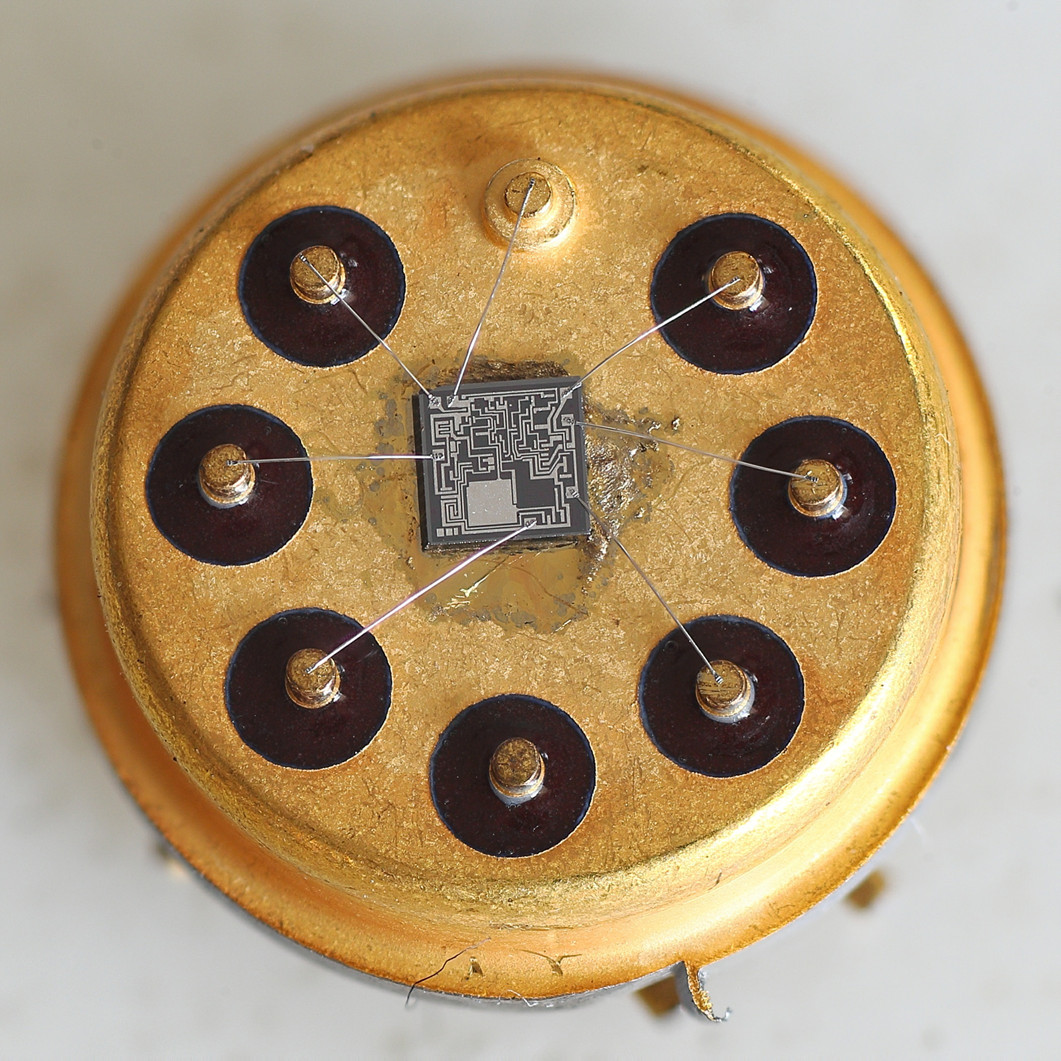
Questions people ask about ΜA741
Who designed the μA741 operational amplifier?
Dave Fullagar designed the μA741 at Fairchild Semiconductor. He worked to improve output dead zones and input stage impedance compared to earlier models.
What makes the μA741 different from earlier op amps?
It introduced an on-chip 30 pF compensation capacitor. This internal frequency compensation eliminated the need for external components to stabilise the amplifier.
Is the μA741 still used in modern electronics?
Its use is now rare in sensitive equipment due to poor noise performance. It is mainly found in legacy systems or used as an educational tool for students.
What are some common alternative names for this chip?
Many manufacturers produce compatible versions. Common alternative names include LM741 and UA741, which are architecturally near-identical to the original.
Good reading and sources
The facts on this page come from the Wikipedia article "ΜA741", written by its contributors and used under the CC BY-SA 4.0 licence, and from its Wikidata record (CC0). EveryChip rewrote the text in its own words, with AI assistance, and compares every page with the article to make sure no passage is copied. It may be reused under the same CC BY-SA 4.0 licence with a link back.
It may contain mistakes, and figures change over time. Nothing here is investment or buying advice. If something is wrong, tell us. Last refreshed 2026-11-14.
Like ΜA741
All analog, power and mixed-signal 🇺🇸 United States4000 series
Versatile CMOS logic chips for low-power digital circuitsAnalog · Other · 1968
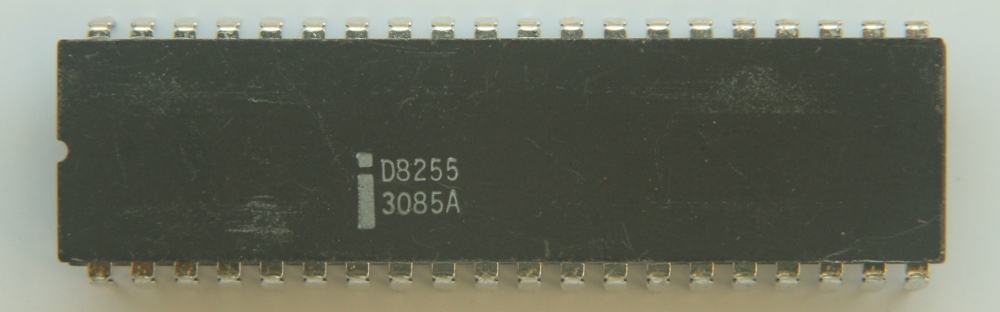 🇺🇸 United StatesIntel 8255
Programmable parallel input/output interface chip for early microprocessorsAnalog · 1970
 🇺🇸 United StatesUART
Chip for serial data communication between devicesAnalog · 1971
 🇬🇧 United KingdomZN414
Single-chip AM radio receiver integrated circuitAnalog · 1972
More from Fairchild Semiconductor
All of them 🇺🇸 United StatesCharge-coupled device
Integrated circuit sensor that converts light into digital images.Sensor · 1969
🇺🇸 United StatesFour-Phase Systems AL1
An early 8-bit slice CPU built for Four-Phase's System IV/70 minicomputer.CPU · Other · 1970
 🇺🇸 United StatesFairchild F8
An early 8-bit microprocessor family built for small controller jobsCPU · 8-bit · 1974
 🇬🇧 United KingdomFerranti F100-L
A 16-bit military microprocessor built on Ferranti's bipolar CDI processCPU · Other · 1977