
DataFlash
Serial interface flash memory with SPI compatibility
DataFlash is a proprietary serial flash memory interface developed by Atmel. It offers higher capacity and faster access than EEPROM, using an SPI-compatible protocol for microcontrollers.
- Proprietary interface compatible with SPI standard
- Capacities range from 128 kB to 8 MB
- Acquired by Adesto Technologies in 2012
- Uses SRAM buffers for EEPROM-like access
What it is
DataFlash is a type of flash memory that uses a low pin-count serial interface. Developed by Atmel as a proprietary standard, it remains compatible with the common Serial Peripheral Interface (SPI). This technology allows microcontrollers to read and write data efficiently. It serves as a storage solution for various electronic devices, offering a balance between speed and simplicity. The interface supports code downloading after reset in many Atmel ARM chips.
How it came about
Atmel created DataFlash to provide a robust storage option for embedded systems. In October 2012, Adesto Technologies acquired the AT45 product lines, related intellectual property, and the supporting employee teams. This transfer marked a shift in ownership while maintaining the technology's presence in the market. The acquisition ensured continued support for existing designs using these memory chips.
Inside the chip
The architecture relies on page-based access rather than byte-level operations typical of EEPROM. However, specific commands allow drivers to mimic EEPROM behaviour for easier integration. AT45 series chips include SRAM buffers, which facilitate faster data handling and EEPROM-like access patterns. Utilising these buffers fully requires specialised software. The AT26 series simplifies the command set but removes these buffers, making it incompatible with the original AT45 software.
How it was made
These chips are available in small packages, such as the 8-pin small outline integrated circuit measuring 8x5 mm. Capacities range from 128 kB to 8 MB for individual chips. The AT45DCB008D card format packages a flash chip into a form factor resembling MMC or SD cards.
Where it went
Microcontrollers like Atmel AVR, Microchip PIC, and ARM processors commonly interface with DataFlash. It appears in numerous consumer electronic products for data storage. The boot ROM of many Atmel ARM microcontrollers supports loading code directly from DataFlash chips. Developers can find source code examples for operating systems such as BeRTOS and eCos to manage these devices.
Versions and family
The AT45 series represents the original implementation with SRAM buffers. The AT26 series offers a simpler command set but lacks buffer support, rendering it software-incompatible with AT45. Example products include the AT45DB161D, a 2 MB chip, and the AT45DB642D, used in card formats. These variants cater to different complexity and cost requirements in embedded designs.
Why it matters
DataFlash provided higher capacities and faster access times compared to early EEPROM solutions. It enabled simple programming interfaces for field upgrades, contrasting with the more complex protocols of MMC or SD cards. While more expensive than consumer card formats, its ease of integration made it valuable for specific industrial and consumer applications where reliability and simple driver support were prioritised.

Questions people ask about DataFlash
What is DataFlash used for?
It serves as non-volatile storage for microcontrollers in consumer electronics and embedded systems. It stores data and can hold boot code for processors like Atmel ARM.
How does it differ from EEPROM?
DataFlash offers higher capacities and faster access times. It uses page-based access but includes commands to emulate byte-level EEPROM operations via SRAM buffers.
Who owns the DataFlash technology now?
Adesto Technologies purchased the AT45 series product lines, intellectual property, and supporting teams from Atmel in October 2012.
Good reading and sources
The facts on this page come from the Wikipedia article "DataFlash", written by its contributors and used under the CC BY-SA 4.0 licence, and from its Wikidata record (CC0). EveryChip rewrote the text in its own words, with AI assistance, and compares every page with the article to make sure no passage is copied. It may be reused under the same CC BY-SA 4.0 licence with a link back.
It may contain mistakes, and figures change over time. Nothing here is investment or buying advice. If something is wrong, tell us. Last refreshed 2026-11-14.
Like DataFlash
All memory chips World6264
JEDEC-standard 64 Kbit static RAM chipMemory
🇺🇸 United StatesTMS6100
Serial mask ROM for speech synthesis data storageMemory · Other · 1978
 🇺🇸 United States and 2 moreEEPROM
Byte-erasable non-volatile memory for small data storageMemory · 1978
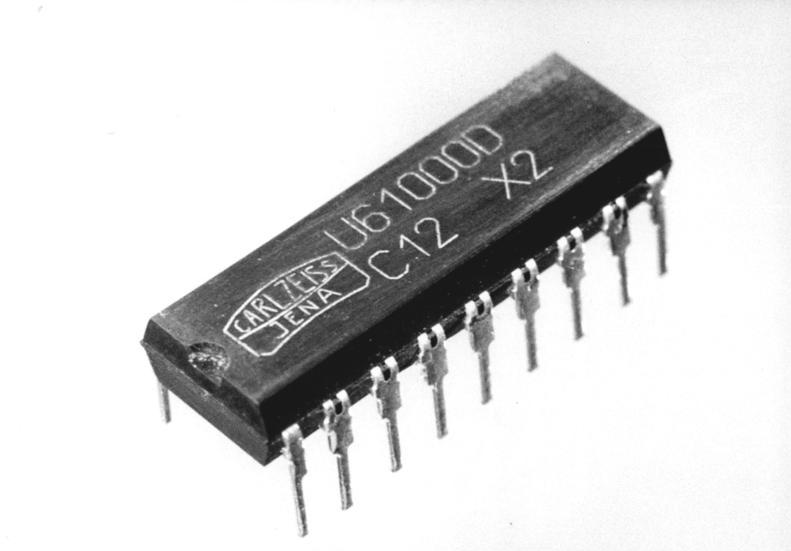 🇩🇪 GermanyU61000
First 1-Mbit DRAM chip from the German Democratic RepublicMemory · 1988
More from Atmel
All of them 🇺🇸 United StatesATmega88
8-bit AVR microcontroller with 8K flash memoryMicrocontroller · Other
 🇺🇸 United StatesAT89 series
Intel 8051-compatible 8-bit microcontrollers by AtmelMicrocontroller · MCU family
 🇺🇸 United StatesATmega328
8-bit AVR microcontroller used in Arduino boardsMicrocontroller
WorldAT91CAP
Customizable ARM microcontroller family with programmable logicMicrocontroller · Arm