AT91CAP
Customizable ARM microcontroller family with programmable logic
The AT91CAP is a family of 32-bit microcontrollers designed by Atmel. It combines standard ARM processor cores with a metal-programmable logic block for custom hardware features. This system-on-a-chip design supports various communication interfaces and embedded memory.
- Features a metal-programmable logic block for custom hardware
- Available with ARM7 or ARM9 processor cores
- Includes embedded SRAM, ROM and external bus support
- Supports USB, Ethernet, CAN and SPI interfaces
- Uses DMA for high-throughput data transfer
What it is
The AT91CAP series consists of 32-bit microcontrollers created by Atmel. These chips are built around ARM RISC processors and include a unique metal-programmable logic block. This block allows developers to add custom hardware functions directly onto the chip. The devices integrate memory and peripherals, functioning as complete systems on a single silicon die. They support both ARM7 and ARM9 core architectures.
How it came about
Atmel developed this family to bridge the gap between fixed microcontrollers and flexible field-programmable gate arrays. The design enables application developers to personalize the hardware logic after the initial chip fabrication. This approach supports parallel development of hardware and software components. An FPGA-based emulation board was provided to test designs at near-full speed before final production.
Inside the chip
The architecture centers on an ARM processor core paired with a customizable MP Block. This logic area can host extra cores, specific interfaces, or dedicated logic like GPS correlators. Embedded SRAM and ROM provide local storage, while an external bus connects to flash memory. A direct memory access controller moves data efficiently between interfaces and memory. Power management features disable unused parts to save energy and allow standby modes.
How it was made
Specific manufacturing details such as the process node or transistor count are not provided in the available records. The chips are produced by Atmel, which later became part of Microchip Technology. The key fabrication step involves the metal-programmable layer that defines the custom logic for each application. This occurs after the base silicon wafer processing is complete.
Where it went
These microcontrollers suit embedded systems requiring specific hardware acceleration or interface customization. Standard communications ports include USB, Ethernet, CAN, SPI, and USART. Analog-to-digital converters and advanced interrupt controllers support real-time tasks. They are used in applications where standard peripherals are insufficient but a full custom chip is too costly. The DMA controller helps maintain high data throughput with low processor load.
Versions and family
The family includes versions based on the ARM7 core and others using the ARM9 core. The primary variation lies in the content of the metal-programmable block, which is defined by the user. The design flow remains consistent across the variants, emphasizing hardware-software co-development.
Why it matters
The AT91CAP introduced a hybrid approach to microcontroller design. It allowed engineers to tailor silicon functionality without the high non-recurring engineering costs of full custom ASICs. By integrating programmable logic with a standard processor, it offered a middle ground for complex embedded tasks. This model influenced how developers approached hardware customization in mid-range applications.
Questions people ask about AT91CAP
What makes the AT91CAP different from standard microcontrollers?
It includes a metal-programmable logic block that developers can customize. This allows adding specific hardware functions, extra cores, or unique interfaces to the standard ARM processor setup.
Which processor architectures does the AT91CAP use?
The family is based on 32-bit ARM RISC processors. Specifically, it is available in versions that use either the ARM7 or the ARM9 core architecture.
How do developers test their custom configurations?
Atmel provides an FPGA-based emulation board. This tool allows hardware and software to be tested together at close to full operational speed to validate the device functionality.
Good reading and sources
The facts on this page come from the Wikipedia article "AT91CAP", written by its contributors and used under the CC BY-SA 4.0 licence, and from its Wikidata record (CC0). EveryChip rewrote the text in its own words, with AI assistance, and compares every page with the article to make sure no passage is copied. It may be reused under the same CC BY-SA 4.0 licence with a link back.
It may contain mistakes, and figures change over time. Nothing here is investment or buying advice. If something is wrong, tell us. Last refreshed 2026-11-14.
Like AT91CAP
All microcontrollers 🇺🇸 United StatesPSoC
Configurable microcontroller with mixed-signal blocksMicrocontroller · Arm · 2002
 EuropeSTM32
32-bit ARM microcontrollers and microprocessors from STMicroelectronicsMicrocontroller · Arm · 2007
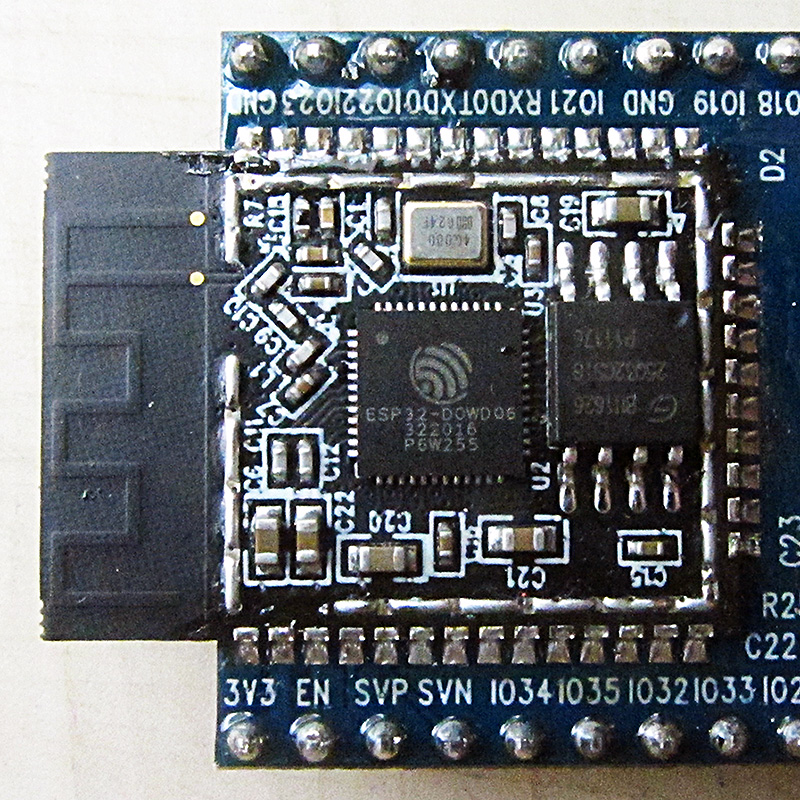 WorldESP32
Low-cost microcontroller with Wi-Fi and Bluetooth made by Espressif Systems.Microcontroller · Arm · 2016
More from Atmel
All of them 🇺🇸 United StatesATmega88
8-bit AVR microcontroller with 8K flash memoryMicrocontroller · Other
 🇺🇸 United StatesATmega328
8-bit AVR microcontroller used in Arduino boardsMicrocontroller
 WorldDataFlash
Serial interface flash memory with SPI compatibilityMemory
 🇺🇸 United StatesAT89 series
Intel 8051-compatible 8-bit microcontrollers by AtmelMicrocontroller · MCU family