PCs and laptops
Desktop and laptop processors, chipsets and graphics. 484 chips on EveryChip so far.
Personal computers and laptops have been built around x86 processors since IBM chose the Intel 8088 for its PC in 1981. Intel and AMD have competed for decades, from the 486 and Pentium to Athlon, Core and Ryzen. Since 2020 Apple's Arm-based M-series and later Qualcomm's Snapdragon X chips have brought Arm into laptops. A PC also holds a GPU, chipset, memory and storage chips.
Intel, AMD and the clock race
Through the 1990s PC chips were sold on clock speed, which rose from tens of megahertz to over 1 GHz in 2000. After the Pentium 4 hit power limits, the focus moved to multiple cores and efficiency, led by Intel's Core 2 in 2006 and AMD's Zen-based Ryzen in 2017. Today's laptop chips mix performance and efficiency cores and include AI engines called NPUs.
Arm arrives
Apple's M1 of 2020 showed that an Arm SoC could match or beat x86 laptops in performance per watt, and Apple moved its whole Mac range to its own chips by 2023. Microsoft's Windows on Arm gained Qualcomm's Snapdragon X Elite in 2024. Intel's Lunar Lake of 2024 responded with memory placed in the processor package, a technique Apple also uses.
Famous PCs and laptops chips
 Intel 8088The processor of the 1981 IBM PC
 I486Intel's 1989 chip with on-chip cache and maths unit
 PentiumIntel's 1993 brand that defined 1990s PCs
 Athlon 64AMD's 64-bit desktop chip, 2003
 Intel Core 2Intel's 2006 efficient multi-core line
 RyzenAMD's Zen-based PC processors, 2017
 Apple M1 UltraApple's first Mac chip, 2020
 Lunar LakeIntel's 2024 laptop chip with on-package memory
Further reading
 🇺🇸 United StatesPhenom II
AMD multi-core desktop processors on the K10 microarchitectureCPU · x86 · 2008
 🇺🇸 United StatesXeon
Intel's x86 processor brand for servers, workstations and embedded systems since 1998CPU · x86 · 1998
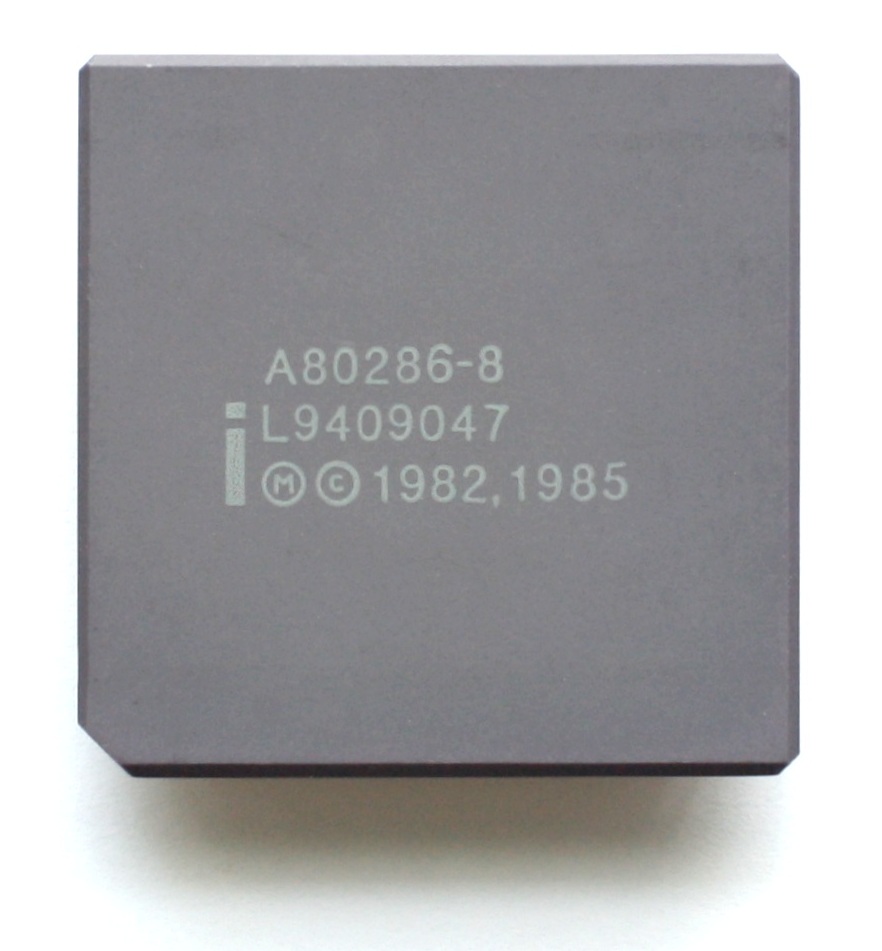 🇺🇸 United StatesIntel 80286
16-bit x86 CPU with protected mode and 24-bit addressing, launched in 1982CPU · x86 · 1982
 🇺🇸 United StatesIvy Bridge
Intel's 22 nm tick microarchitecture featuring FinFET transistors and integrated graphics.CPU · x86 · 2012
 WorldAm486
AMD's 486-class processor family from the 1990sCPU · x86 · 1993
 🇺🇸 United StatesGolden Cove
Intel's high-performance CPU core design, released November 2021CPU · x86 · 2021
 🇺🇸 United StatesAm386
AMD's first independent x86 microprocessor cloneCPU · x86 · 1991
 WorldGeForce 256
Nvidia's first GeForce, a 1999 3D accelerator with hardware transform and lightingGPU · GPU architecture · 1999
 🇺🇸 United StatesIntel 80486
32-bit x86 CPU with pipelined execution and on-chip cache, launched 1989CPU · x86 · 1989
 🇺🇸 United StatesZen 2
AMD's seventh-nanometre processor design used in Ryzen, Epyc and game consoles.CPU · x86 · 2019
 🇺🇸 United StatesAm5x86
High-speed 486-class CPU for legacy system upgradesCPU · x86 · 1995
 🇺🇸 United StatesRyzen Threadripper
High-end desktop and workstation multi-core processors from AMDCPU · x86 · 2017
 🇺🇸 United States and 1 moreDEC J-11
Two-chip CMOS implementation of the PDP-11 ISA for high-end DEC machinesCPU · Other
 🇺🇸 United StatesBonnell
Intel's low-power x86 microarchitecture behind early Atom chipsCPU · x86 · 2008
WorldIMP-16
A 1973 bit-slice microprocessor built from five PMOS chipsCPU · Other · 1973
 🇺🇸 United StatesGeForce RTX 50 series
Nvidia's Blackwell consumer graphics cards, from the RTX 5050 to the RTX 5090GPU · GPU architecture · 2025
 🇺🇸 United StatesTransmeta Crusoe
Low-power x86 microprocessor using software translationCPU · x86 · 2000
🇺🇸 United StatesIntel XMM modems
Intel's series of 4G and 5G cellular modems for phones, tablets and laptopsModem · 2013
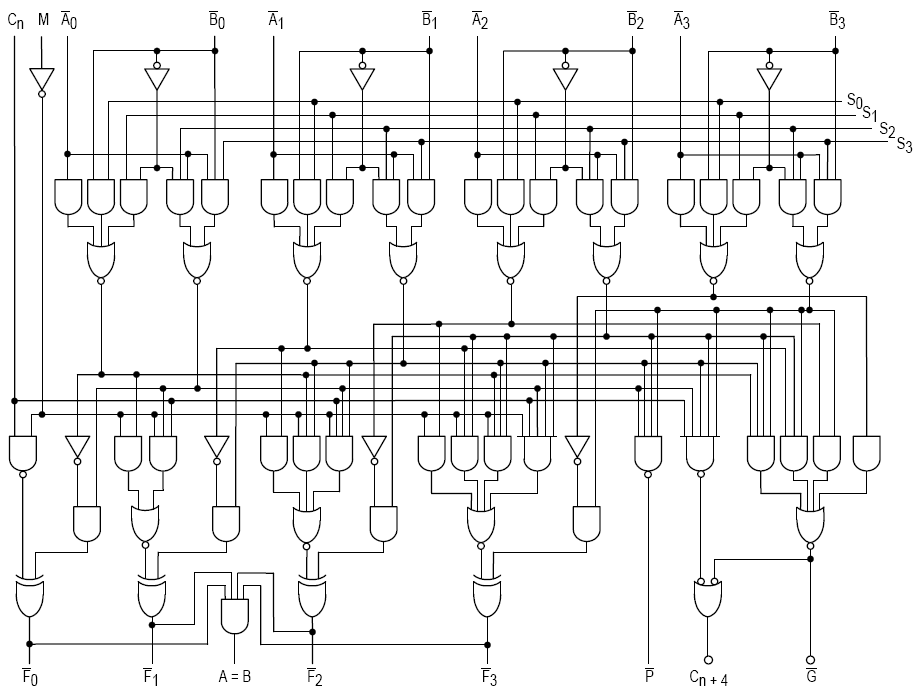 🇺🇸 United States74181
4-bit slice ALU, the first complete arithmetic logic unit on one chipCPU · Other · 1970
 🇺🇸 United StatesAMD APU
AMD chips combining CPU and GPU on one dieCPU · x86 · 2011
 WorldRise mP6
Low-cost x86 microprocessor for Super Socket 7 systemsCPU · x86 · 1998
WorldARM Cortex-A720
Arm's 2023 balanced-performance CPU core, code-named HunterCPU · Arm · 2023
WorldARM Cortex-A725
Arm CPU core for balanced performance and efficiency, unveiled in 2024CPU · Arm · 2024
 🇺🇸 United StatesQualcomm Snapdragon
Qualcomm's brand of ARM-based systems on chip, modems and wireless controllersSoC · Arm · 2007
 🇺🇸 United StatesApple M2
Apple's second-generation ARM SoC family for Macs, iPads and Vision ProSoC · Arm · 2022
🇺🇸 United StatesWDC 65C816
16-bit microprocessor from the 6502 family with 24-bit addressingCPU · Other · 1985
 🇺🇸 United StatesPowerPC 970
IBM's 64-bit PowerPC desktop CPU family, sold by Apple as the G5.CPU · Power · 2002
 🇺🇸 United States and 1 moreNS32000
National Semiconductor's 32-bit CISC microprocessor family from the 1980sCPU · Other · 1982
 🇯🇵 JapanHD64180
A Z80-based embedded microprocessor with on-chip MMU and peripheralsCPU · 8-bit · 1985
 🇺🇸 United States and 1 moreMCP-1600
A 1975 multi-chip 16-bit microprocessor from Western DigitalCPU · Other · 1975
 🇺🇸 United StatesHaswell
Intel's 2013 x86-64 CPU microarchitecture on 22 nm FinFETCPU · x86 · 2013
🇺🇸 United StatesPenryn
Intel's 45 nm shrink of the Core microarchitecture, from 2007CPU · x86 · 2007
 🇺🇸 United StatesCannon Lake
Intel's 10 nm Core microarchitecture, shipped in one laptop CPU onlyCPU · x86 · 2018
 🇺🇸 United States and 1 moreSignetics 8X300
A 1976 bipolar microcontroller and signal processor from SigneticsCPU · Other · 1976
 🇺🇸 United StatesPentium III
Intel's 32-bit P6 desktop and server CPU line, launched in 1999 with SSE.CPU · x86 · 1999
 🇺🇸 United StatesZilog Z8000
16-bit microprocessor family from Zilog, launched in 1979CPU · Other · 1979
 🇺🇸 United StatesPentium
Intel's long-running x86 processor brand, from the 1993 P5 to 2023 budget partsCPU · x86 · 1993
🇺🇸 United States and 1 moreIntel Core 2
Intel's 2006 x86-64 desktop and laptop CPU family, from single-core to quad-core.CPU · x86 · 2006
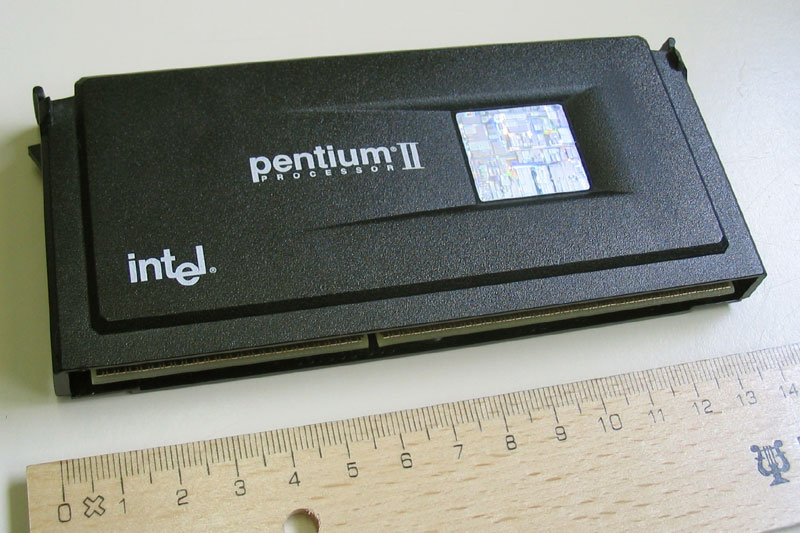 🇺🇸 United StatesPentium II
Intel's 1997 P6 desktop CPU line with MMX, sold in a slot cartridgeCPU · x86 · 1997
 🇺🇸 United StatesPentium 4
Intel's single-core desktop CPU line built on the NetBurst microarchitectureCPU · x86 · 2000
 🇺🇸 United StatesIntel 80386
Intel's 32-bit x86 CPU from 1985, the base of the IA-32 instruction setCPU · x86 · 1985
 🇺🇸 United StatesCeleron
Intel's budget x86 desktop and mobile CPU line, sold from 1998 to 2023CPU · x86 · 1998
 🇺🇸 United StatesIntel 8008
Early 8-bit microprocessor from Intel, launched April 1972CPU · 8-bit · 1972
🇮🇱 IsraelIntel 8088
A 16-bit Intel microprocessor with an 8-bit external data bus, used in the original IBM PC.CPU · x86 · 1979
 🇺🇸 United StatesMotorola 68000
A 16/32-bit CISC microprocessor introduced by Motorola in 1979CPU · 68k · 1979
 🇺🇸 United StatesWestmere
Intel's 32 nm shrink of Nehalem, with six and ten core parts and AES instructionsCPU · x86 · 2010
🇺🇸 United StatesPentium
Intel's first superscalar x86 chip, with dual integer pipelines and a faster FPUCPU · x86 · 1993
 🇺🇸 United StatesIntel Core
Intel's multi-core x86 CPU line for laptops, desktops and workstationsCPU · x86 · 2006
Photo credits on this page
The small pictures above come from Wikimedia Commons under free licences. Some are cropped to fit.
- Xeon: Rjluna2, CC BY-SA 4.0, source
- GeForce 256: Hyins, Public domain, source
- Ivy Bridge: IrisChronomia, CC BY-SA 4.0, source
- Ryzen Threadripper: Geni, CC BY-SA 4.0, source
- GeForce RTX 50 series: 极客湾Geekerwan, CC BY 3.0, source
- AMD APU: Wikiinger, CC0, source
- Lunar Lake: LaptopMedia, CC BY 3.0, source
- Phenom II: D-Kuru, CC BY-SA 3.0 at, source
- Intel 80286: Konstantin Lanzet (with permission), CC BY-SA 3.0, source
- Am486: No machine-readable author provided. Denniss assumed (based on copyrig, CC BY-SA 2.5, source
- Am386: Raimond Spekking, CC BY-SA 4.0, source
- Intel 80486: Thomas Nguyen, CC BY-SA 4.0, source
- Am5x86: Konstantin Lanzet, CC BY-SA 3.0, source
- DEC J-11: Konstantin Lanzet, CC BY-SA 3.0, source
- Transmeta Crusoe: Konstantin Lanzet, CC BY-SA 3.0, source
- 74181: Unknown author, CC BY-SA 3.0, source
- Rise mP6: Konstantin Lanzet (with permission), CC BY-SA 3.0, source
- WD16: RastaKins, CC BY-SA 4.0, source
- Intel Atom: Raimond Spekking, CC BY-SA 4.0, source
- Qualcomm Snapdragon: Raimond Spekking, CC BY-SA 4.0, source
- Apple M2: Henriok, CC0, source
- PowerPC 970: Henriok, CC0, source
- NS32000: Konstantin Lanzet, CC BY-SA 3.0, source
- HD64180: User:Fuwuyuan, Public domain, source
- Haswell: Intel Free Press, CC BY 2.0, source
- Cannon Lake: Fritzchens Fritz, CC0, source
- Signetics 8X300: Konstantin Lanzet, GFDL, source
- Pentium III: Konstantin Lanzet, CC BY-SA 3.0, source
- Zilog Z8000: Myself User:ZyMOS, CC BY-SA 4.0, source
- Pentium: Konstantin Lanzet, GFDL, source
- Intel Core 2: Raimond Spekking, CC BY-SA 4.0, source
- Pentium II: Unknown author, Public domain, source
- Pentium 4: László Szalai (Beyond silence), Public domain, source
- Intel 80386: Mister rf, CC BY-SA 4.0, source
- Celeron: Qurren, CC BY-SA 3.0, source
- Intel 8008: Konstantin Lanzet, CC BY-SA 4.0, source
- Intel 8088: Unknown author, CC BY-SA 3.0, source
- Motorola 68000: en:User:ArnoldReinhold, CC BY-SA 3.0, source
- Westmere: smial ( talk ), FAL, source
- Pentium: Pdesousa359, CC BY-SA 3.0, source
- Intel Core: Intel Corporation, Public domain, source
- Zen 2: Fritzchens Fritz, CC0, source
- Golden Cove: Saneandsad, CC BY-SA 4.0, source
- I486: Konstantin Lanzet, GFDL, source
- Apple M1 Ultra: Henriok, CC0, source
- Ryzen: ICCTsHeY, CC BY-SA 4.0, source
- Athlon 64: Astraera, CC BY-SA 4.0, source