Other foundries
Tower, VIS, Hua Hong, X-FAB, SkyWater and others. 305 chips on EveryChip so far.
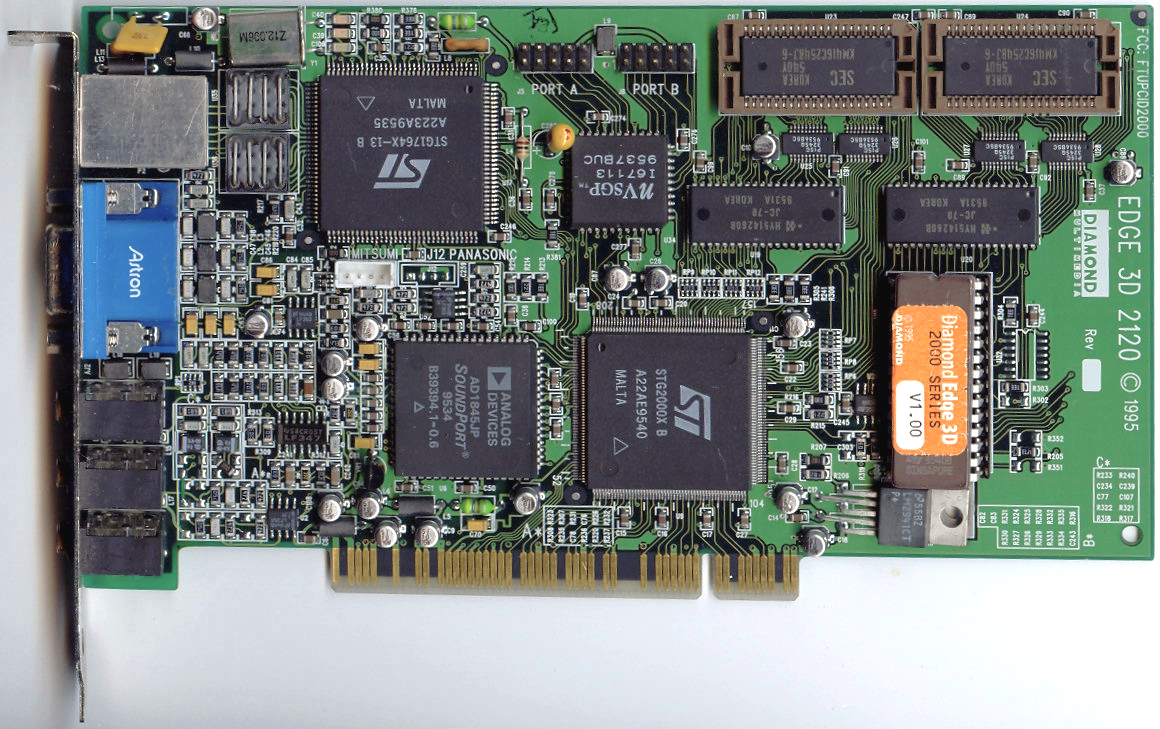
Beyond the giants, many foundries make specialised or mature-node chips: Tower Semiconductor in Israel, Vanguard International (VIS) and PSMC in Taiwan, Hua Hong in China, X-FAB in Germany and SkyWater in the United States, among others. In earlier years Chartered of Singapore and the European firm SGS-Thomson made chips for designers without fabs, including early Nvidia graphics chips.
Specialty foundries
These foundries focus on analog, power, image sensors, radio, MEMS and embedded memory, often on 200 mm wafers and older nodes. Tower, founded in 1993, was to be bought by Intel, but the deal was dropped in August 2023 after it did not receive Chinese regulatory approval in time. SkyWater, in Minnesota, released an open-source 130 nm process design kit with Google in 2020.
Early foundry partners
Before TSMC dominated, chip start-ups often used spare capacity in established firms' fabs. Nvidia's first chips, the NV1 and the RIVA 128, were made by SGS-Thomson. Chartered made some of AMD's Athlon 64 processors and helped make the Xbox 360's processor. PSMC is the technology partner for India's first commercial fab, at Dholera.
Famous other foundries chips


Further reading
 🇺🇸 United StatesPowerPC G4
32-bit PowerPC microprocessor family with AltiVec vector processingCPU · Power · 1999
 WorldVIA C7
Low-power x86 processor for compact and mobile devicesCPU · x86 · 2005
 WorldMOS Technology 6510
8-bit 6502-derived CPU with a built-in I/O port, used in the Commodore 64CPU · 8-bit
 🇺🇸 United StatesTMS320
Texas Instruments' long-running family of digital signal processorsDSP · Other · 1983
EuropeLEON
Radiation-tolerant SPARC V8 microprocessor core for space applicationsCPU · SPARC · 1997
🇺🇸 United StatesR2000
Early 32-bit RISC microprocessor chipset from MIPSCPU · MIPS · 1986
 🇺🇸 United StatesWDC 65C02
CMOS rework of the 6502 with lower power and extra instructionsCPU · 8-bit · 1983
 🇺🇸 United StatesFairchild F8
An early 8-bit microprocessor family built for small controller jobsCPU · 8-bit · 1974
🇺🇸 United StatesCOP8
8-bit microcontroller with low EMI and integrated peripheralsMicrocontroller · Other · 1988
 🇺🇸 United StatesProgrammable Array Logic
Early programmable logic chips for digital circuitsFPGA · Other · 1978
🇩🇪 Germany and 1 moreC166 family
16-bit RISC microcontroller architecture for control tasksMicrocontroller · RISC · 1990
 🇺🇸 United StatesPowerPC 400
Embedded 32-bit RISC processor cores for diverse applicationsCPU · Power · 1994
 🇹🇼 TaiwanVortex86
x86-compatible system-on-chip for embedded systemsSoC · x86
 🇺🇸 United StatesIntel 8253
Programmable interval timer for early microcomputers and PCsAnalog · 1980
 WorldMullard SAA5050
Teletext character generator chip for early microcomputers and TVsAnalog
 🇺🇸 United StatesMotorola 6800 family
An 8-bit microprocessor line from Motorola, starting with the 6800 CPUCPU · 8-bit
🇬🇧 United KingdomRekursiv
A four-chip object-oriented CPU with a writable microcode instruction setCPU · Other · 1988
🇯🇵 JapanExmor
Sony's CMOS image sensor series with on-chip conversion and noise reductionSensor · Other · 2008
 🇺🇸 United States and 1 moreAMD Am2900
AMD's 1975 bipolar bit-slice IC family for building custom control unitsCPU · Other · 1975
 🇺🇸 United StatesPIC microcontroller
Microchip's long-running family of 8-bit to 32-bit microcontrollersMicrocontroller · MIPS · 1976
 🇺🇸 United States and 1 moreLM317
Adjustable positive linear voltage regulator integrated circuitAnalog · 1976
 🇺🇸 United StatesGeneral Instrument CP1600
A 16-bit microprocessor from 1975, best known inside the Intellivision consoleCPU · Other · 1975
 🇺🇸 United States and 1 moreNS32000
National Semiconductor's 32-bit CISC microprocessor family from the 1980sCPU · Other · 1982
 🇺🇸 United States and 1 moreSignetics 8X300
A 1976 bipolar microcontroller and signal processor from SigneticsCPU · Other · 1976
 🇺🇸 United StatesZilog Z8000
16-bit microprocessor family from Zilog, launched in 1979CPU · Other · 1979
 🇺🇸 United StatesIntel 80386
Intel's 32-bit x86 CPU from 1985, the base of the IA-32 instruction setCPU · x86 · 1985
 🇮🇱 IsraelIntel 8088
A 16-bit Intel microprocessor with an 8-bit external data bus, used in the original IBM PC.CPU · x86 · 1979
 🇺🇸 United StatesMotorola 68000
A 16/32-bit CISC microprocessor introduced by Motorola in 1979CPU · 68k · 1979
 🇺🇸 United StatesSignetics 2650
8-bit microprocessor from 1975 modelled on the IBM 1130 minicomputerCPU · 8-bit · 1975
 🇺🇸 United StatesRCA 1802
8-bit CMOS microprocessor family from RCA, first of its kindCPU · 8-bit · 1974
 WorldARM7
A family of 32-bit RISC cores licensed by ARM for microcontroller useCPU · Arm · 1993
 🇺🇸 United States and 1 moreIntel 8087
A 1980 floating-point companion chip for the 8086 and 8088 CPUsCPU · x86 · 1980
🇬🇧 United KingdomVIPER
A formally proven 32-bit microprocessor for safety-critical avionics systemsCPU · Other · 1987
 🇺🇸 United StatesULN2003A
Seven-channel high-voltage Darlington transistor array driverAnalog
🇺🇸 United StatesS2000
4-bit microcontroller for displays and controlMicrocontroller · Other · 1977
 🇹🇼 TaiwanVIA C3
Low-power x86 CPU family for budget PCs and embedded systemsCPU · x86 · 2001
 🇺🇸 United StatesEfficeon
Low-power x86 processor using software translationCPU · x86 · 2004
 🇯🇵 JapanNEC V20
Pin-compatible 16-bit microprocessor with Intel 8088 compatibilityCPU · x86 · 1984
 🇺🇸 United StatesXScale
ARM-based microarchitecture for mobile and embedded systemsCPU · Arm · 2002
🇺🇸 United StatesStrongARM
High-performance ARM microprocessor family for portable devicesCPU · Arm · 1996
🇺🇸 United StatesKrait
Qualcomm in-house ARM CPU core for mobile SoCsCPU · Arm · 2012
 🇩🇪 GermanyU80601
East German clone of the Intel 80286 microprocessorCPU · x86 · 1989
 🇺🇸 United StatesOMAP
Texas Instruments system on chip for mobile multimediaSoC · Arm
 🇺🇸 United StatesPowerVR
Graphics and AI accelerator IP for mobile and embedded systemsGPU · GPU architecture · 1985
 🇯🇵 JapanNEC μPD7220
Early single-chip graphics display controller for bit-mapped screensGPU · 1981
 🇺🇸 United StatesIntel MCS-51
An 8-bit microcontroller series for embedded systems.Microcontroller · Other · 1980
 🇳🇴 NorwayAVR
8-bit RISC microcontroller family with on-chip flash memoryMicrocontroller · RISC · 1997
 🇺🇸 United States and 1 moreMCS-96
A 16-bit microcontroller family for embedded control systems.Microcontroller · Other
Photo credits on this page
The small pictures above come from Wikimedia Commons under free licences. Some are cropped to fit.
- LM317: Raimond Spekking, CC BY-SA 4.0, source
- Microsoft XCPU (Xenon): Konstantin Lanzet, CC BY 3.0, source
- AMD Am2900: Konstantin Lanzet (with permission), CC BY-SA 3.0, source
- PIC microcontroller: Raimond Spekking, CC BY-SA 4.0, source
- General Instrument CP1600: Evan-Amos, CC BY-SA 3.0, source
- NS32000: Konstantin Lanzet, CC BY-SA 3.0, source
- Signetics 8X300: Konstantin Lanzet, GFDL, source
- Zilog Z8000: Myself User:ZyMOS, CC BY-SA 4.0, source
- Intel 80386: Mister rf, CC BY-SA 4.0, source
- Intel 8088: Unknown author, CC BY-SA 3.0, source
- Motorola 68000: en:User:ArnoldReinhold, CC BY-SA 3.0, source
- Signetics 2650: Konstantin Lanzet, GFDL, source
- RCA 1802: Konstantin Lanzet (with permission), CC BY-SA 3.0, source
- ARM7: Raimond Spekking, CC BY-SA 4.0, source
- Intel 8087: Unknown author, CC BY-SA 3.0, source
- ULN2003A: Raimond Spekking, CC BY-SA 4.0, source
- VIA C3: Endorphin, CC BY-SA 2.5, source
- Efficeon: Photographed by Qurren ( talk ), with IXY Digital 10 compact digital c, CC BY-SA 3.0, source
- NEC V20: Myself User:ZyMOS, CC BY-SA 4.0, source
- XScale: Raimond Spekking, CC BY-SA 4.0, source
- U80601: Konstantin Lanzet, CC BY-SA 3.0, source
- OMAP: pandaboard.org, CC BY-SA 3.0, source
- NV1: Swaaye at English Wikipedia, CC BY-SA 3.0, source
- RIVA 128: Raimond Spekking, CC BY-SA 4.0, source
- PowerVR: Gona.eu, Public domain, source
- NEC μPD7220: Drahtlos, CC BY-SA 4.0, source
- Intel MCS-51: Konstantin Lanzet (with permission), CC BY-SA 3.0, source
- AVR: Pengo, CC BY-SA 3.0, source
- MCS-96: Konstantin Lanzet, CC BY-SA 3.0, source
- PowerPC G4: Henrik Wannheden, Public domain, source
- VIA C7: Konstantin Lanzet, CC BY-SA 3.0, source
- Athlon 64: Astraera, CC BY-SA 4.0, source
- MOS Technology 6510: Konstantin Lanzet, CC BY 3.0, source
- TMS320: Raimond Spekking, CC BY-SA 4.0, source
- WDC 65C02: Antoinebercovici, CC BY-SA 4.0, source
- Fairchild F8: Konstantin Lanzet (with permission), CC BY-SA 3.0, source
- Programmable Array Logic: Mister rf, CC BY-SA 4.0, source
- PowerPC 400: Henriok, CC0, source
- Vortex86: 2008Computex_DMnP_Vortex86DX.jpg : Rico Shen derivative work: Mewtu (, CC BY-SA 3.0, source
- Intel 8253: Myself User:ZyMOS, CC BY-SA 4.0, source
- Mullard SAA5050: Ben Harris, CC0, source
- Motorola 6800 family: Motorola Semiconductor Products Inc. Advertising agency, E.B. Lane and, Public domain, source